
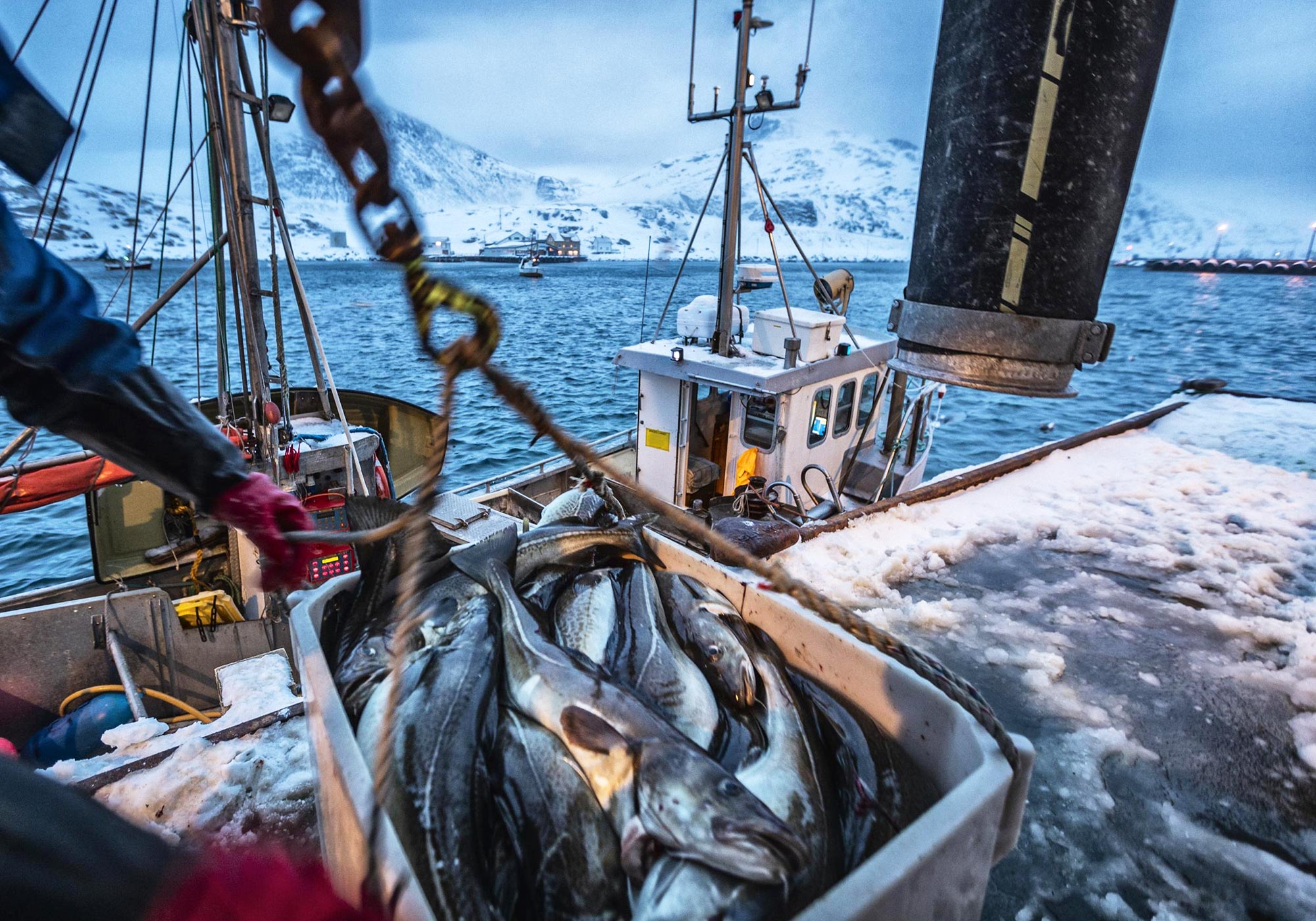
Monthly fresh seafood trade dropped up to 43%, with total exports down 20% from January to August, rapid research project finds.
The pandemic is putting a hurt on the seafood industry, finds the largest study of COVID on U.S. fisheries, which suggests that American fishmongers may flounder — or go belly up — without more government aid.
Monthly fresh seafood exports declined up to 43 percent compared to last year, while monthly imports fell up to 37 percent, and catches dropped 40 percent some months, reports the new University of Vermont-led study in Fish and Fisheries journal.
Over the first six months of 2020, total U.S. seafood exports are down 20 percent, and imports are down 6 percent, compared to the same period last year. Further losses are likely as restrictions increase to address COVID-19.
“Seafood has been hit harder than many other industries because many fisheries rely heavily on restaurant buyers, which dried up when the necessary health protocols kicked in,” said lead author Easton White of the University of Vermont. “Restaurants represent about 65 percent of U.S. seafood spending, normally.”
For context, over one million U.S. seafood workers regularly produce more than $4 billion in annual exports, much of which is processed overseas and imported back to the U.S.
While seafood data often takes several months — or longer — to compile, the researchers used pioneering methods to quickly determine the pandemic’s impacts on fisheries. U.S. Congress received preliminary data from the study in September.
In January, demand for American imports plummeted as lockdowns began in China. Starting in March, web searches for U.S. seafood restaurants fell over 50 percent, and foot traffic at seafood markets decreased 30 percent.
Policymakers can decide ‘who survives’
Aid for fisheries has been slow, partly because pandemics are not currently considered valid reasons for a fishery failure or disaster under current law. The CARES Act has authorized $300M for the sector.
Even with increased demand for seafood delivery, which surged 460% for Google searches from March to April, some producers may not be able to recover without government assistance.
“Seafood is a seasonal business,” said White, who won COVID-19 research funds from UVM’s Gund Institute for Environment. “If you have a March to June season, and can’t get funds until next year, you might have to quit. Support from policymakers will decide which producers can survive.”
Aid should target regions where fisheries make up a disproportionate share of the economy, including Maine, Alaska, Louisiana, and Washington, as well as tribal fisheries, researchers say.
“Foreign markets play an important role in the U.S. seafood sector, but dependence on exports leaves portions of the sector vulnerable to these global shocks,” said co-author Jessica Gephart of American University. “Diversifying the sector by building local networks and consumer education campaigns can help build resilience to future shocks.”
Angling for data
White and the team knew that measuring the pandemic’s impact on fisheries would be essential for allocating government support — but the necessary statistics often take years to become available.
“The data is collected daily or weekly, but it’s often handwritten in a fisher’s logbook,” White said. “The info needs to be processed and turned into a database and verified before researchers and government leaders get the big picture.”
The study used traditional and novel sources of data, from NOAA fisheries reports and federal customs data, to anonymous commercial web location data made available to researchers studying COVID-19, and a comprehensive database of news and trends — created by UVM students — tracking the pandemic’s impacts on fisheries, from plant closures and outbreaks to travel restrictions on seafood laborers.
Changing consumption patterns
While the drops in catches and international trade were stark, White said some seafood producers have found ways to adapt.
Community-supported fisheries programs are increasing, with websites like Local Catch (https:/
That said, home cooking won’t replace seafood restaurant sales. “Most people who cook at home are not likely looking to cook fresh monkfish from Maine for themselves or their family, so the types of species being consumed is changing,” said co-author Halley Froehlich of University of California, Santa Barbara.
These changes in seafood consumption may be here to stay — particularly as global COVID cases climb ever higher — as producers look for ways to sell more of their catches domestically.
Reference: “Early effects of COVID‐19 on US fisheries and seafood consumption” by Easton R. White, Halley E. Froehlich, Jessica A. Gephart, Richard S. Cottrell, Trevor A. Branch, Rahul Agrawal Bejarano and Julia K. Baum, 23 November 2020, Fish & Fisheries.
DOI: 10.1111/FAF.12525
Study researchers include: Easton White (University of Vermont), Halley Froehlich and Richard Cottrell (University of California, Santa Barbara), Jessica Gephart (American University), Trevor Branch (University of Washington), Rahul Agrawal Bejarano (University of Michigan), and Julia Baum (University of Victoria).
This study received COVID-19 rapid research funding from the Gund Institute for Environment at UVM.
Never miss a breakthrough: Join the SciTechDaily newsletter.
Follow us on Google and Google News.
1 Comment
Give the fishing stocks a break, the poor fish are pollut3ed with plastic and other human waste, over-fished for years. If you want fish, fishfarm, make more fish cheaper.