
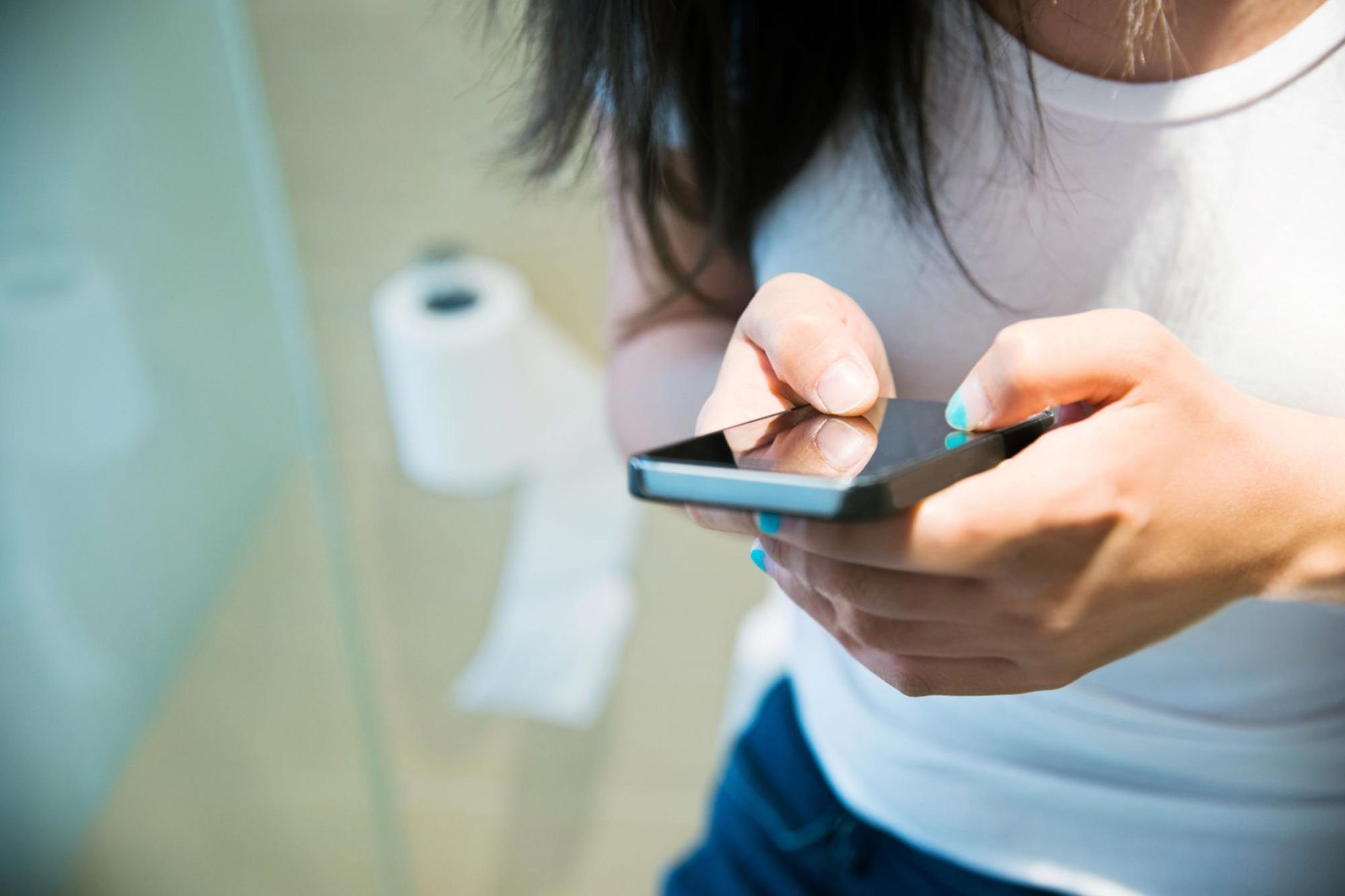
Spending extra time on the toilet scrolling through a smartphone may carry unintended health consequences.
Scrolling on a phone might feel like a harmless way to pass the time in the bathroom. But a new study suggests that this habit could come with an unexpected downside. Researchers report that people who use a smartphone while sitting on the toilet were more likely to have hemorrhoids than people who do not.
The findings come from Chethan Ramprasad of Beth Israel Deaconess Medical Center, U.S., and colleagues, who published the work in the open-access journal PLOS One.
Hemorrhoids are already a major and costly problem in the United States, driving nearly 4 million visits to a doctor or emergency room each year and more than $800 million in healthcare spending. They occur when veins in the anus or rectum become swollen and irritated, which can lead to pain and bleeding. Doctors have long suspected that spending too long on the toilet can contribute, and smartphones may make it easier to lose track of time.
Investigating Toilet Habits and Health
To better understand the possible connection, the researchers studied 125 adults who were undergoing routine screening colonoscopies. Participants completed online questionnaires about their daily routines and bathroom habits. Physicians performing the colonoscopies also assessed whether each participant had hemorrhoids.
Two thirds of the group, or 66 percent, said they used a smartphone while on the toilet. These individuals were generally younger than those who did not report phone use in the bathroom.
After adjusting for factors that could influence hemorrhoid risk, such as age, physical activity, and fiber intake, the researchers found that smartphone users had a 46 percent higher risk of hemorrhoids compared with non-users.
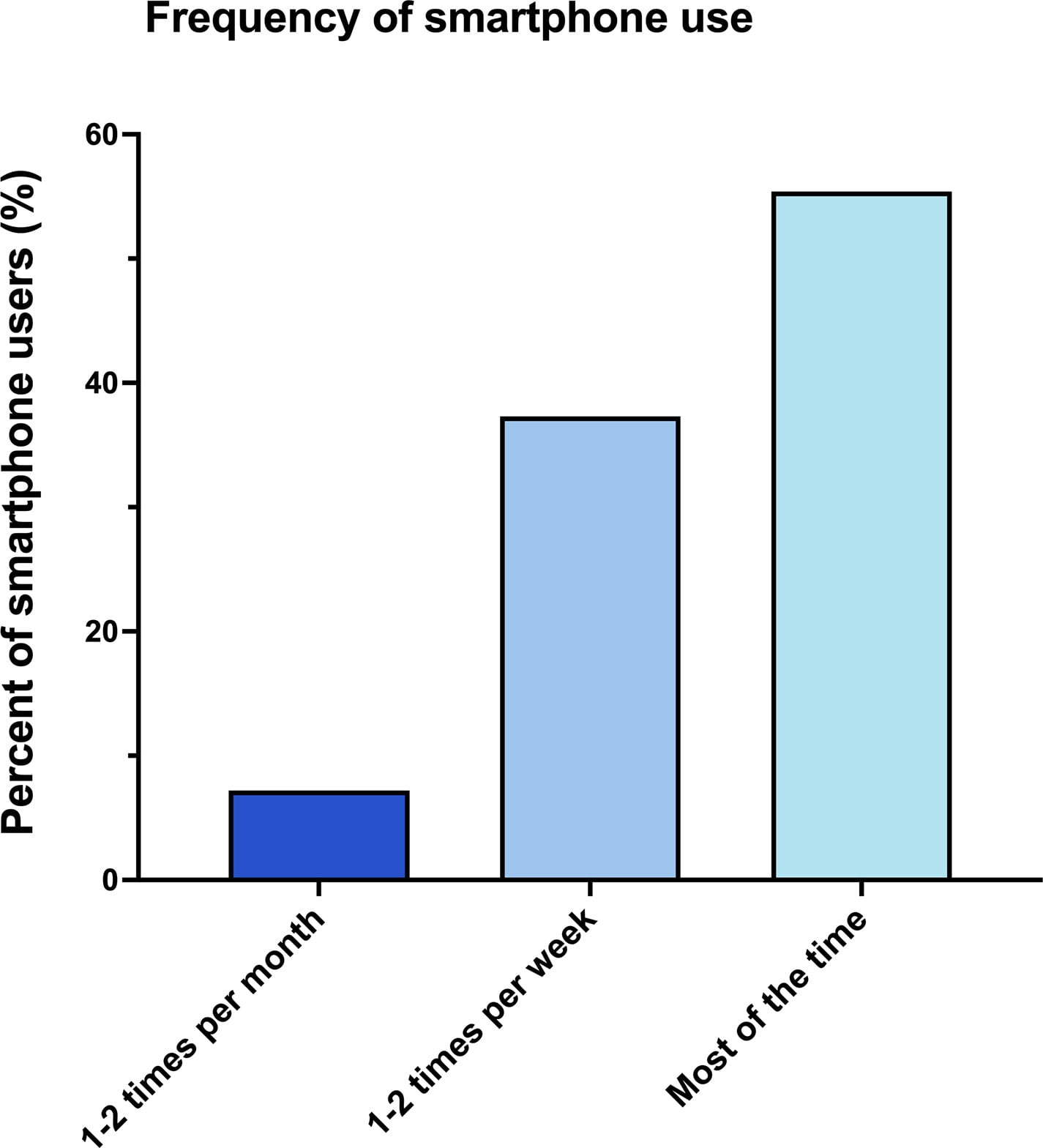
Those who brought their phones into the bathroom also tended to stay on the toilet longer. Among smartphone users, 37 percent reported spending more than 5 minutes per visit, while only 7.1 percent of non-users reported that amount of time. The most common activities included browsing news and checking social media. In contrast to some earlier studies, straining during bowel movements was not linked to a higher risk of hemorrhoids in this analysis.
The researchers suggest that phone use may unintentionally extend the time a person remains seated on the toilet. Sitting for longer periods could increase pressure in the anal and rectal veins, which may contribute to the development of hemorrhoids.
Implications and Next Steps
The findings may offer practical guidance for clinicians counseling patients about bowel habits. Future studies could follow people over longer periods to determine whether smartphone use directly contributes to hemorrhoids and to test strategies aimed at reducing extended bathroom time.
Trisha Pasricha, senior author of the study, adds: “Using a smartphone while on the toilet was linked to a 46 percent increased chance of having hemorrhoids. We’re still uncovering the many ways smartphones and our modern way of life impact our health. It’s possible that how and where we use them—such as while in the bathroom—can have unintended consequences.”
“This study bolsters advice to people in general to leave the smartphones outside the bathroom and to try to spend no more than a few minutes to have a bowel movement. If it’s taking longer, ask yourself why. Was it because having a bowel movement was really so difficult, or was it because my focus was elsewhere?”
“It’s incredibly easy to lose track of time when we’re scrolling on our smartphones—popular apps are designed entirely for that purpose. But it’s possible that constantly sitting longer on the toilet than you intended because you’re distracted by your smartphone could increase your risk of hemorrhoids. We need to study this further, but it’s a safe suggestion to leave the smartphone outside the bathroom when you need to have a bowel movement.”
Reference: “Smartphone use on the toilet and the risk of hemorrhoids” by Chethan Ramprasad, Colin Wu, Jocelyn Chang, Vikram Rangan, Johanna Iturrino, Sarah Ballou, Prashant Singh, Anthony Lembo, Judy Nee and Trisha Pasricha, 3 September 2025, PLOS ONE.
DOI: 10.1371/journal.pone.0329983
Never miss a breakthrough: Join the SciTechDaily newsletter.
Follow us on Google and Google News.
23 Comments
You clearly have too much time on your hands to write an article like this…oh and if you are afraid of hemorrhoids don’t bother having children…you’ll have hemorrhoids the rest of your life and you won’t like it very much
Well men tend not to get hemorrhoids from pregnancy
I use mine like I used to read books on the toilet. Nothing more, nothing less.
Reading this article, while sitting on the toilet
#metoo
Mee too, this is insane
Using your mobile phone in the toilet ?? Crapy ,,ha 😝👌 You must be a loser,,secretly is ok !! But in the loo ?? Wee or poo ,,ok 👍 Weirdos
And if you’re reading a book instead? Does that make a difference?
If you’ve got hemorrhoids from a prolonged sitting on the toilet seat, maybe get a better toilet seat.
I have heard this somewhere else and definitely consider that it could be valid. So let’s do an experiment: Let your study group be people who both use their phone in the bathroom AND have hemmoroids. Let’s see how mang improve after changing behaviors.
This is a correlation study though?
Isn’t it just as, if not MORE, likely that people predisposed to hemorrhoids spend more time on the toilet, so they use their phones more BECAUSE they’re stuck there?
Seems a little premature to play the blame game.
Perhaps it’s a perfect time to buy stock in Preparation H….
Maybe it’s the difficulty in releasing that takes longer and the extended pressure is causing the hemroids whereas the phone simply helps pass the time.
Try Metamucil instead.
This article gave me hemroids🤣
After a lot of IBS problems, I was advised by a dietitian to spend longer on the toilet. And it helps to have the mild distraction of catching up with news etc. on my phone. I also have a raised toilet seat because of balance problems (what a basket case I hear you thinking), which is far more comfortable than a standard one AND has a smaller hole, which is hopeless for peeing standing up, but very good for reducing prolapsed (sagging) piles, which were another problem of mine….
I had serious hemorrhoids long before cellphones appeared and never read magazines on the throne. How many remember when a magazine holder next to the toilet was a thing?
In the mid-1990’s I had a hemorrhoidectomy. Had them surgically removed. Two weeks of painful recovery. But they came back. Plus I had anal fissures.
Seeing one MD after another, I was told by one that my anus was very tight and this could be the cause of my very painful problems. So I had a widening done on my anus. This helped a bit but I still had the hemorrhoids and fissures. And often painful stools with blood.
After further years of suffering and seeing one MD after another to get them tied so they fall off, one MD told me to start taking a fiber supplement. I told him I was sure I got enough fiber but he was insistent. So I shrugged, said why not, the cost is low, and picked up some tubs from Costco. Voila! In a couple of months my hemorrhoids and fissures cleared up. That was 7 years ago.
One other possible contributing factor was that I was consuming apple cider vinegar as a supplement for some years. I also stopped this around the time I started the fiber supplement as I read somewhere that excess acid in the digestive system would get expelled through the anus. And that would cause irritation, which would lead to fissures and hemorrhoids.
So if your diet includes things like apple cde vinegar and sucking on lemons, which mine did, STOP doing this to eliminate excess digestive acid. And add a couple of spoons of fiber supplement. Your hemorrhoid problems might just clear up.
Weirdly and sadly, something like 30% of the US population experiences constipation regularly. Straining on the toilet can cause anal tearing (fissures) and hemorrhoids, which can bleed and be very painful.
If you exercise regularly and eat properly, constipation will not occur. Take a fiber supplement and go easy on the processed and junk foods.
I never have constipation. I have 2-3 well formed stool movements every day, easy out, no straining and much of the time I have almost no residue on the toilet paper after a stool movement.
Those are myths propagated by healthy people who’ve never actually had REAL constipation. Exercise does not work. Fiber does not work. Good diet does not work. Hydration does not work. Squatting does not work. NOTHING works. Magnesium works but will also cause diarrhea so it’s difficult to get it right. Stimulants are habit forming and painful. I’ve battled my own bowels my entire life. I’ve tried everything. Stop lying.
Jennifer, just because you are a fat slob doesn’t mean everything mentioned above doesn’t work. This is a you problem.
And another way of spreading faecal bacteria………
I’m going about 20 minutes every time. I could never poop in 5 minutes or less. But have had hemorrhoids for years now from diet and smoking.
Most people suffer from cerebral constipation. I’m not one of them.
People ashamed to admit using a phone on the toilet are probably more likely to be ashamed to admit having hemorrhoids, also.
ehh😷😱😲, this world carries a lot of mysteries ooh🦠🙆