
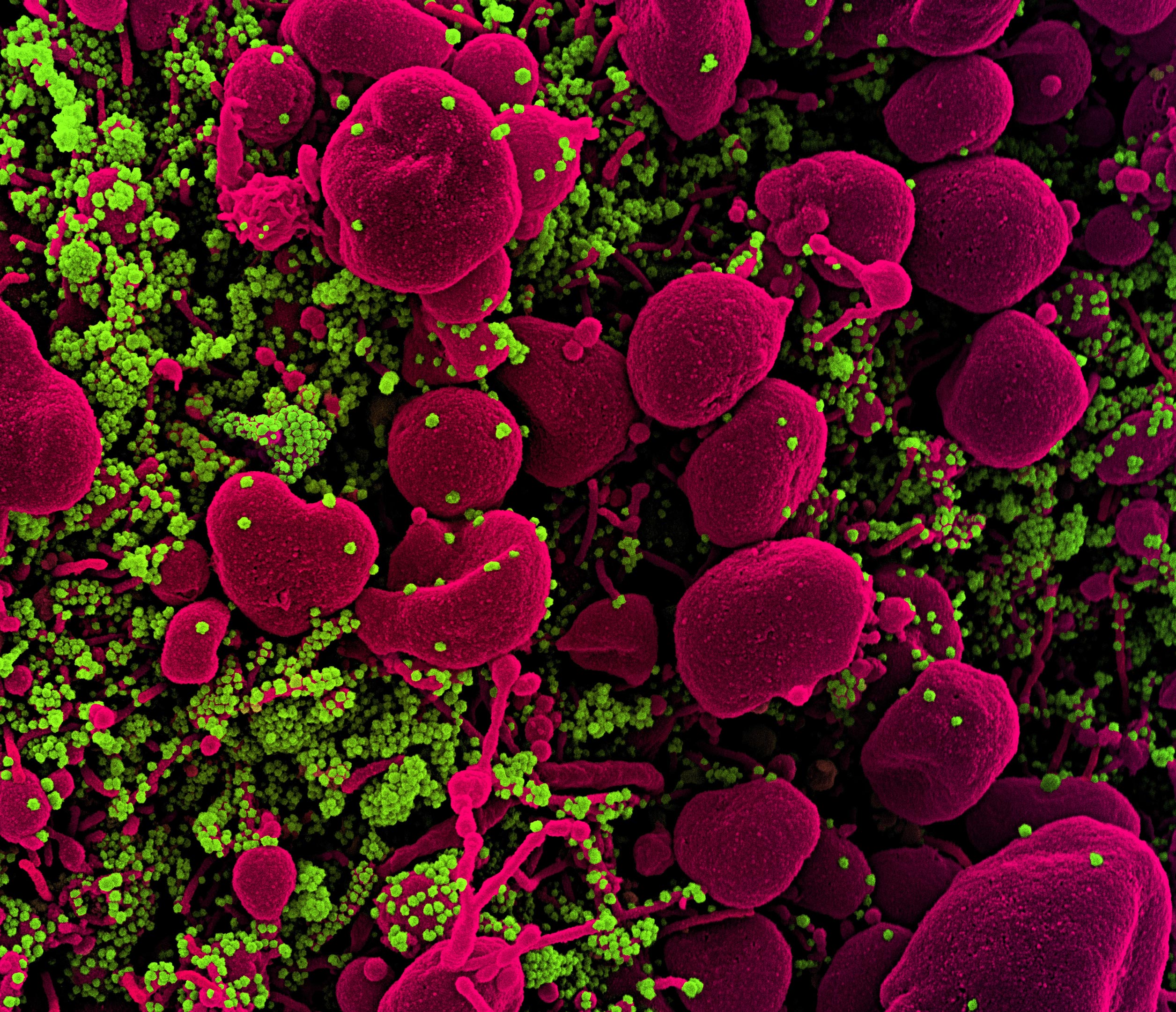
In lab experiments, pralatrexate outperforms remdesivir against SARS-CoV-2.
A novel computational drug screening strategy combined with lab experiments suggest that pralatrexate, a chemotherapy medication originally developed to treat lymphoma, could potentially be repurposed to treat COVID-19. Haiping Zhang of the Shenzhen Institutes of Advanced Technology in Shenzhen, China, and colleagues present these findings in the open-access journal PLOS Computational Biology.
With the COVID-19 pandemic causing illness and death worldwide, better treatments are urgently needed. One shortcut could be to repurpose existing drugs that were originally developed to treat other conditions. Computational methods can help identify such drugs by simulating how different drugs would interact with SARS-CoV-2, the virus that causes COVID-19.
Hybrid Simulation Approach Targets Key Viral Protein
To aid the virtual screening of existing drugs, Zhang and colleagues combined multiple computational techniques that simulate drug-virus interactions from different, complementary perspectives. They used this hybrid approach to screen 1,906 existing drugs for their potential ability to inhibit replication of SARS-CoV-2 by targeting a viral protein called RNA-dependent RNA polymerase (RdRP).
The novel screening approach identified four promising drugs, which were then tested against SARS-CoV-2 in lab experiments. Two of the drugs, pralatrexate, and azithromycin, successfully inhibited replication of the virus. Further lab experiments showed that pralatrexate more strongly inhibited viral replication than did remdesivir, a drug that is currently used to treat some COVID-19 patients.
Pralatrexate Shows Strong Inhibition, But With Caveats
These findings suggest that pralatrexate could potentially be repurposed to treat COVID-19. However, this chemotherapy drug can prompt significant side effects and is used for people with terminal lymphoma, so immediate use for COVID-19 patients is not guaranteed. Still, the findings support the use of the new screening strategy to identify drugs that could be repurposed.
“We have demonstrated the value of our novel hybrid approach that combines deep-learning technologies with more traditional simulations of molecular dynamics,” Zhang says. He and his colleagues are now developing additional computational methods for generating novel molecular structures that could be developed into new drugs to treat COVID-19.
Reference: “A novel virtual screening procedure identifies Pralatrexate as inhibitor of SARS-CoV-2 RdRp and it reduces viral replication in vitro” by Haiping Zhang, Yang Yang, Junxin Li, Min Wang, Konda Mani Saravanan, Jinli Wei, Justin Tze-Yang Ng, Md. Tofazzal Hossain, Maoxuan Liu, Huiling Zhang, Xiaohu Ren, Yi Pan, Yin Peng, Yi Shi, Xiaochun Wan, Yingxia Liu and Yanjie Wei, 31 December 2020, PLOS Computational Biology.
DOI: 10.1371/journal.pcbi.1008489
Funding: This work was partly supported by the National Key Research and Development Program of China under Grant No. 2018YFB0204403 (Y.W.) and 2019YFA0906100 (X.W.); Strategic Priority CAS Project XDB38000000 to Y.W., National Science and Technology Major Project under Grant No. 2018ZX10101004 (Y.Y.), National Science Foundation of China under Grant no. U1813203 (Y.W.); the National Natural Youth Science Foundation of China (Grant no. 31601028: Y.P.); the Shenzhen Basic Research Fund under Grant no. JCYJ20190807170801656 (J.L.), JCYJ20180507182818013 (Y.W.), JCYJ20170413093358429 (Y.W.), and the SIAT Innovation Program for Excellent Young Researchers (J.L.). The funders had no role in study design, data collection and analysis, decision to publish, or preparation of the manuscript.
Never miss a breakthrough: Join the SciTechDaily newsletter.
Follow us on Google and Google News.