
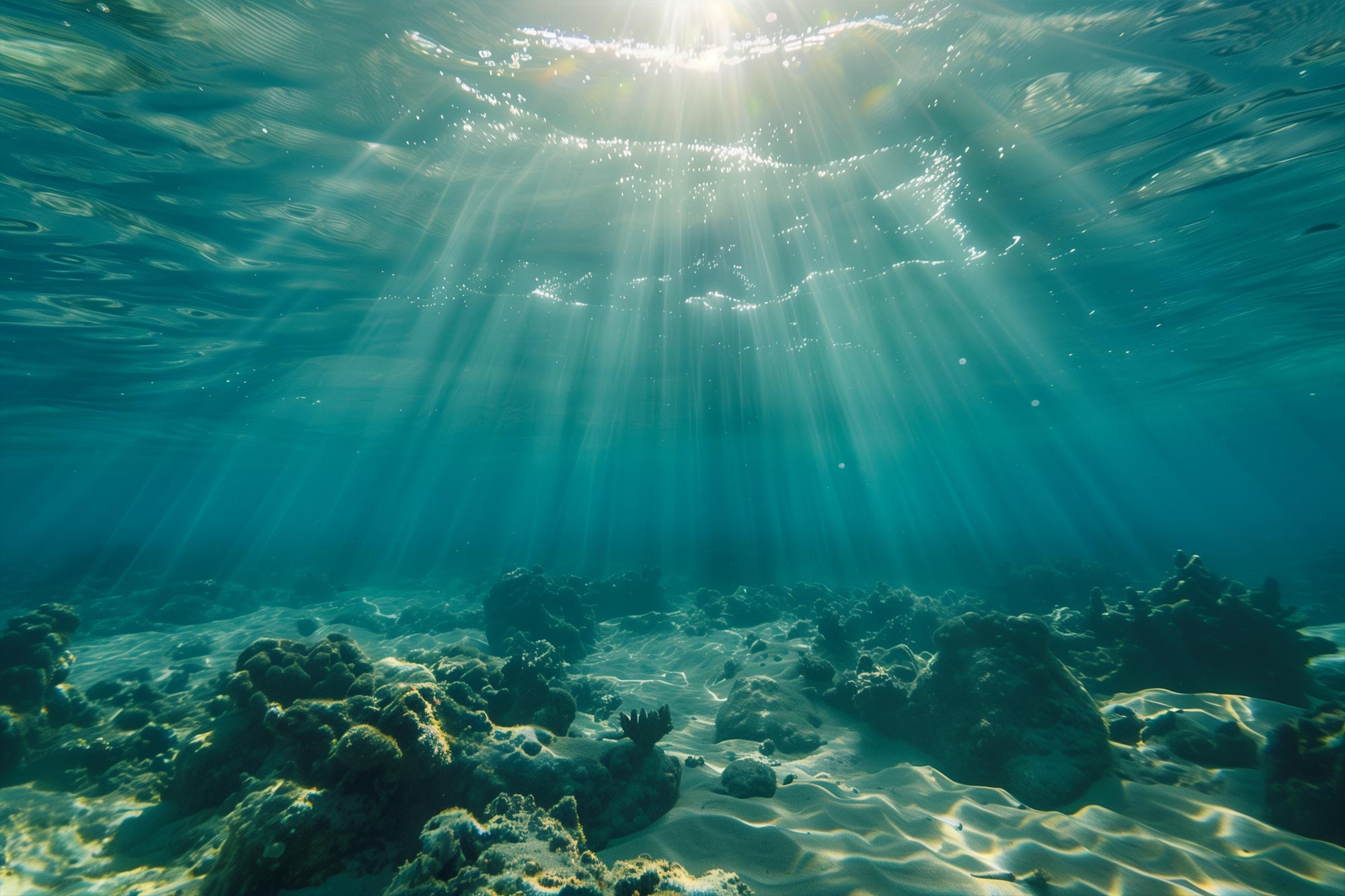
Researchers begin applying lessons learned from the ocean to soils.
Armed with a catalog of hundreds of thousands of DNA and RNA virus species in the world’s oceans, scientists are now zeroing in on the viruses most likely to combat climate change by helping trap carbon dioxide in seawater or, using similar techniques, different viruses that may prevent methane’s escape from thawing Arctic soil.
Advances in Genomic Analysis
By combining genomic sequencing data with artificial intelligence analysis, researchers have identified ocean-based viruses and assessed their genomes to find that they “steal” genes from other microbes or cells that process carbon in the sea. Mapping microbial metabolism genes, including those for underwater carbon metabolism, revealed 340 known metabolic pathways throughout the global oceans. Of these, 128 were also found in the genomes of ocean viruses.
“I was shocked that the number was that high,” said Matthew Sullivan, professor of microbiology and director of the Center of Microbiome Science at The Ohio State University.
Having mined this massive trove of data via advances in computation, the team has now revealed which viruses have a role in carbon metabolism and are using this information in newly developed community metabolic models to help predict how using viruses to engineer the ocean microbiome toward better carbon capture would look.
“The modeling is about how viruses may dial up or dial down microbial activity in the system,” Sullivan said. “Community metabolic modeling is telling me the dream data point: which viruses are targeting the most important metabolic pathways, and that matters because it means they’re good levers to pull on.”
Sullivan presented the research yesterday (February 17, 2024) at the annual meeting of the American Association for the Advancement of Science in Denver.
Viral Engineering for Carbon Capture
Sullivan was the virus coordinator for the Tara Oceans Consortium, a three-year global study of the impact of climate change on the world’s oceans and the source of 35,000 water samples containing the microbial bounty. His lab focuses on phages, viruses that infect bacteria, and their potential to be scaled up in an engineering framework to manipulate marine microbes into converting carbon into the heaviest organic form that will sink to the ocean floor.
“Oceans soak up carbon, and that buffers us against climate change. CO2 is absorbed as a gas, and its conversion into organic carbon is dictated by microbes,” Sullivan said. “What we’re seeing now is that viruses target the most important reactions in these microbial community metabolisms. This means we can start investigating which viruses could be used to convert carbon toward the kind we want.
“In other words, can we strengthen this massive ocean buffer to be a carbon sink to buy time against climate change, as opposed to that carbon being released back into the atmosphere to accelerate it?”
In 2016, the Tara team determined that carbon sinking in the ocean was related to the presence of viruses. It is thought that viruses help sink carbon when virus-infected carbon-processing cells cluster into larger, sticky aggregates that drop to the ocean floor. The researchers developed AI-based analytics to identify from thousands of viruses which few are “VIP” viruses to culture in the lab and work with as model systems for ocean geoengineering.
This new community metabolic modeling, developed by collaborator Professor Damien Eveillard of the Tara Oceans Consortium, helps them understand what unintended consequences might be of such an approach. Sullivan’s lab is taking these oceanic lessons learned and applying them to using viruses to engineer microbiomes in human settings to aid recovery from spinal cord injury, improve outcomes for infants born to mothers with HIV, combat infection in burn wounds, and more.
Applications Beyond Oceans
“The conversation we’re having is, ‘How much of this is transferable?’” said Sullivan, also a professor of civil, environmental and geodetic engineering. “The overall goal is engineering microbiomes toward what we think is something useful.”
He also reported on early efforts to use phages as geoengineering tools in an entirely different ecosystem: the permafrost in northern Sweden, where microbes both change the climate and respond to climate change as the frozen soil thaws. Virginia Rich, associate professor of microbiology at Ohio State, is co-director of the National Science Foundation-funded EMERGE Biology Integration Institute based at Ohio State that organizes the microbiome science at the Sweden field site. Rich also co-led previous research that identified a lineage of single-cell organisms in the thawing permafrost soil as a significant producer of methane, a potent greenhouse gas.
Rich co-organized the AAAS session with Ruth Varner of the University of New Hampshire, who co-directs the EMERGE Institute, which is focusing on better understanding how microbiomes respond to permafrost thaw and the resulting climate interactions.
Sullivan’s talk was titled “From ecosystems biology to managing microbiomes with viruses,” and was presented at the session titled “Microbiome-Targeted Ecosystem Management: Small Players, Big Roles.”
The oceans work is supported by the National Science Foundation, the Gordon and Betty Moore Foundation and Tara Oceans, and, in addition to the NSF, the soils work has been funded by the Department of Energy and the Grantham Foundation.
Never miss a breakthrough: Join the SciTechDaily newsletter.
Follow us on Google and Google News.
2 Comments
They are trying to kill us all! More CO2 in the oceans means that most life, as we know it in those oceans, will die.
It seems some people are thinking about altering the balance of viruses in the ocean. What could possibly go wrong?