
Close Menu
    Facebook X (Twitter) Instagram
    SciTechDaily
    • Biology
    • Chemistry
    • Earth
    • Health
    • Physics
    • Science
    • Space
    • Technology
    Facebook X (Twitter) Pinterest YouTube RSS
    SciTechDaily
    Home»Earth»Wall of Lava Burns a Path Through La Palma
    Earth

    Wall of Lava Burns a Path Through La Palma

    By Adam Voiland, NASA Earth ObservatorySeptember 29, 2021No Comments2 Mins Read
    Facebook Twitter Pinterest Telegram LinkedIn WhatsApp Email Reddit
    Share
    Facebook Twitter LinkedIn Pinterest Telegram Email Reddit
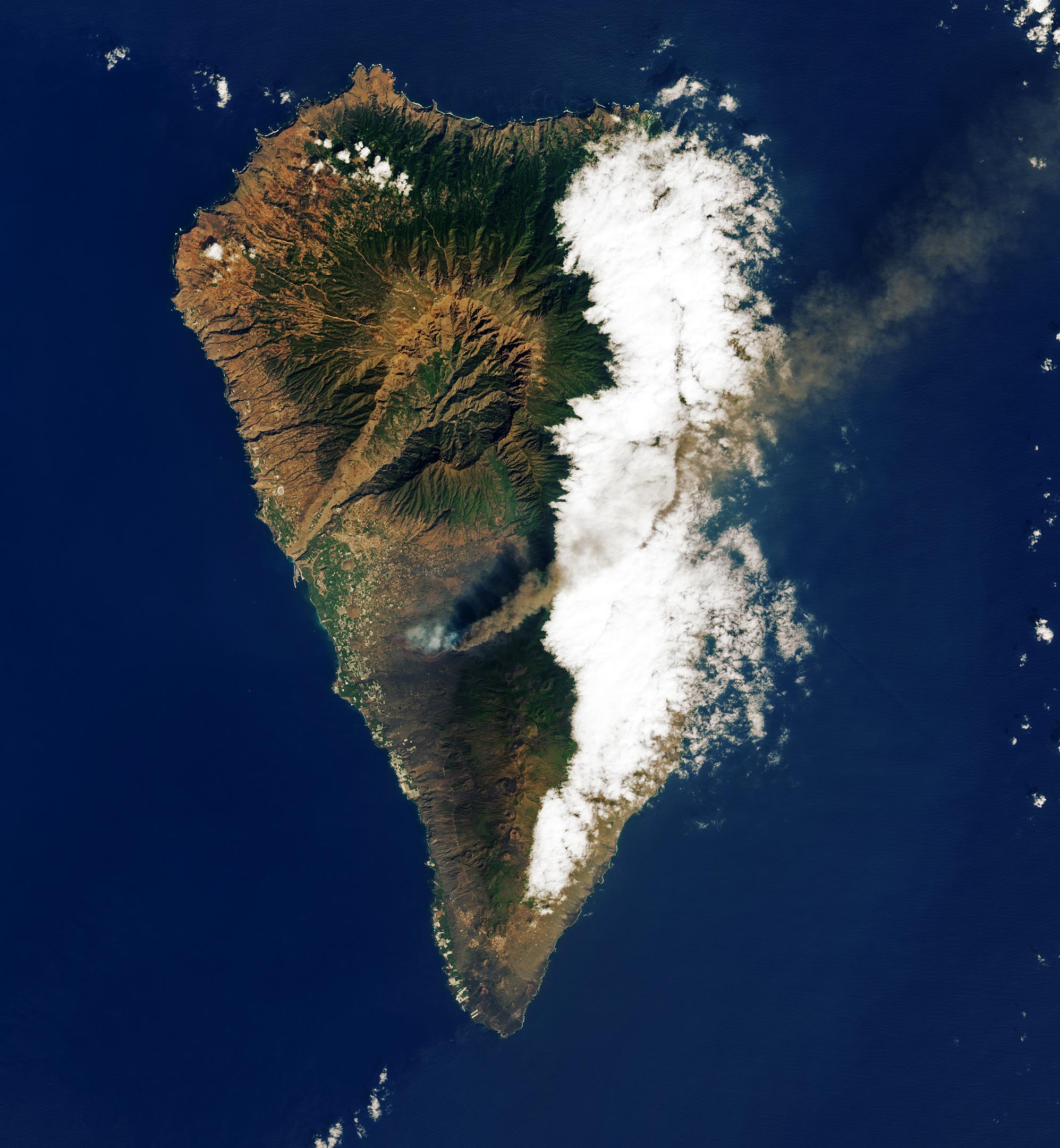
    La Palma September 2021 Annotated
    September 26, 2021

    A slow-moving wall of basaltic lava is bulldozing its way through communities on one of the Canary Islands.

    After Cumbre Vieja split open and began erupting on September 19, 2021, a slow-moving wall of basaltic lava began bulldozing its way through populated parts of La Palma. Lava flows have destroyed nearly 400 homes, buried dozens of kilometers of roads, and consumed farmland as molten rock creeps down the western flank of the volcanic island toward the ocean.

    The Operational Land Imager (OLI) on Landsat 8 captured a natural-color image (above) of lava flowing through the communities of El Paraiso and Todoque on September 26, 2021. Though the inside of the lava flow was hot and molten, cooling on the surface left a dark crust that made the flow appear black in natural-color imagery. Observations of infrared wavelengths (second image below) reveal the hottest parts of the flow.
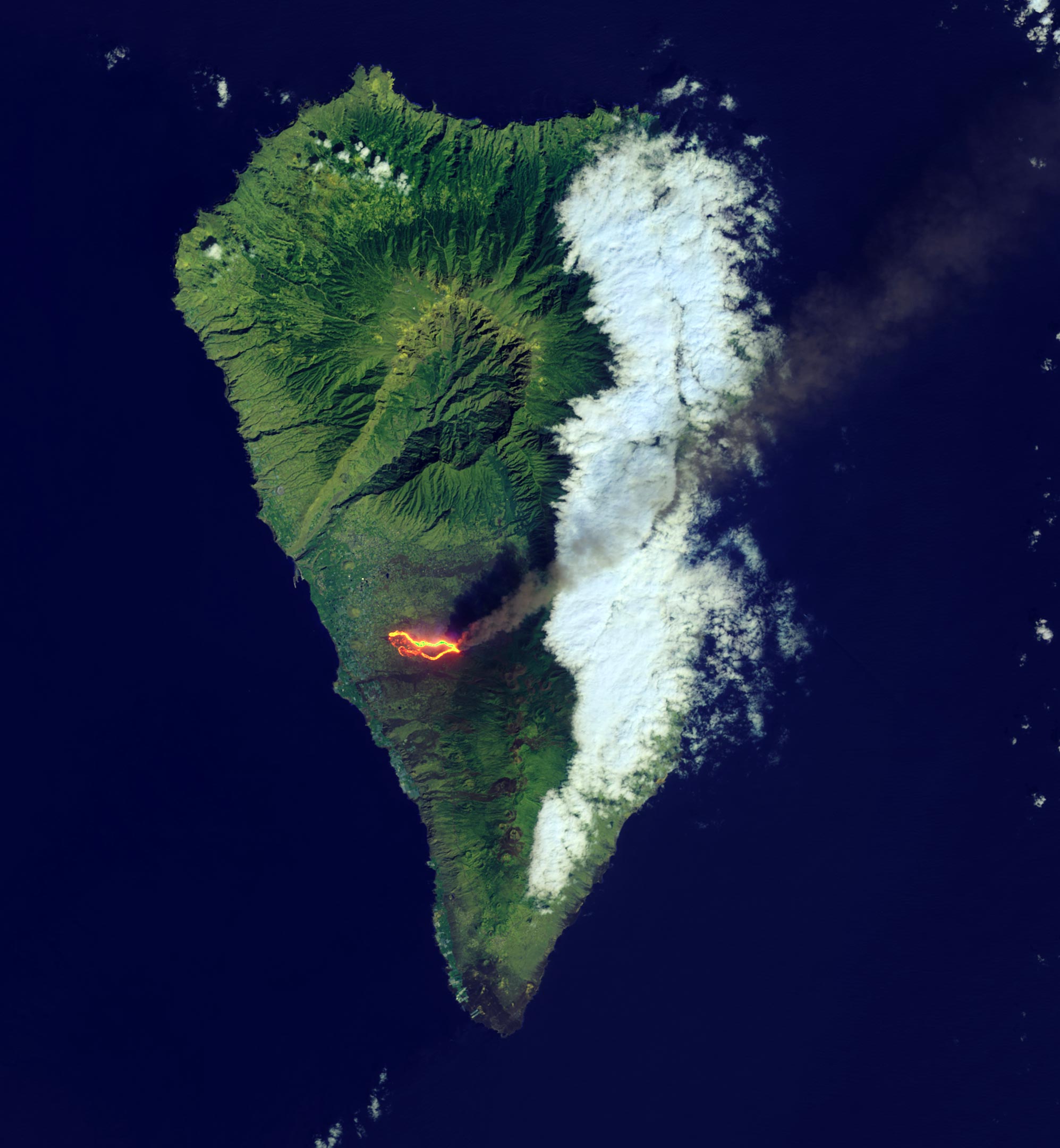
    La Palma Infrared September 2021 Annotated
    September 26, 2021

    Many of the white rectangular features near the coast are greenhouses. The dark green areas along the coast are crops, likely fields of bananas. The volcanic plume streaming toward the northeast contains a mixture of ash, sulfur dioxide, and other volcanic gases.

    A lull in activity in the morning on September 27 suggested that the eruption might be winding down, but explosive activity resumed later in the day, according to the Volcanology Institute of the Canary Islands (INVOLCAN). Experts from INVOLCAN have indicated that the current eruption could persist for weeks to months.

    Cumbre Vieja last erupted 50 years ago. The most recent eruption in the Canary Islands happened in 2011, when an underwater vent at El Hierro came to life.

    NASA Earth Observatory images by Lauren Dauphin, using Landsat data from the U.S. Geological Survey.

    Never miss a breakthrough: Join the SciTechDaily newsletter.
    Follow us on Google and Google News.

    Geography NASA NASA Earth Observatory Volcano
    Share. Facebook Twitter Pinterest LinkedIn Email Reddit

    Related Articles

    Massive Tonga Volcano Plume Reached the Mesosphere – 36 Miles Into the Atmosphere

    Island Obliterated: Dramatic Changes at Hunga Tonga-Hunga Ha’apai

    Hunga Tonga Island Obliterated – NASA Satellites Capture Massive Blast

    A Wolf Awakens in the Galápagos Islands at Night

    A Deadly Day on Mount Semeru: Destructive Rivers of Debris on Indonesian Volcano

    Cumbre Vieja Lights Up the Night – Astronaut Photo Captures Volcanic Eruption From Space

    Socked in Stratovolcano: Astronaut on ISS Captures Incredible View of Uninhabited Atlasov Island

    Kilauea’s Lava Lake Returns – Hawaii’s Most Active Volcano Is Erupting Again

    Newberry Volcano Photographed by Astronaut Onboard the International Space Station

    Leave A Reply Cancel Reply

    • Facebook
    • Twitter
    • Pinterest
    • YouTube

    Don't Miss a Discovery

    Subscribe for the Latest in Science & Tech!

    Trending News

    Once-in-a-Century Impact: NASA Just Found a Massive New Crater on the Moon

    Anak Krakatau Just Blasted Ash 50,000 Feet Into the Sky

    NASA’s Chandra Reveals Galaxies Being Torn Apart, Blasted by Black Holes, and Reborn in Stars

    Ozempic’s Active Ingredient Shows Surprising Anti-Aging Effects

    Scientists Discover Canada’s First Dinosaur Tracks From a Rarely Documented Cretaceous Age

    Astronomers Just Caught a Giant Planet in the Act of Forming

    Two Dead Stars Are Racing Around Each Other Every 6.2 Minutes

    Natural Compound May Help Protect the Brain and Heart From Excess Salt

    Follow SciTechDaily
    • Facebook
    • Twitter
    • YouTube
    • Pinterest
    • Newsletter
    • RSS
    SciTech News
    • Biology News
    • Chemistry News
    • Earth News
    • Health News
    • Physics News
    • Science News
    • Space News
    • Technology News
    Recent Posts
    • Scientists Discover a New Potential Treatment Target for High Blood Pressure
    • Researchers Find a Surprising Link Between Bone Density and Brain Aging
    • Researchers Find Creatine’s Benefits Extend Far Beyond the Gym
    • A 9-Million-Year-Old Tooth Just Challenged What Scientists Thought They Knew About the Atacama Desert
    • Scientists Discover a “Fire Amoeba” That Defies Life’s Heat Limit
    Copyright © 1998 - 2026 SciTechDaily. All Rights Reserved.
    • Science News
    • About
    • Contact
    • Editorial Board
    • Privacy Policy
    • Terms of Use

    Type above and press Enter to search. Press Esc to cancel.