
Close Menu
    Facebook X (Twitter) Instagram
    SciTechDaily
    • Biology
    • Chemistry
    • Earth
    • Health
    • Physics
    • Science
    • Space
    • Technology
    Facebook X (Twitter) Pinterest YouTube RSS
    SciTechDaily
    Home»Earth»Auroral Extravaganza: Canada’s Sky Dazzled by Solar Phenomena
    Earth

    Auroral Extravaganza: Canada’s Sky Dazzled by Solar Phenomena

    By Lindsey Doermann, NASA Earth ObservatoryDecember 20, 2023No Comments2 Mins Read
    Facebook Twitter Pinterest Telegram LinkedIn WhatsApp Email Reddit
    Share
    Facebook Twitter LinkedIn Pinterest Telegram Email Reddit
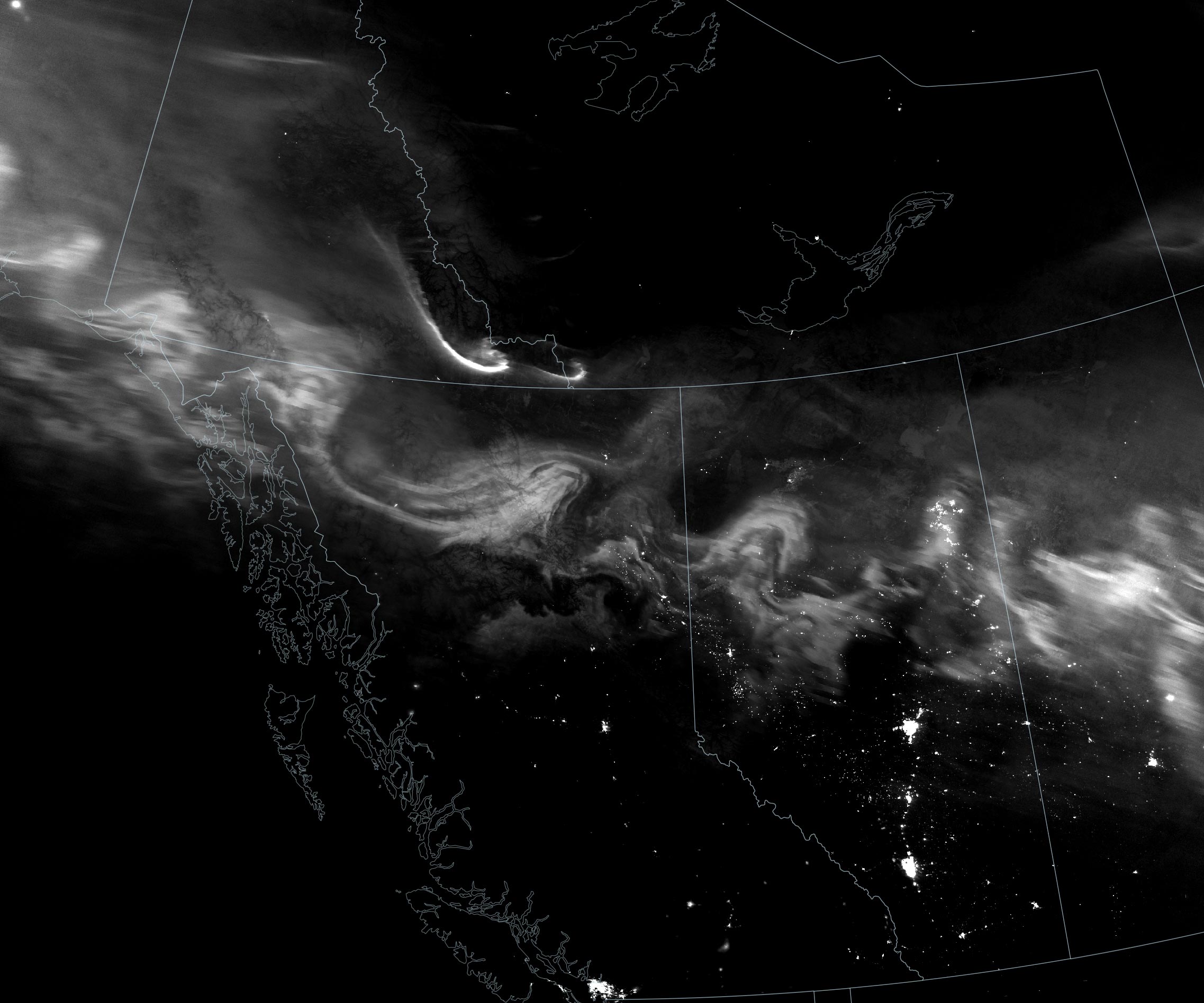
    Auroras Light Up Canada December 2023 Annotated
    December 17, 2023

    A spate of solar activity produced widespread auroras across Canada.

    A flurry of solar activity in mid-December 2023 sent energized particles crashing into Earth’s magnetosphere, producing undulating auroras across northern latitudes of our planet. The VIIRS (Visible Infrared Imaging Radiometer Suite) on the NOAA-NASA Suomi NPP satellite captured this image of light from the aurora over western Canada in the early morning of December 17, 2023. The day-night band of VIIRS detects nighttime light in a range of wavelengths from green to near-infrared and uses filtering techniques to observe signals such as city lights, reflected moonlight, and auroras.

    Origins of the Auroras

    These auroras may have stemmed from several coronal mass ejections that were observed on December 14 and 15. Minor to moderate geomagnetic storm conditions were expected in the following days, according to NOAA’s Space Weather Prediction Center. Coronal mass ejections contain large amounts of plasma from the Sun’s corona and carry with them an embedded magnetic field. Interactions between these expulsions from the Sun and the upper atmosphere of Earth produce light that makes up colorful aurora displays.

    The Sun’s Increasing Activity

    The Sun’s activity is ramping up as it approaches the peak of solar cycle 25, forecast to occur in or around July 2025. The Sun’s magnetic field flips at the peak of these cycles, each of which lasts approximately 11 years. Scientists track fluctuations in solar activity in part by monitoring the number and location of sunspots—dark blotches on the Sun’s surface that are the main source of solar eruptions.

    Aurora and Solar Flare Connection

    The aurora seen here occurred several days after the strongest solar flare of this solar cycle so far. Whereas coronal mass ejections may take several days to travel to Earth, solar flares reach the planet in a matter of minutes and interfere with radio communications. Coronal mass ejections often, but not always, occur in tandem with solar flares.

    NASA Earth Observatory image by Lauren Dauphin, using VIIRS day-night band data from the Suomi National Polar-orbiting Partnership.

    Never miss a breakthrough: Join the SciTechDaily newsletter.
    Follow us on Google and Google News.

    Aurora NASA NASA Earth Observatory Popular
    Share. Facebook Twitter Pinterest LinkedIn Email Reddit

    Related Articles

    Geomagnetic Storm Sets Sky Ablaze: October’s Unforgettable Aurora Spectacle

    Strongest Geomagnetic Storm in Over 20 Years Unleashes Stunning Aurora

    Stunning Aurora Light Up the Night During Epic Geomagnetic Storm

    Solar Storm Spectacle: Colorful Auroras Light Up Earth’s Atmosphere

    Aurora, Meet Airglow: Two of Earth’s Most Colorful Atmospheric Phenomena Meet in Stunning Photo From Space Station

    Unusual “Volcano Track” Clouds Investigated

    NASA Scientists Collect Moon-Like Rocks From Site in Montana

    NASA Satellites Spot Several Wildfires Near Chernobyl Exclusion Zone

    Shocking Disappearance of Ecuador’s Tallest Waterfall

    Leave A Reply Cancel Reply

    • Facebook
    • Twitter
    • Pinterest
    • YouTube

    Don't Miss a Discovery

    Subscribe for the Latest in Science & Tech!

    Trending News

    Why Popular Diabetes Drugs Like Ozempic Don’t Work for Everyone: The “Genetic Glitch”

    Scientists Stunned After Finding Plant Thought Extinct for 60 Years

    Scientists Discover Tiny New Spider That Hunts Prey 6x Its Size

    Natural Component From Licorice Shows Promise for Treating Inflammatory Bowel Disease

    Scientists Warn: Popular Sweetener Linked to Dangerous Metabolic Effects

    Monster Storms on Jupiter Unleash Lightning Beyond Anything on Earth

    Scientists Create “Liquid Gears” That Spin Without Touching

    The Simple Habit That Could Help Prevent Cancer

    Follow SciTechDaily
    • Facebook
    • Twitter
    • YouTube
    • Pinterest
    • Newsletter
    • RSS
    SciTech News
    • Biology News
    • Chemistry News
    • Earth News
    • Health News
    • Physics News
    • Science News
    • Space News
    • Technology News
    Recent Posts
    • 100,000-Year-Old Neanderthal Fossils in Poland Reveal Unexpected Genetic Connections
    • Unexpected Hormone Discovery Could Change How We Treat Arthritis
    • Scientists Supercharge “Natural Killer” Cells To Break Through Cancer’s Defenses
    • Simple “Gut Reset” May Prevent Weight Gain After Ozempic or Wegovy
    • 2.8 Days to Disaster: Scientists Warn Low Earth Orbit Could Suddenly Collapse
    Copyright © 1998 - 2026 SciTechDaily. All Rights Reserved.
    • Science News
    • About
    • Contact
    • Editorial Board
    • Privacy Policy
    • Terms of Use

    Type above and press Enter to search. Press Esc to cancel.