
Close Menu
    Facebook X (Twitter) Instagram
    SciTechDaily
    • Biology
    • Chemistry
    • Earth
    • Health
    • Physics
    • Science
    • Space
    • Technology
    Facebook X (Twitter) Pinterest YouTube RSS
    SciTechDaily
    Home»Space»Fly Your Name Around the Moon on NASA’s Artemis I
    Space

    Fly Your Name Around the Moon on NASA’s Artemis I

    By Nancy Atkinson, Universe TodayMarch 13, 20221 Comment2 Mins Read
    Facebook Twitter Pinterest Telegram LinkedIn WhatsApp Email Reddit
    Share
    Facebook Twitter LinkedIn Pinterest Telegram Email Reddit
    Orion Artemis I Moon Earth
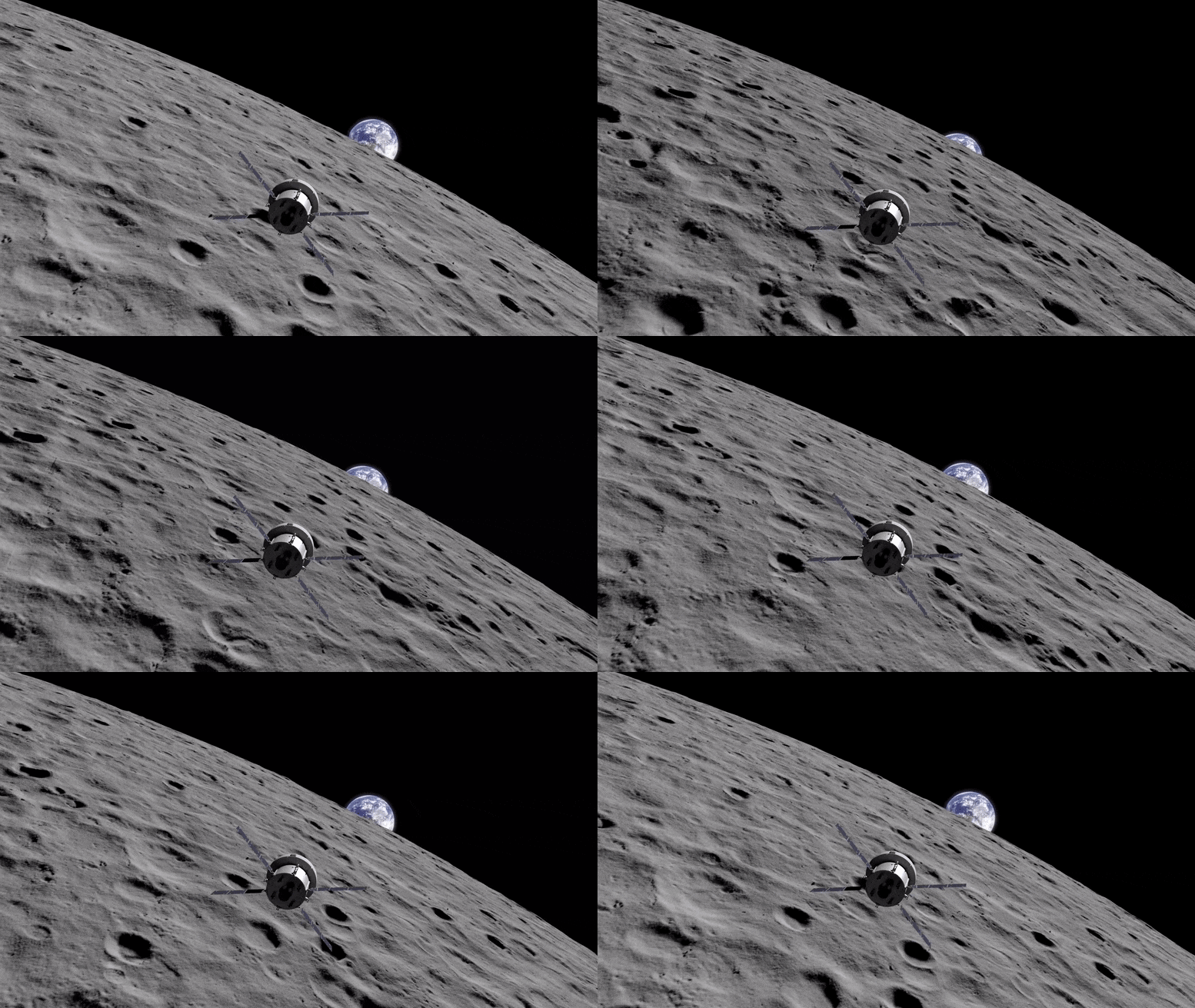
    Artist’s illustration of Orion Artemis I flying to the Moon.

    Here’s your chance to participate in NASA’s return to the Moon with the Artemis program!

    NASA is inviting people to submit their names to be included on a flash drive that will be sent along with Artemis I, an uncrewed test flight that kicks off the space agency’s plans to land the first woman and first person of color on the Moon.

    The flight, which is not yet officially scheduled, should take place in the coming next few months, perhaps late May, June, or July 2022.
    Fly Name Around the Moon With Artemis 1

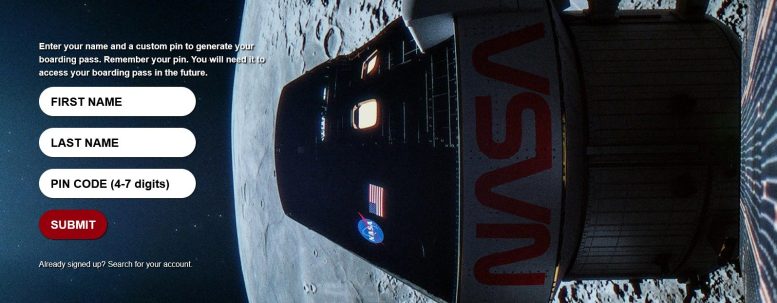
    The sign-up process is easy: go to this link on NASA’s website, and click on the “Get boarding pass.” Users will be directed to fill in their first and last name, along with a 4-7 digit pin code. A “boarding pass” will be displayed with your name, which you can save, or you can access it again later by remembering your pin code. After submitting, NASA will send a QR code to allow those who sign up to join future NASA launches by watching online. T

    Artemis 1 will launch from the historic Launch Complex 39B at Kennedy Space Center, using the Space Launch System (SLS) for the first time. NASA says the Orion spacecraft “will demonstrate our commitment and capability to extend human existence to the Moon and beyond.”

    The plan is for the uncrewed Orion to orbit the Moon for approximately a week and spend about a month in space. This will allow engineers to test out all the systems on board the spacecraft and rocket and enable the first future crews to travel beyond Earth orbit since 1972, the final Apollo mission.

    Of course, this isn’t the first time NASA has gathered names to send along to space. Almost all of NASA’s robotic missions in the past decade or more have offered this opportunity, which is a fun way to include everyone on these missions of exploration.

    Adapted from an article originally published on Universe Today.

    Never miss a breakthrough: Join the SciTechDaily newsletter.
    Follow us on Google and Google News.

    ARTEMIS Mission Astronomy Moon NASA
    Share. Facebook Twitter Pinterest LinkedIn Email Reddit

    Related Articles

    See the Far Side of the Moon: Incredibly Detailed Pictures From Artemis I Orion Close Lunar Flyby

    Fly Your Name for Free Around the Moon on NASA’s Artemis I Mission

    Don’t Miss It: The Next Full Moon Is the Cold Moon and Will Feature a Partial Eclipse

    Moon Supply Unloading System Design Winners Announced by NASA

    Incredible Photograph Captures Space Station As It Transited the Waning Gibbous Moon

    NASA to Announce “Exciting New Discovery” About the Moon Made by Airborne Observatory

    NASA Selects Intuitive Machines to Land Water-Measuring Payload PRIME-1 on the Moon

    Lunar Deep Freeze Challenge: Help NASA Return Frozen Moon Samples

    October 2020 Skywatching Tips From NASA: Harvest Moon, Blue Moon, Mars, and Go Intergalactic With Andromeda

    1 Comment

    1. SHAHIDA BEEGUM. N. C on May 5, 2024 9:36 am

      Sr I am AMATEUR ASTRONOMY
      CALICUT KERALA INDIA

      Reply
    Leave A Reply Cancel Reply

    • Facebook
    • Twitter
    • Pinterest
    • YouTube

    Don't Miss a Discovery

    Subscribe for the Latest in Science & Tech!

    Trending News

    Doctors May Need To Rethink Calcium and Vitamin D Recommendations After Major Review

    Scientists Discover a Hidden Cause of Cellular Aging That Can Be Reversed

    Archaeologists Have Found Something Unexpected Inside a 1,600-Year-Old Egyptian Mummy

    Scientists May Have Found a Completely New Way To Treat Depression

    New 7-Dimensional Theory May Finally Solve the Black Hole Information Paradox

    Scientists Made Older Mice Biologically Younger Using Gut Microbes

    Scientists Finally Uncover Why Ozempic Stops Working for Some People

    Wasp Colonies Explode Into Violence After Losing Their Queen

    Follow SciTechDaily
    • Facebook
    • Twitter
    • YouTube
    • Pinterest
    • Newsletter
    • RSS
    SciTech News
    • Biology News
    • Chemistry News
    • Earth News
    • Health News
    • Physics News
    • Science News
    • Space News
    • Technology News
    Recent Posts
    • Researchers Measured Alien Planet Spins and Discovered a Surprising Pattern
    • NASA’s Roman Telescope Will Search 100 Million Stars for New Worlds
    • A Cannibal Star Finally Solves One of Astronomy’s Biggest Mysteries
    • Researchers Solve the Mystery Behind a Billion-Dollar Dental Implant Disease
    • Scientists Finally Uncover How a “Forever Chemical” Causes Birth Defects
    Copyright © 1998 - 2026 SciTechDaily. All Rights Reserved.
    • Science News
    • About
    • Contact
    • Editorial Board
    • Privacy Policy
    • Terms of Use

    Type above and press Enter to search. Press Esc to cancel.