
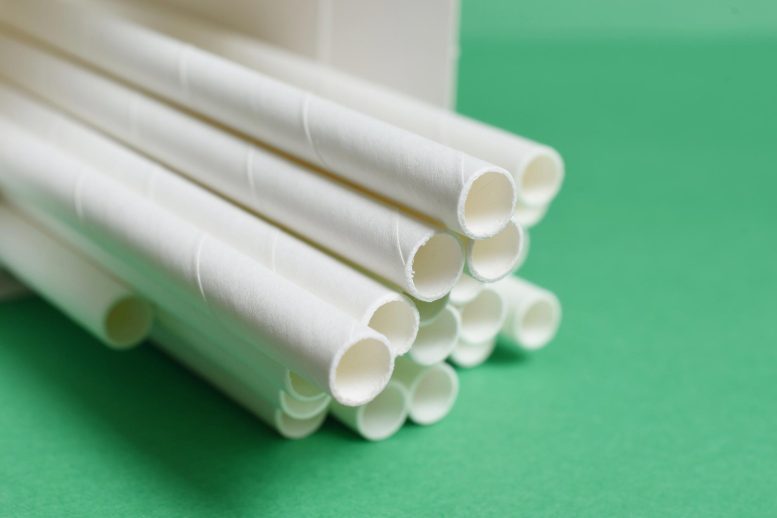
Long-lasting “forever chemicals,” which can cause damaging health issues, were found in 18 out of 20 brands of paper straws.
“Eco-friendly” paper drinking straws contain long-lasting and potentially toxic chemicals, a new study has concluded.
In the first analysis of its kind in Europe, and only the second in the world, Belgian researchers tested 39 brands of straws for the group of synthetic chemicals known as poly- and perfluoroalkyl substances (PFAS).
PFAS were found in the majority of the straws tested and were most common in those made from paper and bamboo, the study, published in the peer-reviewed journal Food Additives and Contaminants, found.
PFAS: Uses and Risks
PFAS are used to make everyday products, from outdoor clothing to non-stick pans, resistant to water, heat, and stains. They are, however, potentially harmful to people, wildlife, and the environment.
They break down very slowly over time and can persist over thousands of years in the environment, a property that has led to them being known as “forever chemicals.”
They have been associated with a number of health problems, including lower response to vaccines, lower birth weight, thyroid disease, increased cholesterol levels, liver damage, kidney cancer, and testicular cancer.
Straw Materials and Sustainability
“Straws made from plant-based materials, such as paper and bamboo, are often advertised as being more sustainable and eco-friendly than those made from plastic,” says researcher Dr. Thimo Groffen, an environmental scientist at the University of Antwerp, who is involved in this study.
“However, the presence of PFAS in these straws means that’s not necessarily true.”
A growing number of countries, including the UK and Belgium, have banned the sale of single-use plastic products, including drinking straws, and plant-based versions have become popular alternatives.
Study Methodology and Findings
After a recent study found PFAS in plant-based drinking straws in the US, Dr. Groffen and colleagues wanted to find out if the same was true of those on sale in Belgium.
To explore this further, the research team purchased 39 different brands of drinking straws made from five materials – paper, bamboo, glass, stainless steel, and plastic.
The straws, which were mainly obtained from shops, supermarkets, and fast-food restaurants, then underwent two rounds of testing for PFAS.
The majority of the brands (27/39, 69%) contained PFAS, with 18 different PFAS detected in total.
The paper straws were most likely to contain PFAS, with the chemicals detected in 18/20 (90%) of the brands tested. PFAS were also detected in 4/5 (80%) brands of bamboo straw, 3/4 (75%) of the plastic straw brands, and 2/5 (40%) brands of glass straw. They were not detected in any of the five types of steel straw tested.
The most commonly found PFAS, perfluorooctanoic acid (PFOA), has been banned globally since 2020.
Also detected were trifluoroacetic acid (TFA) and trifluoromethanesulfonic acid (TFMS), “ultra-short chain” PFAS which are highly water-soluble and so might leach out of straws into drinks.
The PFAS concentrations were low and, bearing in mind that most people tend to only use straws occasionally, pose a limited risk to human health. However, PFAS can remain in the body for many years and concentrations can build up over time.
“Small amounts of PFAS, while not harmful in themselves, can add to the chemical load already present in the body,” says Dr. Groffen.
Conclusions and Recommendations
It isn’t known whether the PFAS were added to the straws by the manufacturers for waterproofing or whether were the result of contamination. Potential sources of contamination include the soil the plant-based materials were grown in and the water used in the manufacturing process.
However, the presence of the chemicals in almost every brand of paper straw means it is likely that it was, in some cases, being used as a water-repellent coating, say the researchers.
The study’s other limitations include not looking at whether the PFAS would leach out of the straws into liquids.
Dr. Groffen concludes: “The presence of PFAS in paper and bamboo straws shows they are not necessarily biodegradable.
“We did not detect any PFAS in stainless steel straws, so I would advise consumers to use this type of straw – or just avoid using straws at all.”
Reference: “Assessment of poly- and perfluoroalkyl substances (PFAS) in commercially available drinking straws using targeted and suspect screening approaches” by Pauline Boisacq, Maarten De Keuster, Els Prinsen, Yunsun Jeong, Lieven Bervoets, Marcel Eens, Adrian Covaci, Tim Willems and Thimo Groffen, 24 August 2023, Food Additives & Contaminants.
DOI: 10.1080/19440049.2023.2240908
Never miss a breakthrough: Join the SciTechDaily newsletter.
Follow us on Google and Google News.
2 Comments
Brush your teeth and it slowly comes off throughout the day and you swallow it. Shouldn’t even be in toothpaste nor you in a hospital
“3/4 brands of plastic” and “4/5 of bamboo” so from this it’s concluded that bamboo has more?? What a good example of misleading statistics and a poorly written article.