
“Superbugs” present in chicken, turkey, beef and pork, Spanish study finds.
Multidrug-resistant E. coli were found in 40% of supermarket meat samples tested in a Spanish study. E. coli strains capable of causing severe infections in people were also highly prevalent, this year’s European Congress of Clinical Microbiology & Infectious Diseases (ECCMID 2023, Copenhagen, April 15-18) will hear.
Antibiotic resistance is reaching dangerously high levels around the world. Drug-resistant infections kill an estimated 700,000 people a year globally and, with the figure projected to rise to 10 million by 2050 if no action is taken, the World Health Organization (WHO) classes antibiotic resistance as one of the greatest public health threats facing humanity.
Multidrug-resistant bacteria can spread from animals to humans through the food chain but, due to commercial sensitivities, data on levels of antibiotic-resistant bugs in food is not made widely available.
To find out more, Dr Azucena Mora Gutiérrez and Dr Vanesa García Menéndez, of the University of Santiago de Compostela-Lugo, Lugo, Spain, together with colleagues from other research centres, designed a series of experiments to assess the levels of multidrug-resistant and extraintestinal pathogenic Enterobacteriaceae (Klebsiella pneumoniae, E. coli and other bacteria that can cause multidrug-resistant infections such as sepsis or urinary tract infections) in meat on sale in Spanish supermarkets.
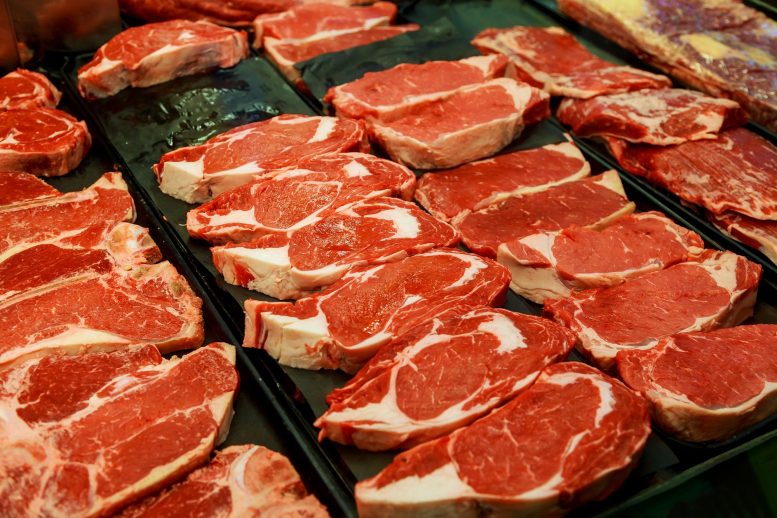
They analyzed 100 meat products (25 each of chicken, turkey, beef, and pork) chosen at random from supermarkets in Oviedo during 2020.
The majority (73%) of the meat products contained levels of E. coli that were within food safety limits.
Prevalence of Multidrug-Resistant and Pathogenic Bacteria
Despite this, almost half (49%) contained multidrug-resistant and/or potentially pathogenic E. coli. From those, 82 E. coli isolates were recovered and characterized. In addition, 12 K. pneumoniae isolates were recovered from 10 of the 100 meat products (7 chicken, 2 turkey, and 1 pork).
Forty of the 100 meat products contained multidrug-resistant E. coli (56 of the 82 E. coli characterized). These included E. coli that produced extended-spectrum beta-lactamases (ESBLs), enzymes that confer resistance to most beta-lactam antibiotics, including penicillins, cephalosporins, and the monobactam aztreonam.
The percentage of positive samples for the carriage of ESBL-producing E. coli per meat type was: 68% turkey, 56% chicken, 16% beef, and 12% pork. This higher presence of ESBL-producing E. coli strains in poultry compared to other types of meat is likely due to differences in production and slaughter.
Twenty-seven percent of the meat products contained potentially pathogenic extraintestinal E. coli (ExPEC). ExPEC possess genes that allow them to cause disease outside the gastrointestinal tract. ExPEC causes the vast majority of urinary tract infections (UTIs), is a leading cause of adult bacteremia (sepsis), and is the second most common cause of neonatal meningitis.
Six percent of the meat products contained uropathogenic (UPEC) E. coli – UPEC is part of the ExPEC group; these possess specific virulence traits that allow them to cause UTIs.
One percent of the meat products contained E. coli harboring the mcr-1 gene. This gene confers resistance to colistin, an antibiotic of last resort used to treat infections caused by bacteria resistant to all other antibiotics.
The study’s authors, who in a previous study reported high levels of bacteria that were potentially capable of causing severe human infections and/or multidrug resistance in chicken and turkey1, say that their latest research shows that consumers may also be exposed to these bacteria through beef and pork.
They are calling for regular assessment of levels of antibiotic-resistant bacteria, including ExPEC E. coli, in meat products.
Recommendations for Reducing Consumer Risk
Dr Mora adds: “Farm-to-fork interventions must be a priority to protect the consumer. For example, implementation of surveillance lab methods to allow further study of high-risk bacteria (in farm animals and meat) and their evolution due to the latest EU restriction programs on antibiotic use in veterinary medicine.
“Strategies at farm level, such as vaccines, to reduce the presence of specific multidrug-resistant and pathogenic bacteria in food-producing animals, which would reduce the meat carriage and consumer risk.
“The consumer plays a key role in food safety through proper food handling. Advice to consumers includes not breaking the cold chain from the supermarket to home, cooking meat thoroughly, storing it properly in the refrigerator, and disinfecting knives, chopping boards, and other cooking utensils used to prepare raw meat appropriately to avoid cross-contamination. With these measures, eating meat becomes a pleasure and zero risk.”
Reference: “Microbiological risk assessment of Turkey and chicken meat for consumer: Significant differences regarding multidrug resistance, mcr or presence of hybrid aEPEC/ExPEC pathotypes of E. coli” by Dafne Díaz-Jiménez, Isidro García-Meniño, Alexandra Herrera, Luz Lestón and Azucena Mora, 19 October 2020, Food Control.
DOI: 10.1016/j.foodcont.2020.107713
Never miss a breakthrough: Join the SciTechDaily newsletter.
Follow us on Google and Google News.
7 Comments
Read about the XL Foods scandal and deaths in Canada… you’ll find your culprit – the processing equipment and careless operators/sanitation!
Did any of the meats in these studies come from the United States??
This is VERY TROUBLING NEWS!
“This higher presence of ESBL-producing E. coli strains in poultry compared to other types of meat …”
This is not really a new finding. The consumer has long been warned about safely handling poultry. There are several reasons for thoroughly meat, pathogens are only one reason.
E.Coli is very common, as are its antibiotic-resistant strains now. The researchers could have found it by testing themselves. Still, Sam is right, the Spanish meat processing industry then needs to improve its processing equipment sanitation. The advice they give is wrong, as “With these (consumer sanitation) measures, eating meat becomes a pleasure and zero risk”, being that the kitchen isn’t a sanitary lab, but is that ever a Spanish thing to say.
They are Just Trying to scare people in to vegitarianism THOUGH US AMERICAN WE EAT BEEF AND PORK AND CHICKEN AND WE DRINK REAL MILK THATS FROM COWS
Yeah, all the samples *were* taken in Spain.
Yep, it’s just propaganda. Push back against the matrix and trust in Christ. Satan has no power over God’s children, in Jesus name! Amen.