
Researchers found water ice throughout a dusty debris disk circling the Sun-like star HD 181327.
We’ve long known that ice, frozen water, is common in our own solar system. It’s found on the moons of Jupiter, Saturn, Uranus, and Neptune, and has been spotted on comets, dwarf planets, and rocky objects drifting through the Kuiper Belt at the solar system’s edge. But for years, scientists could only guess whether water ice existed around other stars.
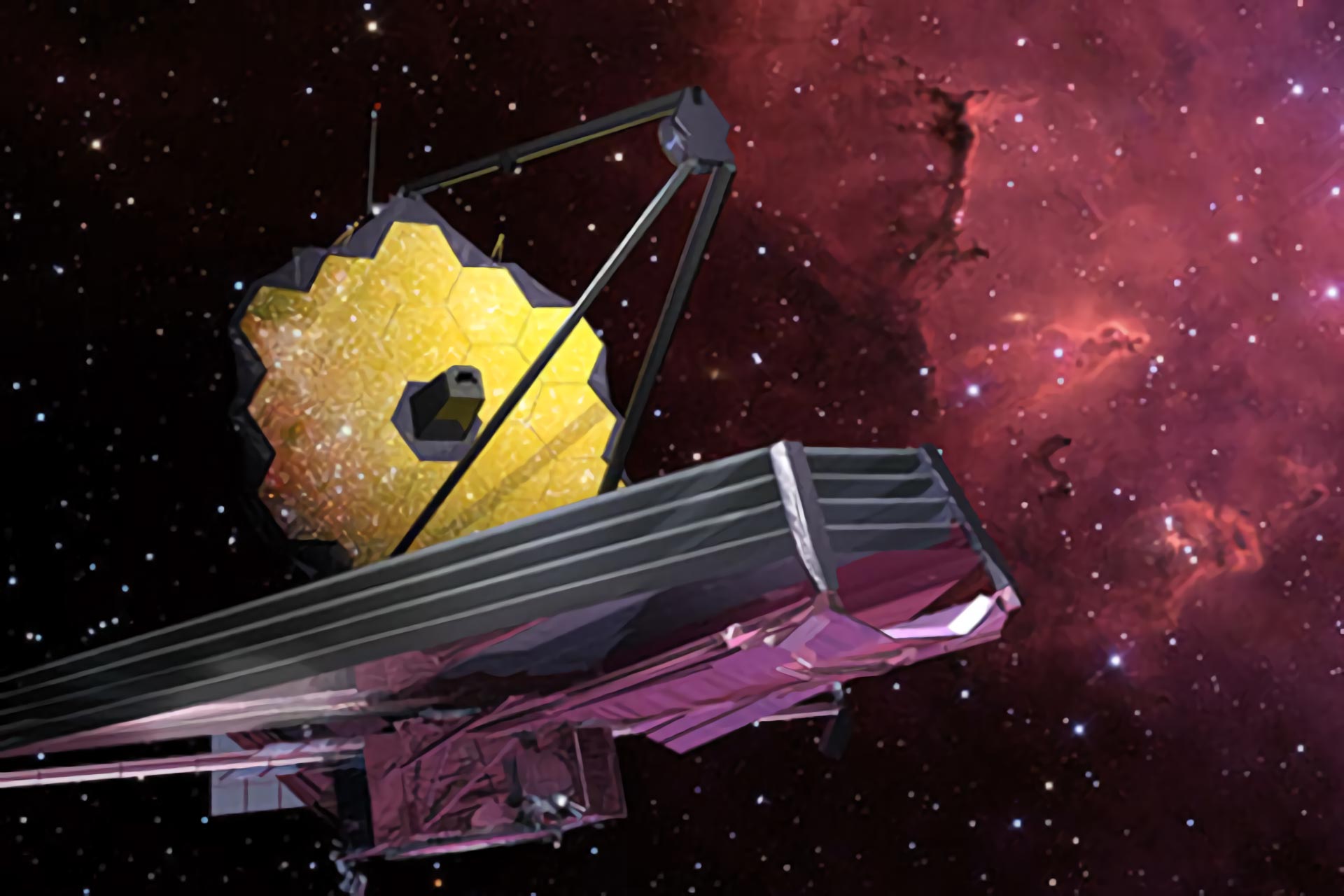
Now, thanks to the James Webb Space Telescope, there’s no more doubt. Using its ultra-sensitive Near-Infrared Spectrograph (NIRSpec), Webb has clearly detected water ice in a dusty ring of debris circling a young star called HD 181327.
This frozen water plays a major role in building giant planets and may even be delivered to rocky planets by icy comets, just as it may have been on Earth. With this discovery, scientists can now begin exploring how these icy building blocks shape the evolution of countless other planetary systems across the galaxy.

Another First: NASA Webb Identifies Frozen Water in Young Star System
Astronomers have long suspected that frozen water exists in other star systems. Clues came from detecting water vapor — the gas form of H2O — and from the abundance of ice in our own solar system. But until now, there was no direct proof of solid water orbiting distant stars.
That’s changed, thanks to NASA’s James Webb Space Telescope. Using its powerful spectrograph to analyze light from a dusty debris ring around a star 155 light-years away, scientists have confirmed the presence of crystalline water ice — solid water with a highly ordered structure, like the kind found in Saturn’s rings or in the icy Kuiper Belt.
This star, known as HD 181327, had shown hints of water ice back in 2008 with NASA’s earlier Spitzer Space Telescope. But Webb’s new observations remove all doubt.
Crystals in the Cosmos
“Webb unambiguously detected not just water ice, but crystalline water ice, which is also found in locations like Saturn’s rings and icy bodies in our solar system’s Kuiper Belt,” said Chen Xie, the lead author of the new paper and an assistant research scientist at Johns Hopkins University in Baltimore, Maryland.
The icy particles Webb found aren’t just floating alone — they’re mixed with fine dust, forming what scientists call “dirty snowballs.” These tiny frozen fragments are scattered throughout the debris disk and help us understand how planets, and possibly life-sustaining worlds, might begin to take shape elsewhere in the universe.
The findings were published in the journal Nature.
Long-Awaited Discovery
Astronomers have been waiting for this definitive data for decades. “When I was a graduate student 25 years ago, my advisor told me there should be ice in debris disks, but prior to Webb, we didn’t have instruments sensitive enough to make these observations,” said Christine Chen, a co-author and an astronomer at the Space Telescope Science Institute in Baltimore. “What’s most striking is that this data looks similar to the telescope’s other recent observations of Kuiper Belt objects in our own solar system.”
Water ice is a vital ingredient in disks around young stars — it heavily influences the formation of giant planets and may also be delivered by small bodies like comets and asteroids to fully formed rocky planets. Now that researchers have detected water ice with Webb, they have opened the door for all researchers to study how these processes play out in new ways in many other planetary systems.
Rocks, Dust, Ice Rushing Around
The star, cataloged HD 181327, is significantly younger than our Sun. It’s estimated to be 23 million years old, compared to the Sun’s more mature 4.6 billion years. The star is slightly more massive than the Sun, and it’s hotter, which led to the formation of a slightly larger system around it.
Webb’s observations confirm a significant gap between the star and its debris disk — a wide area that is free of dust. Farther out, its debris disk is similar to our solar system’s Kuiper Belt, where dwarf planets, comets, and other bits of ice and rock are found (and sometimes collide with one another). Billions of years ago, our Kuiper Belt was likely similar to this star’s debris disk.
“HD 181327 is a very active system,” Chen said. “There are regular, ongoing collisions in its debris disk. When those icy bodies collide, they release tiny particles of dusty water ice that are perfectly sized for Webb to detect.”
Frozen Water — Almost Everywhere
Water ice isn’t spread evenly throughout this system. The majority is found where it’s coldest and farthest from the star. “The outer area of the debris disk consists of over 20% water ice,” Xie said.
The closer in the researchers looked, the less water ice they found. Toward the middle of the debris disk, Webb detected about 8% water ice. Here, it’s likely that frozen water particles are produced slightly faster than they are destroyed. In the area of the debris disk closest to the star, Webb detected almost none. It’s likely that the star’s ultraviolet light vaporizes the closest specks of water ice. It’s also possible that rocks known as planetesimals have “locked up” frozen water in their interiors, which Webb can’t detect.
From Dust to Planets
This team and many more researchers will continue to search for — and study — water ice in debris disks and actively forming planetary systems throughout our Milky Way galaxy. “The presence of water ice helps facilitate planet formation,” Xie said. “Icy materials may also ultimately be ‘delivered’ to terrestrial planets that may form over a couple of hundred million years in systems like this.”
The researchers observed HD 181327 with Webb’s NIRSpec (Near-Infrared Spectrograph), which is super-sensitive to extremely faint dust particles that can only be detected from space.
Reference: “Water ice in the debris disk around HD 181327” by Chen Xie, Christine H. Chen, Carey M. Lisse, Dean C. Hines, Tracy Beck, Sarah K. Betti, Noemí Pinilla-Alonso, Carl Ingebretsen, Kadin Worthen, András Gáspár, Schuyler G. Wolff, Bryce T. Bolin, Laurent Pueyo, Marshall D. Perrin, John A. Stansberry and Jarron M. Leisenring, 14 May 2025, Nature.
DOI: 10.1038/s41586-025-08920-4
The James Webb Space Telescope (Webb) is the world’s leading space science observatory, designed to explore the cosmos like never before. As a joint mission between NASA, the European Space Agency (ESA), and the Canadian Space Agency (CSA), Webb is tackling some of the most profound astronomical questions of our time. It is uncovering secrets within our own solar system, studying distant exoplanets orbiting other stars, and investigating the earliest galaxies and cosmic structures to better understand the origins of the universe—and our place in it. With its powerful infrared capabilities, Webb is redefining what we know about space and time.
Never miss a breakthrough: Join the SciTechDaily newsletter.
Follow us on Google and Google News.
1 Comment
I totally love all this space exploration it’s very interesting I would love to find out all the stuff that you see very interesting stuff that cannot be published understood but wow what amazing job you have