
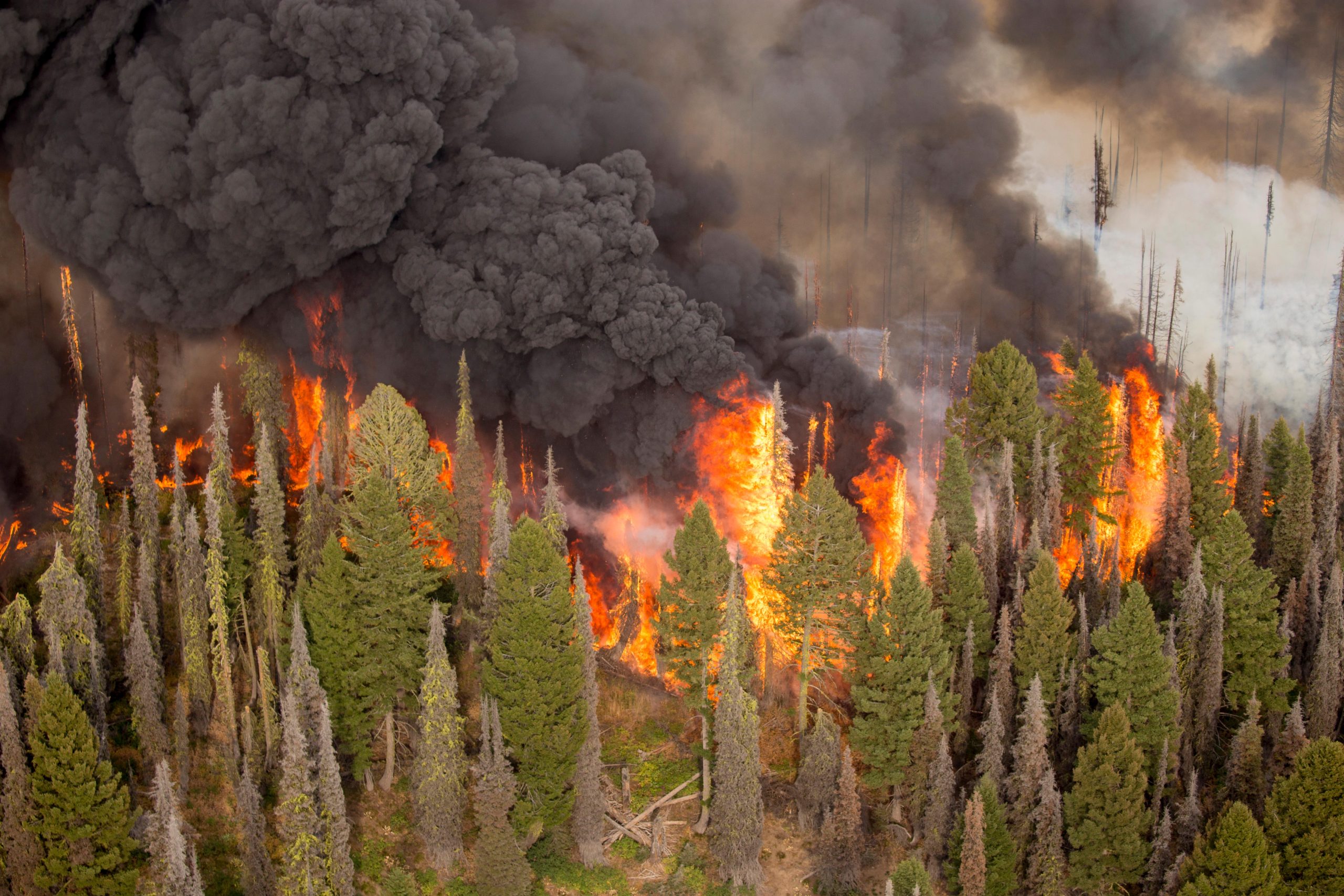
Modern wildfires are less frequent but more severe due to fire suppression and fuel buildup. Scientists urge prescribed burns and fuel treatments to reduce wildfire risks.
Fewer wildfires occur in North American forests today than in past centuries, but this decline has increased the risk of more intense wildfires, according to a study published in Nature Communications. While it may seem unexpected, frequent low-intensity surface fires help maintain forest health by naturally reducing fuel buildup over large areas.
Researchers from the Cooperative Institute for Research in Environmental Sciences (CIRES) at the University of Colorado Boulder and the U.S. Forest Service’s Rocky Mountain Research Station compared wildfire frequency across two periods: 1600 to 1880 and 1984 to 2022. Using data from 1,850 tree-ring records in historically burned areas, they assessed past fire activity and compared it with modern fire perimeter maps from Canada and the United States.
The findings show modern-day fires are much less frequent than they were in past centuries, despite recent record-breaking fire years, such as 2020. The results also reveal that much of the continent is in a substantial “fire deficit,” experiencing about 20 percent as much fire as in the past. On average, larger areas of land burned from fires each year before 1880 compared to 1984-2022. This deficit allows fuel to build up over time, creating conditions for more severe fires.
The Consequences of Reduced Fire Activity
“It’s a harbinger for far more bad fires to come unless we can get more beneficial management fires on the landscape,” said Chris Guiterman, a CIRES research scientist and member of NOAA’s National Centers for Environmental Information (NCEI) paleoclimate team.
Even though a much larger portion of the forest burned in fires in the 18th and 19th centuries, those fires were less devastating: the trees that recorded those fires survived and continued to grow. Modern fires, in contrast, are so severe they often leave forests barren and speckled with dead trees.

According to the researchers, the differences between historical and contemporary fires likely reflect the changed relationship between fire, forests, and people across much of the U.S. and Canada. Before 1880, fires burned more frequently but less severely across many forests due to traditional burning practices by Indigenous peoples and lightning-sparked fires. These fires often had a stabilizing effect on the forests by clearing out brush and debris—lowering the amount of flammable forest fuels available.
The disruption of traditional burning practices, widespread livestock grazing, and later suppression of human and lightning-ignited fires have prevented beneficial forest fires from igniting across the U.S over the past century. This has destabilized forests that evolved with and are adapted to fire. Today’s higher-severity wildfires are more likely to harm people and communities while transforming forests into other vegetation types such as shrublands.
Managing Wildfire Risks for the Future
This study complements recent research demonstrating that historical fires burned less severely and coincided with drought episodes over large regions.
Wildfires are inevitable in forests across the Western U.S. There is an ever-growing body of science around practices to help reduce the probability that these fires will have adverse impacts on forests and humans. Previous research shows that activities such as mechanical fuel treatments and prescribed burning are effective ways to reduce fire impacts, and are in line with both Indigenous management practices and long-term ecological processes.
“It’s heartbreaking to witness how recent wildfires are devastating people, communities, and forests,” said Sean Parks, research scientist with the U.S. Forest Service Rocky Mountain Research Station, and lead author of the study. “Wildfires are inevitable, so preparing our forests for these events through fuel reduction treatments and prescribed fire will reduce their impacts to communities and forests.”
Reference: “A fire deficit persists across diverse North American forests despite recent increases in area burned” by Sean A. Parks, Christopher H. Guiterman, Ellis Q. Margolis, Margaret Lonergan, Ellen Whitman, John T. Abatzoglou, Donald A. Falk, James D. Johnston, Lori D. Daniels, Charles W. Lafon, Rachel A. Loehman, Kurt F. Kipfmueller, Cameron E. Naficy, Marc-André Parisien, Jeanne Portier, Michael C. Stambaugh, A. Park Williams, Andreas P. Wion and Larissa L. Yocom, 10 February 2025, Nature Communications.
DOI: 10.1038/s41467-025-56333-8
USGS Powell Center for Analysis and Synthesis funded this research.
Never miss a breakthrough: Join the SciTechDaily newsletter.
Follow us on Google and Google News.
2 Comments
…and the so-called “Greens” continue to oppose sane measures re: this, so they can blame the fires on “climate change”.
Wouldn’t one expect wildfires to become MORE frequent if global warming were responsible? Whereas, if the problem was buildup of fuel, the problem would be bigger and more severe.