
Close Menu
    Facebook X (Twitter) Instagram
    SciTechDaily
    • Biology
    • Chemistry
    • Earth
    • Health
    • Physics
    • Science
    • Space
    • Technology
    Facebook X (Twitter) Pinterest YouTube RSS
    SciTechDaily
    Home»Earth»What Caused the World’s Fourth-Largest Proglacial Lake To Suddenly Drain? Scientists Finally Have an Answer
    Earth

    What Caused the World’s Fourth-Largest Proglacial Lake To Suddenly Drain? Scientists Finally Have an Answer

    By Hokkaido UniversityNovember 2, 20222 Comments4 Mins Read
    Facebook Twitter Pinterest Telegram LinkedIn WhatsApp Email Reddit
    Share
    Facebook Twitter LinkedIn Pinterest Telegram Email Reddit
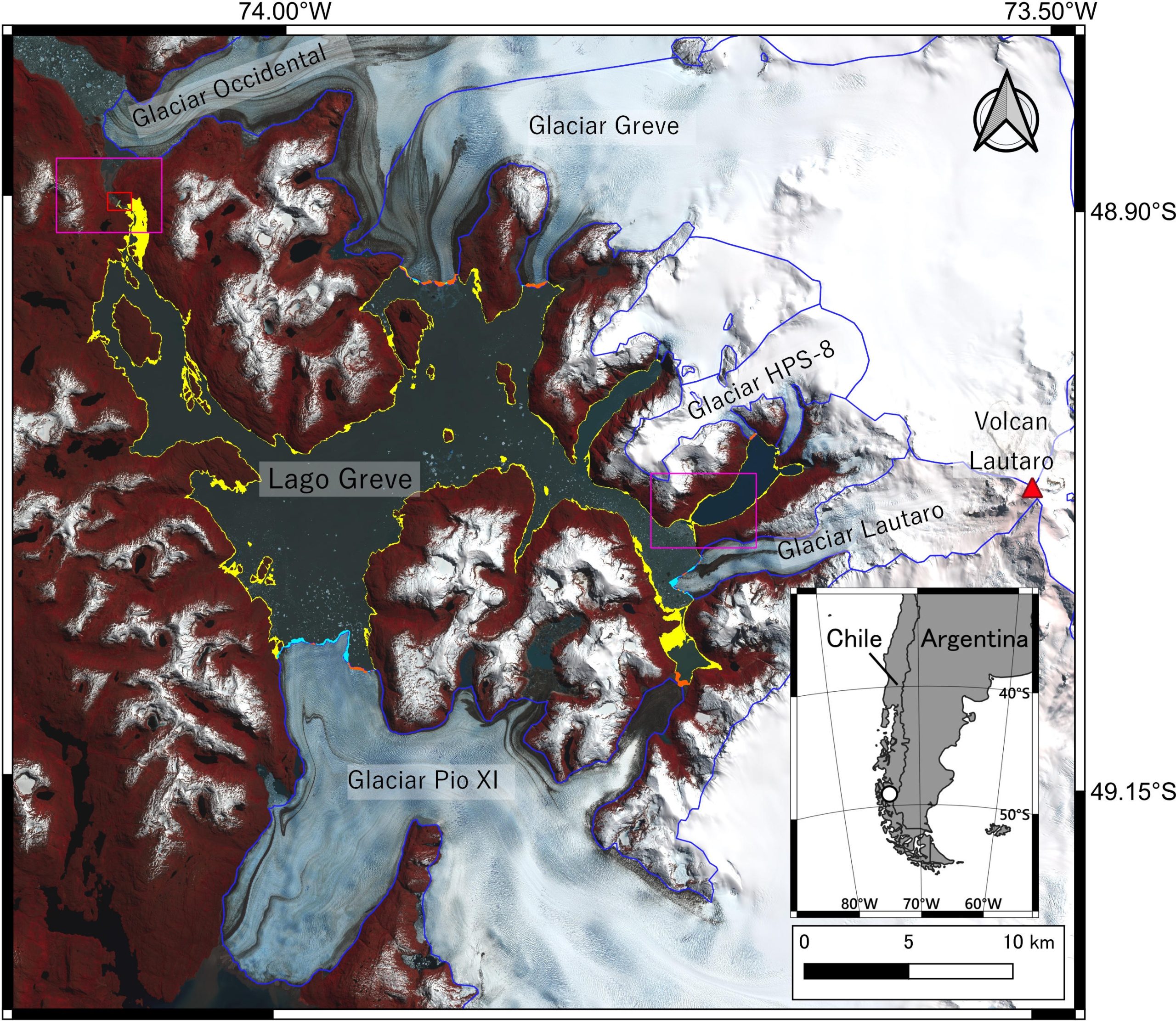
    Satellite Image of Lago Greve, Chile, and Surrounding Landmarks
    Satellite image of Lago Greve (Greve Lake), Chile, and surrounding landmarks. The area which turned from lake to land surface from 8 April to 1st November 2020 is highlighted in yellow. Areas highlighted in orange and cyan indicate the advance and retreat of glacier-calving fronts during the same period. The red box (top right) indicates the location of the lake outlet. Credit: Shuntaro Hata, Shin Sugiyama, Kosuke Heki, Communications Earth & Environment, August 26, 2022

    The massive proglacial lake drainage in remote Patagonia was captured by satellites.

    Only satellites were around when the fourth-largest proglacial lake in the world suddenly drained in 2020. Researchers from Hokkaido University have recently uncovered the event and examined its source, the collapse of a sediment bump near the lake’s outlet.

    Proglacial lakes are created when meltwater from retreating glaciers is held in place by ice or a moraine that was left behind by the same or another glacier. A warmer climate contributes to the recent worldwide rise in the number and volume of these lakes, and they also contribute to glaciers melting more quickly.

    These lakes may, however, suddenly drain if the dams keeping them in place fail for a number of different causes. A catastrophic occurrence like this not only endangers human safety directly, but it also has an impact on ecosystems downstream owing to the sudden influx of a lot of fresh water. Therefore, it is crucial to keep an eye on proglacial lakes and research how they interact with their surroundings. Unfortunately, given their often remote location, this is challenging.
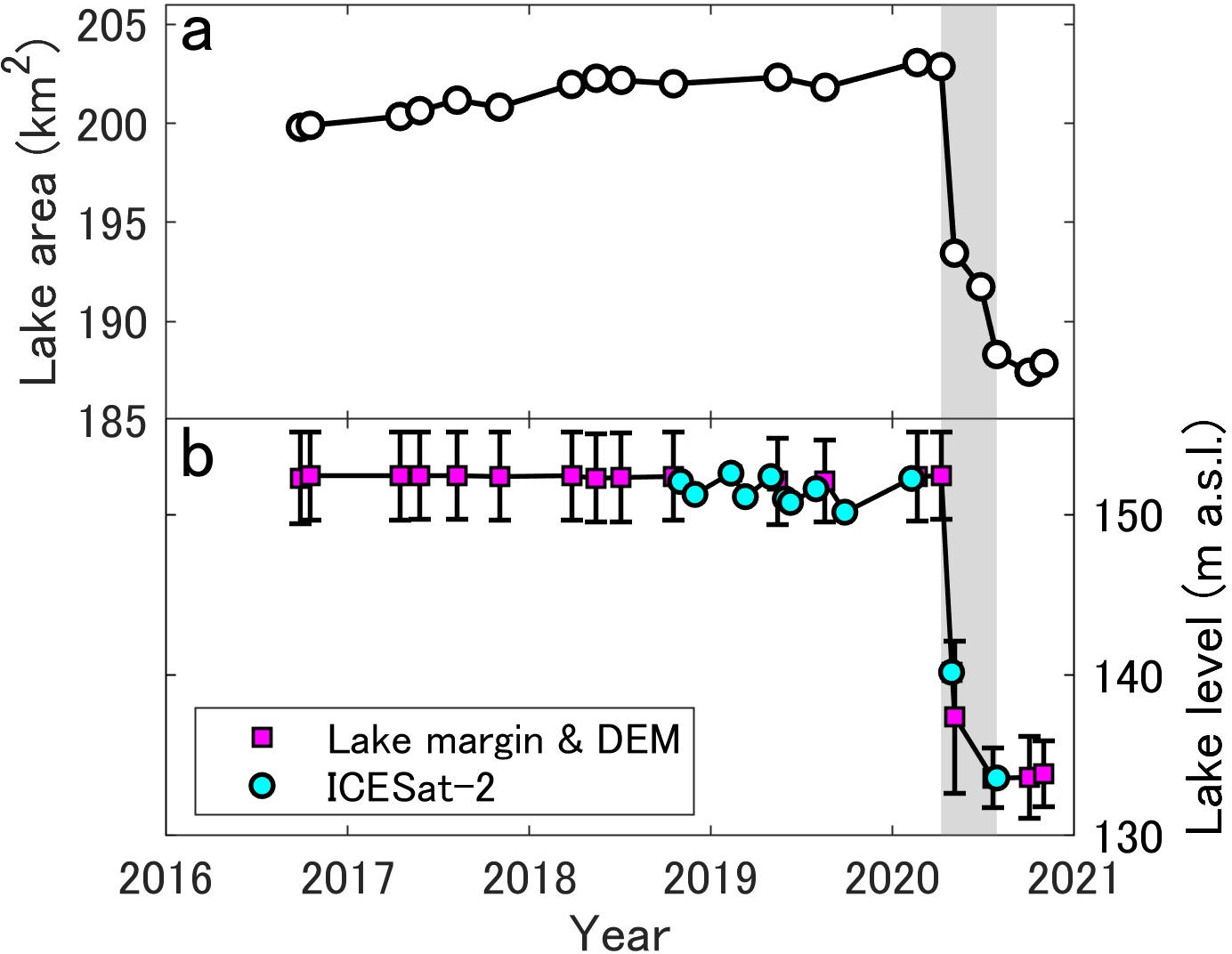
    Change in Area and Level of Lago Greve
    The lake area (top) and lake level (bottom) dropped precipitously within the span of 4 months in 2020. Credit: Shuntaro Hata, Shin Sugiyama, Kosuke Heki, Communications Earth & Environment, August 26, 2022.

    While researching glacier fluctuations in Chilean Patagonia using satellite pictures, Shin Sugiyama of Hokkaido University and doctoral student Shuntaro Hata discovered that the proglacial lake Lago Greve had significantly shrunk between April and July of 2020.

    In their publication of these findings in the journal Communications Earth & Environment, they add further analysis of the available data confirming that the lake’s water level dropped by 18 meters, which translates to a loss of 3.7 cubic kilometers (or, giga-tonnes) of water—the largest such event observed by a satellite to date. This massive loss of water even impacted the Earth’s gravitational field, as recorded by GRACE satellites, although the quantitative data from these satellites is inconsistent with the actual volume of water drained.

    Finally, careful analysis of the satellite imagery and topographic data from before and after the event enabled them to deduce that the cause of the release probably was the collapse of a sediment bump close to the outlet of the lake.
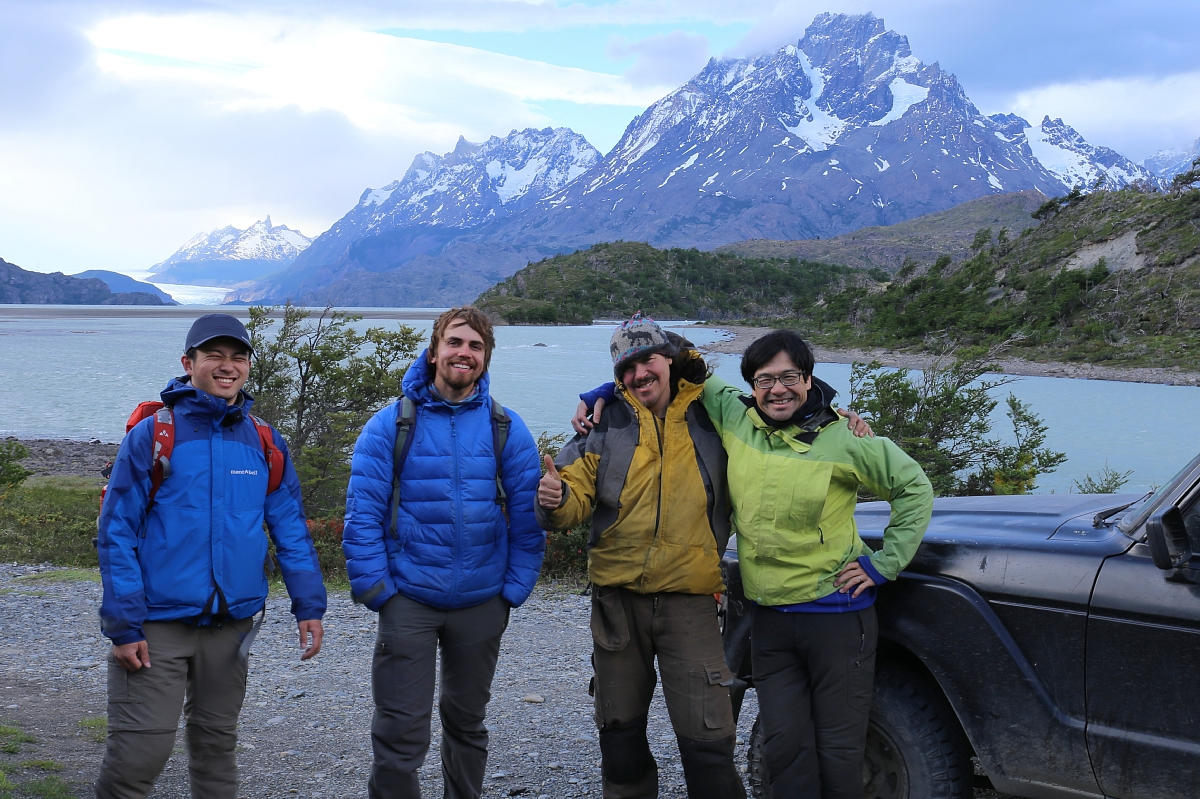
    Shuntaro Hata and Shin Sugiyama With Colleagues
    Shuntaro Hata (left) and Shin Sugiyama (right), authors of the study, with Matthias Scheiter (center left) and Rodrigo Traub (center right). Credit: Shin Sugiyama.

    This study opens up many interesting aspects. For one, it points the way for future research on glacial dynamics. Sugiyama explains: “These results provide detailed information on large-scale glacial lake outburst floods, which occur very rarely, and are important for understanding disasters caused by glacial lake failures.” It also highlights the possibility and the current limitations of using GRACE satellite data for observing such events.

    The researchers suggest: “The importance of GRACE measurements in studying such events would be increased if the calculation of the gravity field readings is adapted for localized events.” And finally, the study provides concrete data that can be used to better understand the dynamics of the interactions between glaciers and the lakes they form, as “the observed changes in the water level of glacial lakes can be used to predict changes in the glacier inflow into the lakes.”

    Reference: “Abrupt drainage of Lago Greve, a large proglacial lake in Chilean Patagonia, observed by satellite in 2020” by Shuntaro Hata, Shin Sugiyama, and Kosuke Heki, 26 August 2022, Communications Earth & Environment.
    DOI: 10.1038/s43247-022-00531-5

    Never miss a breakthrough: Join the SciTechDaily newsletter.
    Follow us on Google and Google News.

    Climatology Glacier Hokkaido University Lakes
    Share. Facebook Twitter Pinterest LinkedIn Email Reddit

    Related Articles

    Beneath the Ice: Hidden Currents Driving Antarctica’s Rapid Melt

    Million-Year-Old Arctic Sedimentary Record Sheds Light on Climate Mystery That Has Puzzled Scientists

    Melting of the Antarctic Ice Sheet Could Cause 5-Meter Rise in Sea Levels by the End of the Millennium

    Complex Behavior of a Turbulent Plume at the Calving Front of a Greenlandic Glacier

    Himalayan Glaciers Declining Less Rapidly Than Previously Thought

    Third Pole Glacial Measuring Stations Will Give Monitor Glacier Health in Tibet

    Fossil Fuel Emissions, Organic Carbon and Alaska’s Glaciers

    Rapidly Retreating Glacial Ice Leaves Species Threatened

    Research Shows Roughly 150 Billion Tons of Ice Lost Annually

    2 Comments

    1. Clyde Spencer on November 2, 2022 9:05 am

      All lakes are ephemeral features on a geological time scale. For some interesting reading on the impact of the release of glacial lakes, search online for “Channeled Scablands.”

      Reply
    2. JN on January 18, 2024 3:12 am

      Looking at the geography of area it seems like the lake drains not close to the Brüggen Glacier which blocks it to the south but rather by a waterfall over a sill to the north. My guess would be that you had some kind of collapse at the waterfall or perhaps it just eroded down to a much weaker rock layer which greatly speeded up erosion levels rather than water breaching the Brüggen glacier.

      Reply
    Leave A Reply Cancel Reply

    • Facebook
    • Twitter
    • Pinterest
    • YouTube

    Don't Miss a Discovery

    Subscribe for the Latest in Science & Tech!

    Trending News

    Millions Take These IBS Drugs, But a New Study Finds Serious Risks

    Scientists Unlock Hidden Secrets of 2,300-Year-Old Mummies Using Cutting-Edge CT Scanner

    Bread Might Be Making You Gain Weight Even Without Eating More Calories

    Scientists Discover Massive Magma Reservoir Beneath Tuscany

    Europe’s Most Active Volcano Just Got Stranger – Here’s Why Scientists Are Rethinking It

    Alzheimer’s Symptoms May Start Outside the Brain, Study Finds

    Millions Take This Popular Supplement – Scientists Discover a Concerning Link to Heart Failure

    The Universe Is Expanding Too Fast and Scientists Can’t Explain Why

    Follow SciTechDaily
    • Facebook
    • Twitter
    • YouTube
    • Pinterest
    • Newsletter
    • RSS
    SciTech News
    • Biology News
    • Chemistry News
    • Earth News
    • Health News
    • Physics News
    • Science News
    • Space News
    • Technology News
    Recent Posts
    • Simple Blood Test May Predict Alzheimer’s Years Before Brain Scans Show Signs
    • Scientists Say Adding This Unusual Seafood to Your Diet Could Reverse Signs of Aging
    • U.S. Waste Holds $5.7 Billion Worth of Crop Nutrients
    • Scientists Say a Hidden Structure May Exist Inside Earth’s Core
    • Doctors Surprised by the Power of a Simple Drug Against Colon Cancer
    Copyright © 1998 - 2026 SciTechDaily. All Rights Reserved.
    • Science News
    • About
    • Contact
    • Editorial Board
    • Privacy Policy
    • Terms of Use

    Type above and press Enter to search. Press Esc to cancel.