
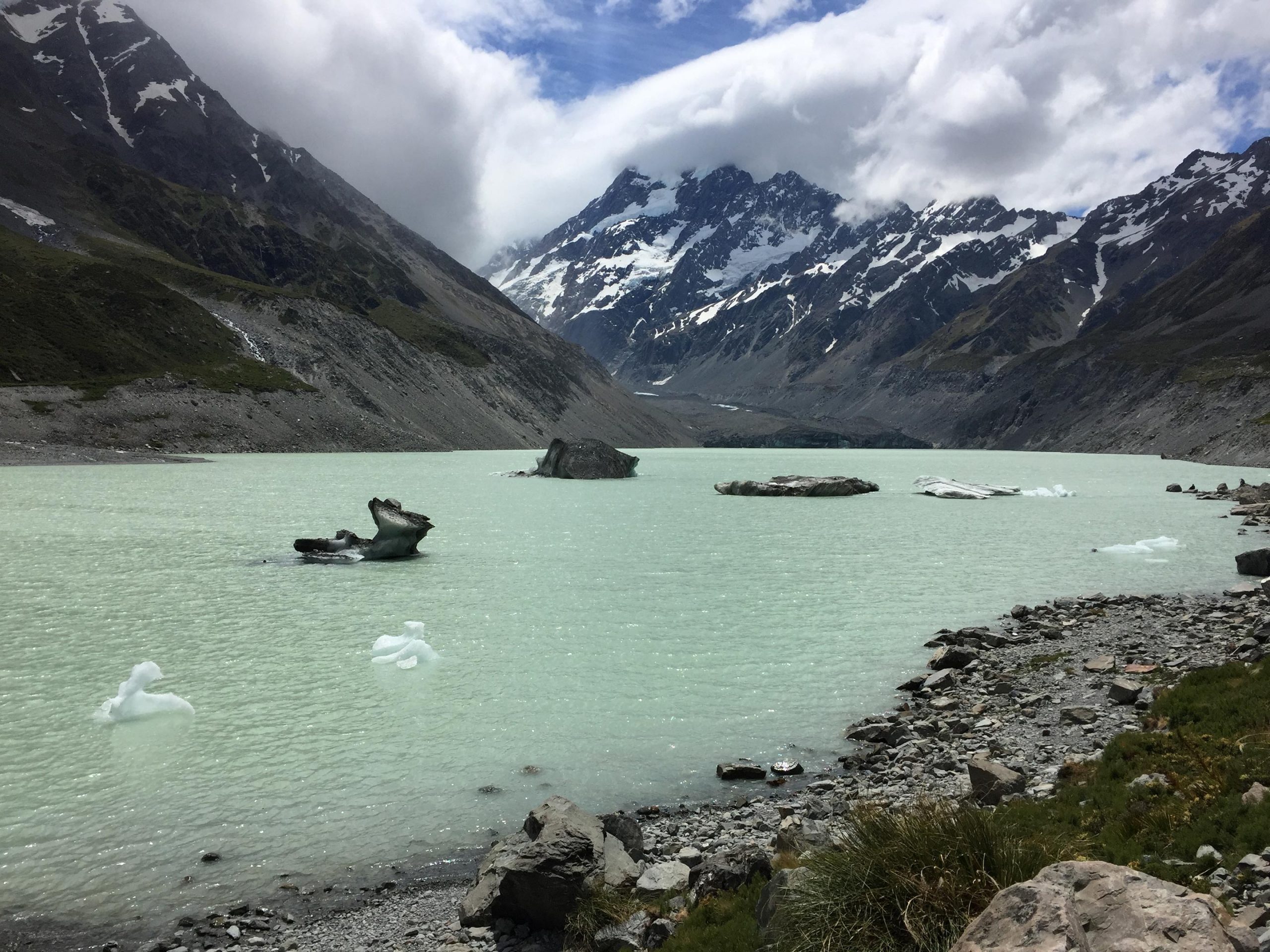
Meltwater lakes that form at glacier margins cause ice to recede much further and faster compared to glaciers that terminate on land, according to a new study. But the effects of these glacial lakes are not represented in current ice loss models, warn the study authors.
Therefore, estimates of recession rates and ice mass loss from lake-terminating glaciers in the coming decades are likely to be under-estimated.
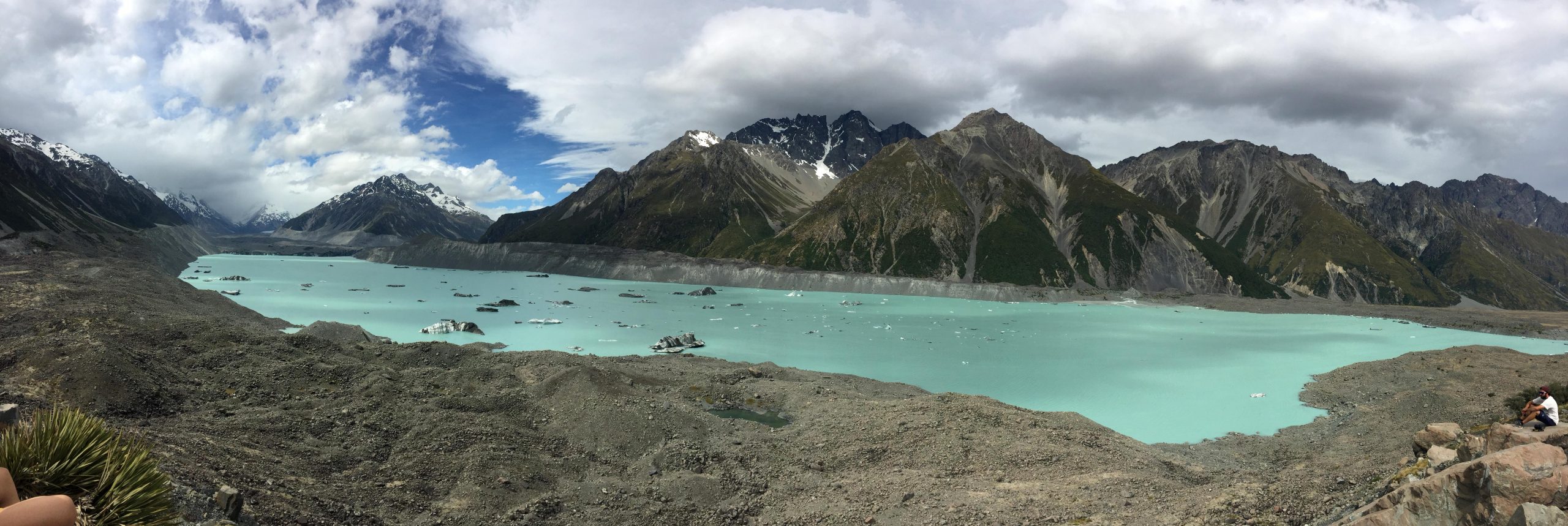
Many mountain glaciers now terminate in such lakes, formed as meltwater becomes trapped behind ridges of glacier debris. They are known as proglacial lakes. Climate change has increased glacier melt worldwide and this in turn has led to a dramatic increase in the size and number of proglacial lakes. But the effects of proglacial lakes on the rates of deglaciation and on glacier behavior have previously been poorly understood.
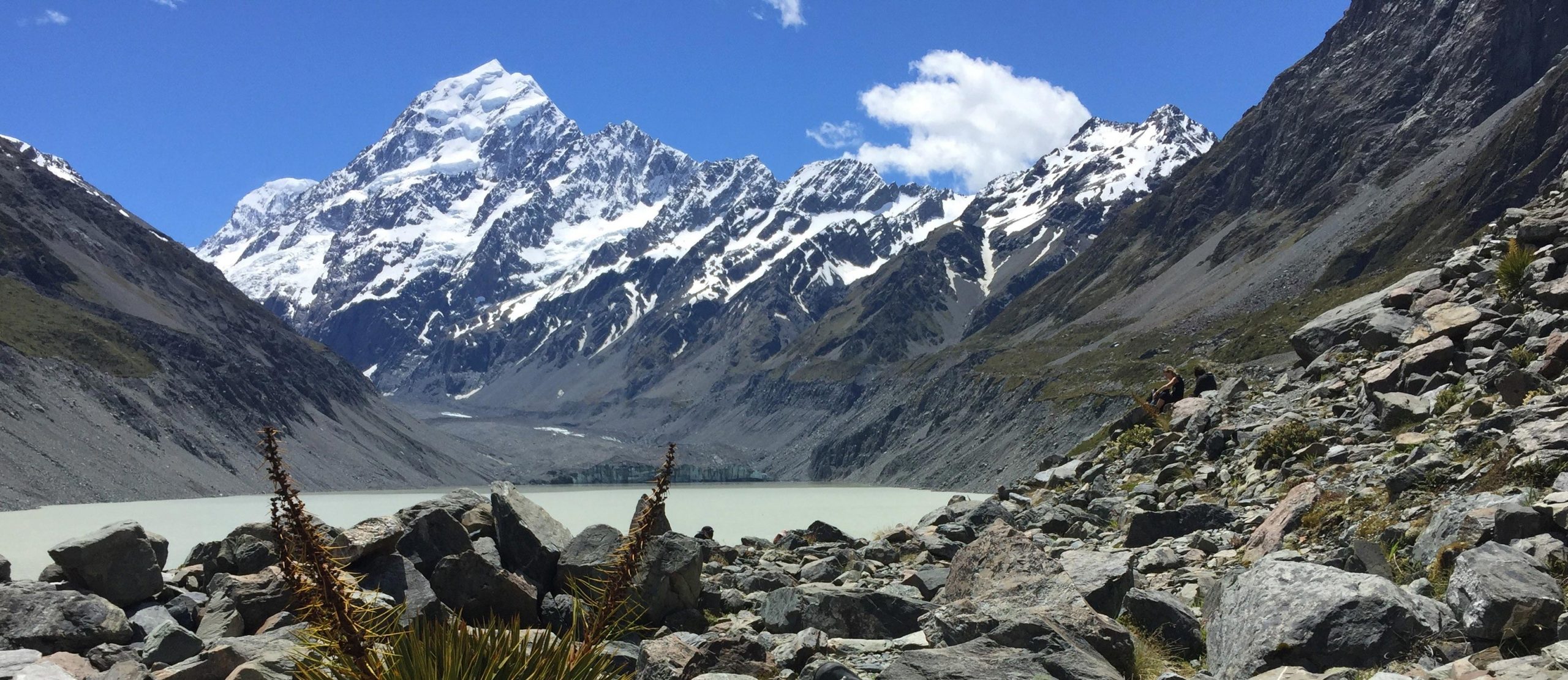
Now, an international team of researchers, led by the University of Leeds, has quantified for the first time the influence of proglacial lakes on mountain glaciers using computer simulations. They found that the presence of a proglacial lake causes a glacier to recede more than four times further and accelerate ice flow by up to eight times when compared to the same glacier terminating on land under the same climate.
The findings, published today (October 9, 2020) in the journal Geophysical Research Letters, show that a land-terminating glacier took 1000 years to succumb to the same amount of recession as a lake-terminating glacier experienced in 100 years.
Study lead author Dr. Jenna Sutherland undertook this research while a PhD candidate in the School of Geography at Leeds. She said: “An ice cube in a bowl of water is going to melt much more quickly than an ice cube sitting on a table, and the effect proglacial lakes have on glacier ice is roughly the same.
“The simulations show that the influence of a proglacial lake on a glacier predominantly takes place over decades to centuries rather than over millennia, meaning the glacier recedes much faster than it ever could from climatic changes alone.”
Study co-author Dr. Jonathan Carrivick, a senior lecturer in geomorphology at Leeds, said: “Our findings suggest that simulations of past, contemporary or future glaciers ignore the effects of ice-contact lakes and will likely mis-represent the timing and rate of recession, especially the changes to the timing and rate that will occur once a proglacial lake forms.
“These effects need to be included in all future models and simulations if we are to have an accurate global picture of glacial ice loss.”
The team used the BISICLES ice-flow model, to analyze the effects of a proglacial on the Pukaki Glacier, New Zealand, during recession from the end of the last ice age.
Study co-author James Shulmeister from the University of Canterbury, New Zealand said: “While this study focussed on New Zealand, proglacial lakes are prevalent during glacial retreat worldwide and this paper should therefore be of global interest and importance.”
In addition, he noted: “This study is also critical because the timing of ice retreat is often used to determine the synchrony or lack thereof of in climate events globally. Major inferences have been made about the roles of phenomena like oceanic circulation in affecting the global climate system from glacial retreat timings. If the timings are wrong, the relationship between these processes may need to be re-examined.”
Reference: “Proglacial Lakes Control Glacier Geometry and Behavior During Recession” by J. L. Sutherland, J. L. Carrivick, N. Gandy, J. Shulmeister, D. J. Quincey and S. L. Cornford, 21 September 2020, Geophysical Research Letters.
DOI: 10.1029/2020GL088865
Never miss a breakthrough: Join the SciTechDaily newsletter.
Follow us on Google and Google News.
2 Comments
“Climate change has increased glacier melt worldwide and this in turn has led to a dramatic increase in the size and number of proglacial lakes.” “Dramatic Increase” compared to when? The current rate of melting pales in comparison to the first meltwater pulse at the end of the last glaciation. Probably other interglacial warming events, such as the Holocene Climatic Optimum, similarly exceeded current rates. A lot of superlatives without justification!
https://en.wikipedia.org/wiki/Holocene_climatic_optimum
“… using computer simulations.” Computer simulations can be powerful tools in understanding complex, dynamic systems. However, they are rarely vetted, and then usually poorly. One needs to understand their limitations and the unstated assumptions.
“An ice cube in a bowl of water is going to melt much more quickly than an ice cube sitting on a table, …” The obvious caveat here is, What is the temperature of the water and what is the temperature of the air?” If identical, then the cube in water will melt faster because water conducts heat better. However, if the air temperature is much higher on the table, the cube on it will probably melt faster. What is critical is if the temperature difference is high enough to compensate for the difference in thermal conductivity. Note that the pro-glacial lakes (typically just above freezing) cool the air around the glacier. In the absence of the water, the air temperatures would be higher. It isn’t a simple problem, involving also such things as windiness and cloudiness.
“… during recession from the end of the last ice age.” That should read “last glaciation.” We are still in an ice age, currently experiencing what is called an interglacial.
The quality of research being pumped our, particularly with respect to so-called climate change, leaves a lot to be desired.
For the record: there is no “Pukaki Glacier”. The two glacial lakes shown in this article are from the Hooker and Tasman glaciers and flow into Lake Pukaki.