
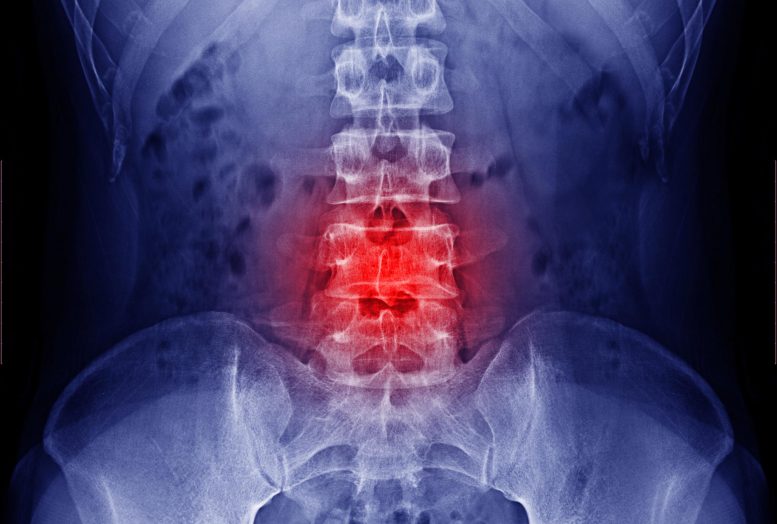
Medication should be used in conjunction with physical therapy, exercise regimens, and the treatment of the underlying degenerative disease process and medical illness.
Growing numbers of elderly persons have spinal pain. Although medications are crucial for pain management, geriatric patients cannot utilize them too much due to decreased liver and kidney function, comorbid diseases, and polypharmacy (the simultaneous use of multiple drugs to treat medical conditions).
A recent review study has shown that acetaminophen is safe in older adults, but nonsteroidal anti-inflammatory drugs (ibuprofen) may be more beneficial for spinal pain. Nonsteroidal anti-inflammatories should be used in lower dosage courses for a short period of time with gastrointestinal caution, whereas corticosteroids have the least evidence for treating nonspecific back pain.
Anti-Nerve-Pain Medications and Muscle Relaxants
Additionally, older adults may utilize the anti-nerve-pain drugs gabapentin and pregabalin with prudence about dosage and kidney function. With consideration for potential drowsiness and dizziness, newer antidepressants (duloxetine) may assist with back pain more so than older ones (nortriptyline). With consideration for kidney and liver function, several muscle relaxants (such as baclofen and tizanidine) may be taken by older people. Opioids have little use in treating typical back pain, although they may be used cautiously in circumstances when other treatments are ineffective.
“Most older people experience neck or low back pain at some point, bothersome enough to see their doctor. Our findings provide a helpful medication guide for physicians to use for spine pain in an older population that can have a complex medical history,” explained corresponding author Michael D. Perloff, MD, Ph.D. He is an assistant professor of neurology at Boston University School of Medicine (BUSM) and a neurologist at Boston Medical Center.
The researchers performed a literature review to assess the evidence-basis for medications used for spine-related pain in older adults, with a focus on drug metabolism and adverse drug reactions. They then provided their recommendations based on safe and effective dosing.
Among their findings:
- Pain medicines gabapentin and pregabalin may cause dizziness or difficulty walking, but may have some benefits for neck and back nerve pain (such as sciatica) in older adults. They should be used in lower doses with smaller dose adjustments.
- Some muscle relaxants (carisoprodol, chlorzoxazone, cyclobenzaprine, metaxalone, methocarbamol, and orphenadrine) are avoided in older adults due to the risk for sedation and falls. Others (tizanidine, baclofen, dantrolene) may be helpful for neck and back pain, with the most evidence for tizanidine and baclofen. These should be used in reduced doses, avoiding tizanidine with liver disease and reducing baclofen dosing with kidney disease.
- Older antidepressants are typically avoided in older adults due to their side effects, but nortriptyline and desipramine may be better tolerated for neck and back nerve pain at lower doses. Overall, newer antidepressants (namely duloxetine) have a better safety profile and good efficacy for spine-related nerve pain.
- Tramadol may be tolerated in older adults, but has the risk for sedation, upset stomach, and constipation. It may be used in lower doses after alternative medications have failed and works well with co-administered acetaminophen. Opioids are avoided due to their side effects and mortality risk, but low-dose opioid therapy may be helpful for severe refractory pain with close monitoring of patients clinically.
According to the researchers, complementary medicine, physical therapy, injections and surgery all have a place to help older persons with spine-related pain. “Medications used at the correct dose, for the correct diagnosis, adjusting for preexisting medical problems can result in better use of treatments for spine pain,” added first author Jonathan Fu, a 2022 MD graduate from BUSM.
Reference: “Pharmacotherapy for Spine-Related Pain in Older Adults” by Jonathan L. Fu and Michael D. Perloff, 27 June 2022, Drugs & Aging.
DOI: 10.1007/s40266-022-00946-x
Never miss a breakthrough: Join the SciTechDaily newsletter.
Follow us on Google and Google News.
12 Comments
Never gonna happen because the Dr.s won’t share the profits. Real world guys…grow up.
This is a poorly articulated article. “Back pain” as such is not a diagnosis and lumping patients together in one large homogeneous group does nothing to help them or elucidate appropriate interventions for their symptoms. Muscle relaxers should only help if the pain symptoms are coming from muscle spasms or trigger points.
Gabapentin and the like would only help if the pain is from nerve issues. NSAIDs will only help if the pain is inflammatory in nature which is less typical, especially for chronic pain patients.
A lot of the confusion for how to manage low back pain comes from an inability of clinicians and researchers to frame the problem appropriately because low back pain is multifactorial and biopsychosocial factors can also be at play. If anyone at scitechdaily would like to contact me to talk about this topic further I’d be happy to provide research to support these points.
I’ve been suffering from “chronic back pain for 15 years. I’ve tried everything that you have mentioned and I’ve out grown and upset that I am not found anything to help with this degenerative disease. Help me to find a viable solution for relief.
Ablation. I got it it works. They burn the nurves
Not one mention of Chiropractic care….pathetic
And no discussion of CBD oil!
Very poor article indeed.
For reference see Richard Lawhern, PhD, and Jeffrey Singer MD and others about safe use of prescription opioids. The CDC dislikes people with disabilities so much, they refuse to give equal website space to “Disabled Adult Abuse” as they do for “Elder Abuse” and “Child Abuse”. All three populations are federally mandated to be protected from abuse and neglect and depending on the state, financial exploitation. The CDC has REFUSED to list “Disabled Adult Abuse” in their website’s “A-Z Index”, much less give equal words to the phenomena. This is part of the reason why the CDC’s opioid Prescription Guideline is so abusive of people with disabilities. Prescription opioids are profoundly effective at reducing pain signals. This class of drugs have their risks, but drug addiction and overdoses are PRIMARILY due to illegal drug use we can trace back to the mid-70s, NOT legally used prescription opioids. Has the War on Drugs ever been successful?
Motor vehicles kill +- 30,000/year. Preventable medical errors kill an estimated 150,000-250,000/year (National Institute of Medicine, 2000)- the 3rd leading cause of death before Covid-19 hit. Extubation errors (removing breathing tubes) kill up to 30,000/year.
We can TEACH prescription opioid patients how to reduce their risks of overdosing. Addiction is not the same as dependence, and usually becomes apparent to the physician. Prescription opioids are useful for many back pain patients, in an integrated pain management program.
Every pain patient has unique DNA and life experiences, each patient (and doctor) has to find what works for the individual. The CDC has perpetrated massive ongoing abuse of disabled, elderly and some minor child pain patients with their Prescription Guideline. The CDC has conned the public.
How many millions of Americans have safely and responsibly taken prescription opioids for years or decades without ever overdosing or becoming addicted? The CDC doesn’t want you to know the answer to this question ….
The witch hunt quality of anti opioiod hysteria is somewhat amusing even though tragic at the same time. If only the hysterics could feel a day of back pain
Would anyone like to see them and pictures of them trying there new medical hardware out on a person? Then after being cut on for 40 plus years, take away the opioids, whichever their little case study SUFFERING! DONT LET ANY OF THEM TOUCH YOU, BCUZ THEY WILL NOT STAND BEHIND YOU OR HELP YOU! Let me know if you want to see the girl that’s part robot!
The absolute best solution for joint and spinal pain/ arthritis, is enzymes and bone building natural elements. I take them daily and have reversed radiculopathy and sciatica. Lose the back pain is where I get them now. Enzymes on an empty stomach several times daily and bone building minerals, glucosamine, chondroitin twice daily. Walking, stretching, 8 hours of sleep and lots of salad and protein will fix you right up. My dear relatives suffered with allopathic medical treatments including drugs, joint replacement, etc. and faired much worse. I was told I would be in a wheelchair byI said no to those docs, took the enzymes and am good as new.
Just got my back fixed with ablation. They burned the nurves. It works
Of course always go to drugs first, no mention of chiropractic, acupuncture, decompression,laser treatment, massage, etc.