
Close Menu
    Facebook X (Twitter) Instagram
    SciTechDaily
    • Biology
    • Chemistry
    • Earth
    • Health
    • Physics
    • Science
    • Space
    • Technology
    Facebook X (Twitter) Pinterest YouTube RSS
    SciTechDaily
    Home»Biology»When Reefs Die, Parrotfish Thrive, Paving the Way for Coral Regrowth
    Biology

    When Reefs Die, Parrotfish Thrive, Paving the Way for Coral Regrowth

    By Australian Institute of Marine ScienceDecember 2, 20191 Comment3 Mins Read
    Facebook Twitter Pinterest Telegram LinkedIn WhatsApp Email Reddit
    Share
    Facebook Twitter LinkedIn Pinterest Telegram Email Reddit
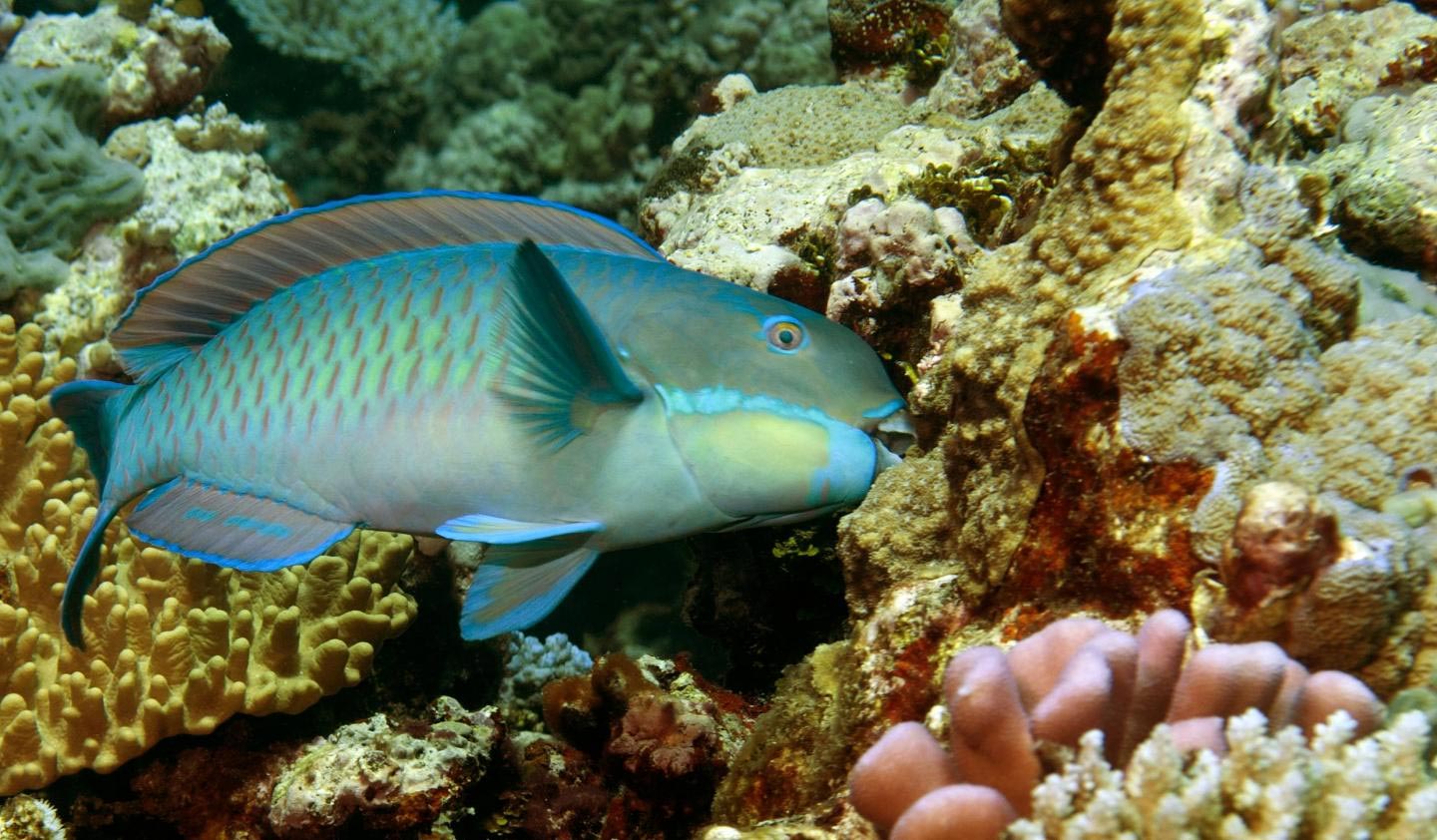
    Parrotfish
    Parrotfish numbers rise as reef quality decreases. Credit: Kendall Clements

    Researchers find familiar species pave the way for coral regrowth.

    In contrast to most other species, reef-dwelling parrotfish populations boom in the wake of severe coral bleaching.

    The surprise finding came when researchers led by Perth-based Dr. Brett Taylor of the Australian Institute of Marine Science (AIMS) looked at fish populations in severely bleached areas of two reefs — the Great Barrier Reef in the western Pacific and the Chagos Archipelago in the Indian Ocean.

    The sites are 8,000 kilometers (5,000 miles) apart.

    Bleaching is coral’s stress reaction to prolonged exposure to higher sea surface temperatures.
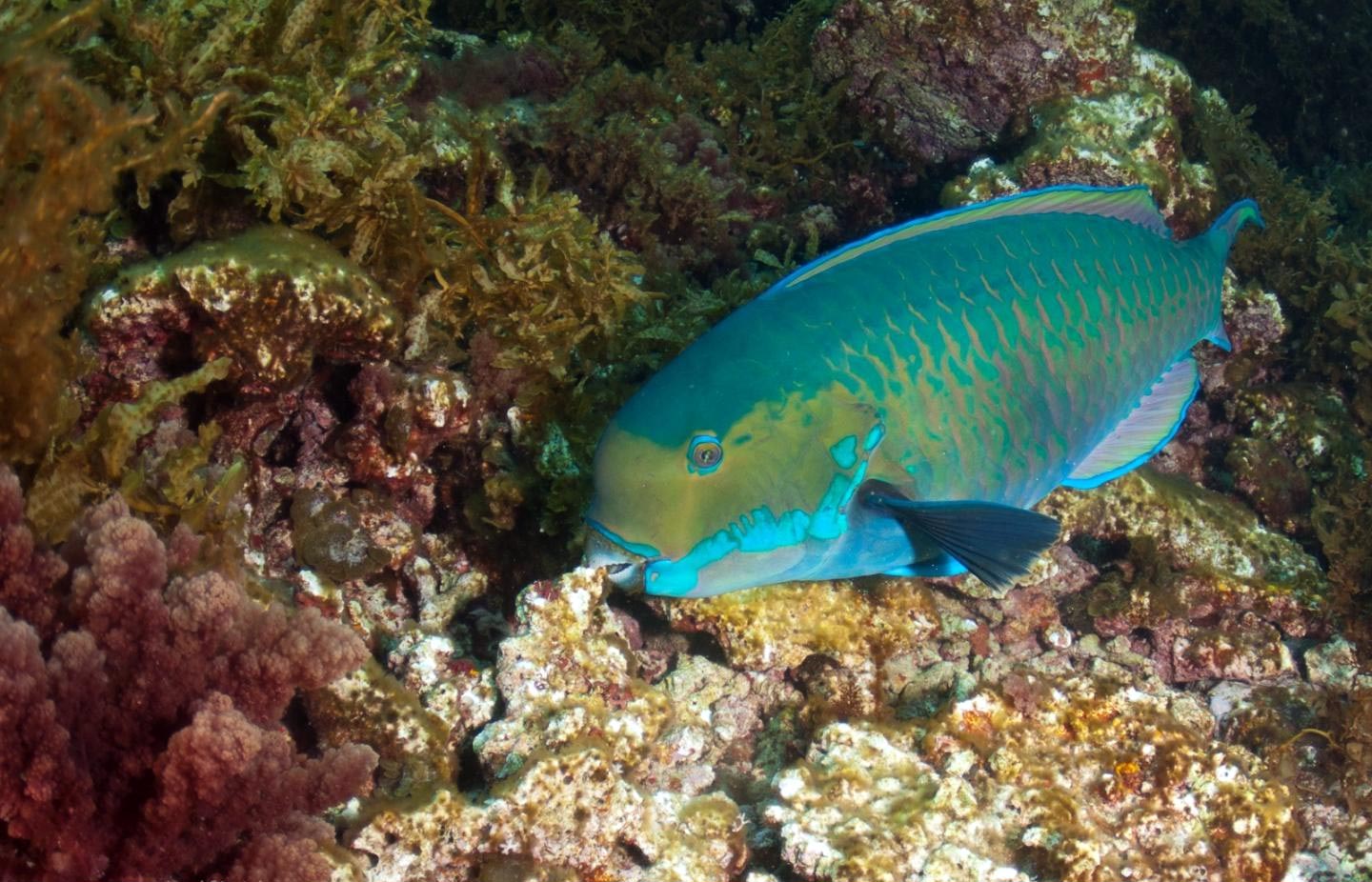
    Parrotfish Ecosystem Engineers
    Parrotfish are sometimes described as ecosystem engineers. Credit: Steve Lindfield

    “Warming oceans place enormous pressure on reefs and if the temperatures remain high for too long the coral will die. The more frequently this occurs there is less time for coral reefs to recover,” Dr. Taylor said.

    In the damaged areas of the reefs, the study found that parrotfish populations increased in number by between two and eight times, and individual fish were about 20% larger than those in unbleached sections.

    Almost every other species of fish was in sharp decline in the bleached areas.
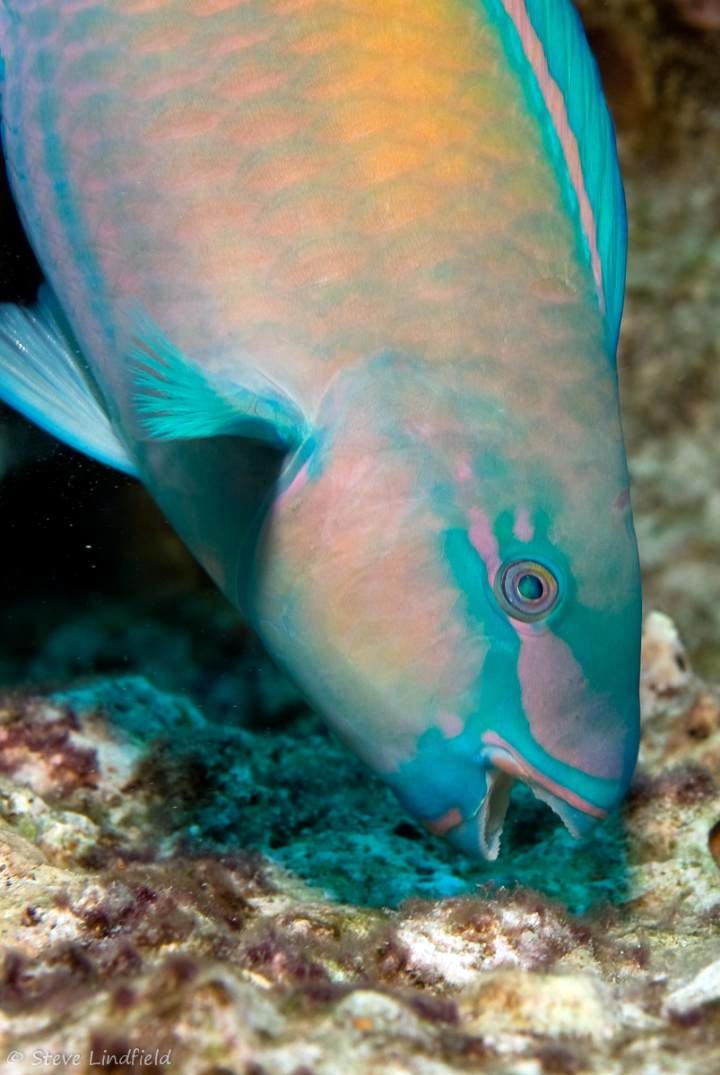
    Parrotfish Eat Algae Damaged Reefs
    Parrotfish are perfectly adapted to scraping micro-algae from damaged reefs. Credit: Steve Lindfield

    Parrotfish, named because of their tightly packed teeth in a beak formation, use their teeth to scrape microorganisms off coral — and their presence in large numbers on damaged reefs very likely helps the process of repair, Taylor and his colleagues suggest.

    “When bleaching reduces coral cover on the reefs, it creates large areas of newly barren surfaces,” Taylor said.

    “This immediately gets colonized by the microalgae and cyanobacteria, basically an internal and external layer of ‘scunge,’ which provides nutritious, abundant food for parrotfish.”

    The researchers concluded that the coral and the parrotfish constitute a feedback loop, slowly bringing each other into balance. When reefs are damaged, parrotfish numbers swell. This results in low levels of scunge, giving the coral the best chance to recover. As the reef then returns to health, parrotfish numbers decline again.

    “We found reef ecosystems in two different oceans had the same response to global heat events which is indicative of the current magnitude of climate change effects,” he said.

    The fact that plump parrotfish were found in large numbers on both reefs indicates the feedback loop is an inherent part of reef ecology and not caused by local factors.

    “Parrotfish are a vital link in the reef ecosystem,” says AIMS co-author Dr. Mark Meekan.

    “As herbivores, their grazing shapes the structure of reefs through effects on coral growth and suppression of algae that would otherwise proliferate. Because of these important ecological roles, they have been described as ‘ecosystem engineers’ of reef systems.”

    As well as AIMS, scientists working on the project came from James Cook University in Australia, the University of Auckland in New Zealand, and the University of Lancaster in the UK.

    The research is published in the journal Global Change Biology.

    Reference: “Synchronous biological feedbacks in parrotfishes associated with pantropical coral bleaching” by Brett M. Taylor, Cassandra E. Benkwitt, Howard Choat, Kendall D. Clements, Nicholas A. J. Graham and Mark G. Meekan, 2 December 2019, Global Change Biology.
    DOI: 10.1111/gcb.14909

    Never miss a breakthrough: Join the SciTechDaily newsletter.
    Follow us on Google and Google News.

    Australian Institute of Marine Science Coral Reefs Cyanobacteria Fish Marine Biology
    Share. Facebook Twitter Pinterest LinkedIn Email Reddit

    Related Articles

    This Simple Change Could Unlock Millions of Meals From the Sea

    Bright Lights, Dark Consequences: How Artificial Light Threatens Coral Reefs

    Motion Camouflage: The Remarkable Hunting Tactics of Trumpetfish

    “Ugly” Reef Fish Are Most in Need of Conservation Support Due to Their Ecological Traits and Evolutionary History

    Fish Predators Help Control Coral-Eating Crown-of-Thorns Starfish on Great Barrier Reef

    Abundance of Life on Coral Reefs Has Been Puzzling Since Charles Darwin’s Day – New Research Provides Answers

    Cyclones Can Damage Distant Coral Reefs 1000 Km Away – 10x Further Than Conventional Modeling

    Black Band Disease Puts Great Barrier Reef at Risk

    Jacques Cousteau Predicted Detrimental Change in Coral Reefs

    1 Comment

    1. Craig Quirolo on December 2, 2019 9:37 am

      In the Florida Keys they have found that no take zones to protect fish have zero impact on the health of the coral. Clean, clear nutrient free water is what corals need to exist. Anything less is greenwashing. reefreliefarchive.org

      Reply
    Leave A Reply Cancel Reply

    • Facebook
    • Twitter
    • Pinterest
    • YouTube

    Don't Miss a Discovery

    Subscribe for the Latest in Science & Tech!

    Trending News

    The Universe Is Expanding Too Fast and Scientists Can’t Explain Why

    “Like Liquid Metal”: Scientists Create Strange Shape-Shifting Material

    Early Warning Signals of Esophageal Cancer May Be Hiding in Plain Sight

    Common Blood Pressure Drug Shows Surprising Power Against Deadly Antibiotic-Resistant Superbug

    Scientists Uncover Dangerous Connection Between Serotonin and Heart Valve Disease

    Scientists Discover a “Protector” Protein That Could Help Reverse Hair Loss

    Bone-Strengthening Discovery Could Reverse Osteoporosis

    Scientists Uncover Hidden Trigger Behind Stem Cell Aging

    Follow SciTechDaily
    • Facebook
    • Twitter
    • YouTube
    • Pinterest
    • Newsletter
    • RSS
    SciTech News
    • Biology News
    • Chemistry News
    • Earth News
    • Health News
    • Physics News
    • Science News
    • Space News
    • Technology News
    Recent Posts
    • A Common Diabetes Drug May Hold the Key to Stopping HIV From Coming Back
    • Ancient “Syphilis-Like” Disease in Vietnam Challenges Key Scientific Assumptions
    • Drinking Alcohol To Cope in Your 20s Could Damage Your Brain for Life
    • Scientists Crack Alfalfa’s Chromosome Mystery After Decades of Debate
    • Ancient Ant-Plant Alliance Collapses As Predatory Wasps Move In
    Copyright © 1998 - 2026 SciTechDaily. All Rights Reserved.
    • Science News
    • About
    • Contact
    • Editorial Board
    • Privacy Policy
    • Terms of Use

    Type above and press Enter to search. Press Esc to cancel.