
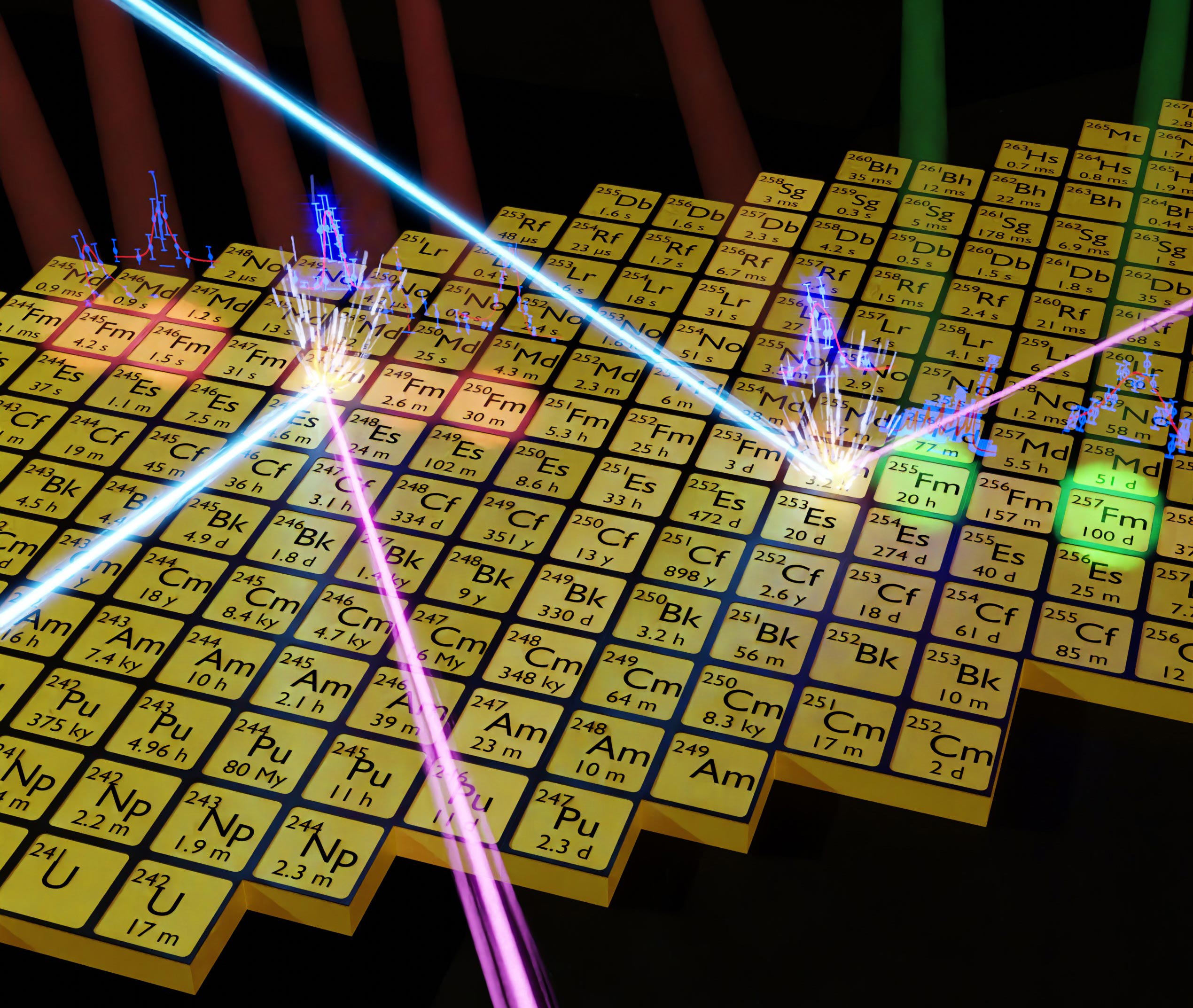
Fermium studies indicate nuclear shell effects diminish as nuclear mass increases, emphasizing macroscopic influences in superheavy elements.
Where does the periodic table of chemical elements end and which processes lead to the existence of heavy elements? An international research team has conducted experiments at the GSI/FAIR accelerator facility and at Johannes Gutenberg University Mainz to investigate these questions.
Their research, published in the journal Nature, provides new insights into the structure of atomic nuclei of fermium (element 100) with different numbers of neutrons. Using forefront laser spectroscopy techniques, the team traced the evolution of the nuclear charge radius and found a steady increase as neutrons were added to the nuclei. This indicates that localized nuclear shell effects have a reduced influence on the nuclear charge radius in these heavy nuclei.
Quantum Effects in Superheavy Elements
Elements beyond uranium (element 92), such as Fermium (element 100), do not occur naturally in the Earth’s crust. To be studied, they thus have to be produced artificially. They bridge from the heaviest naturally occurring elements to the so-called superheavy elements, which start at element 104. Superheavy elements owe their existence to stabilizing quantum mechanical shell effects, which add about two-thousandths of the total nuclear binding energy. Although small, this contribution is critical in counteracting the repelling forces between the many positively charged protons.
Quantum mechanical effects induced by the building blocks of atomic nuclei, the protons and neutrons, which together make up the nucleus, are explained by the nuclear shell model. Similar to atoms, where filled electron shells lead to chemical stability and inertness, nuclei with filled nuclear shells (containing so-called “magic” numbers of protons/neutrons) exhibit increased stability. Consequently, their nuclear binding energies and their lifetimes increase. In lighter nuclei, filled nuclear shells are known to also influence trends in the nuclear charge radii.
Advanced Techniques in Nuclear Measurement
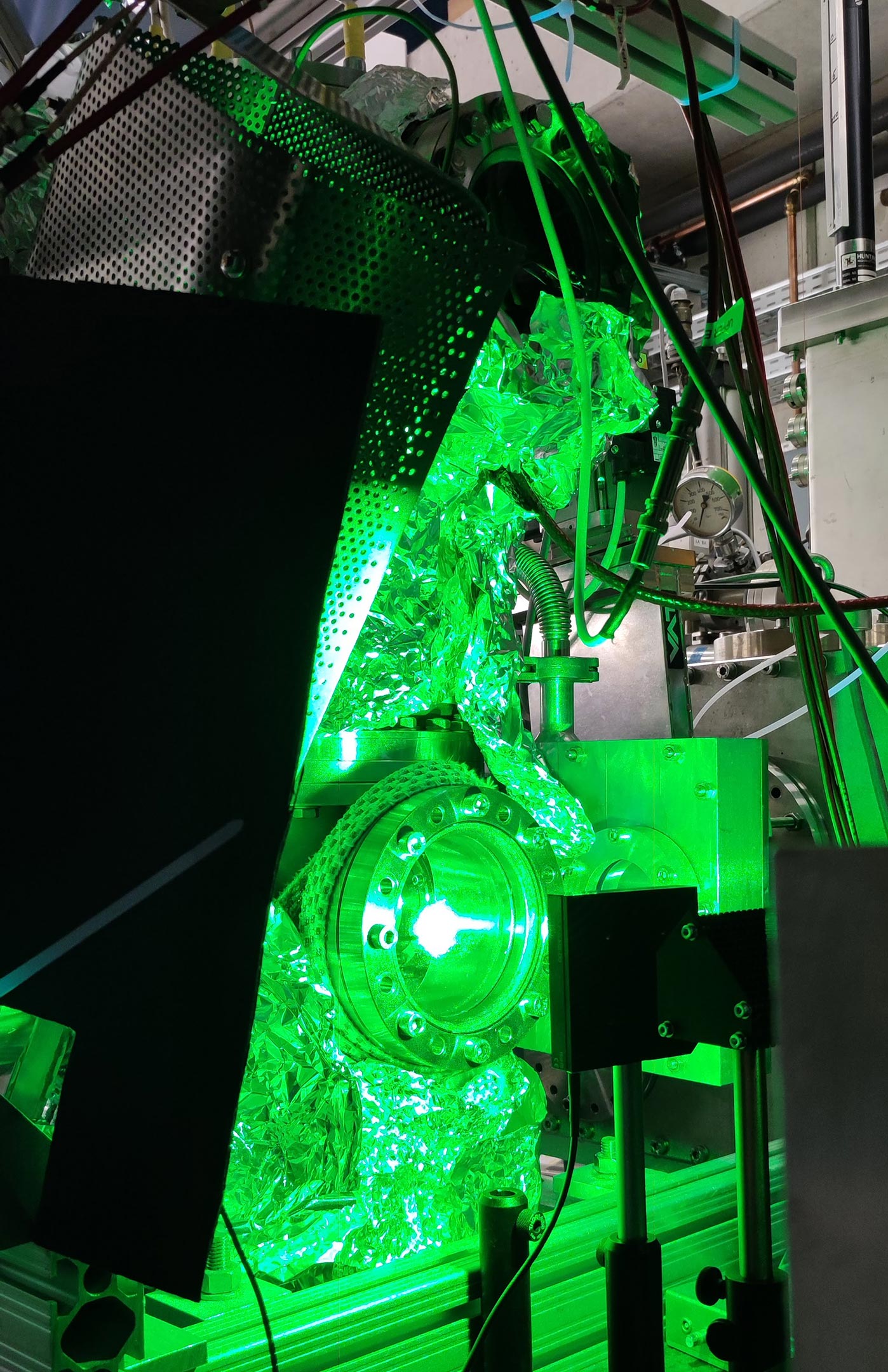
Using laser spectroscopy methods, subtle changes in the atomic structure can be analyzed, which in turn provide information about nuclear properties such as the nuclear charge radius, i.e. the distribution of protons in the atomic nucleus. Studies of several atomic nuclei of the same element, but with different neutron numbers, have revealed a steady increase in this radius, unless a magic number is crossed. Then, a kink is observed, as the slope of the radial increase changes at the shell closure. This effect was found for lighter, spherical atomic nuclei up to lead.
New Insight Into the Nuclear Structure of Heavy Nuclei
“Using a laser-based method, we investigated fermium atomic nuclei, which possess 100 protons, and between 145 and 157 neutrons. Specifically, we studied the influence of quantum mechanical shell effects on the size of the atomic nuclei. This allowed shedding light on the structure of these nuclei in the range around the known shell effect at neutron number 152 from a new perspective,” explains Dr. Sebastian Raeder, the spokesperson of the experiment at GSI/FAIR.
“At this neutron number, the signature of a neutron shell closure was previously observed in trends of the nuclear binding energy. The strength of the shell effect was measured by high-precision mass measurements at GSI/FAIR in 2012. As mass is equivalent to energy according to Einstein, these mass measurements gave hints about the extra binding energy the shell effect provides. Atomic nuclei around neutron number 152 are an ideal testbench for deeper studies, as they happen to be shaped more like a rugby-ball, rather than spherical. This deformation allows the many protons in their nuclei to be further apart than in a spherical nucleus.”
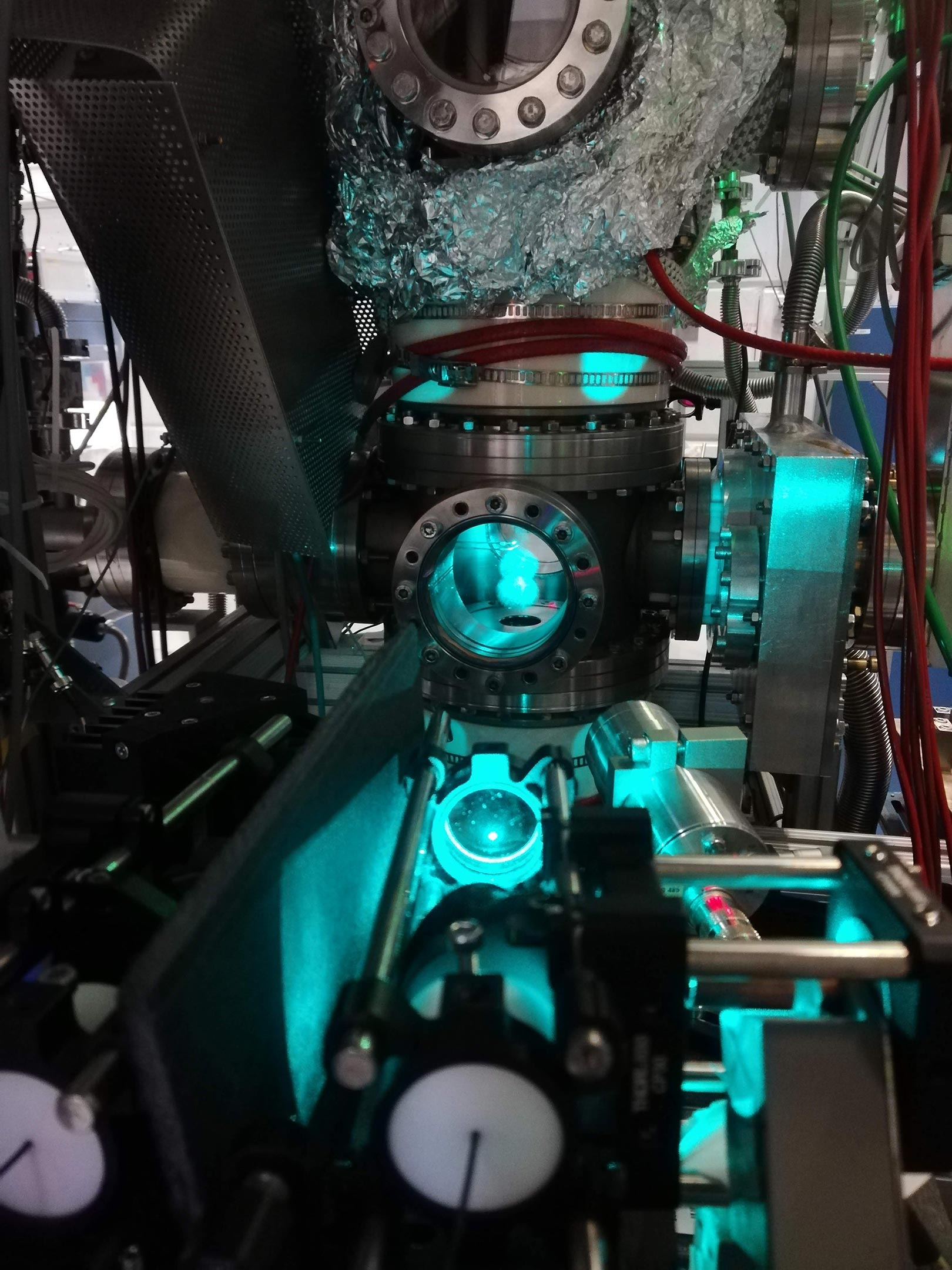
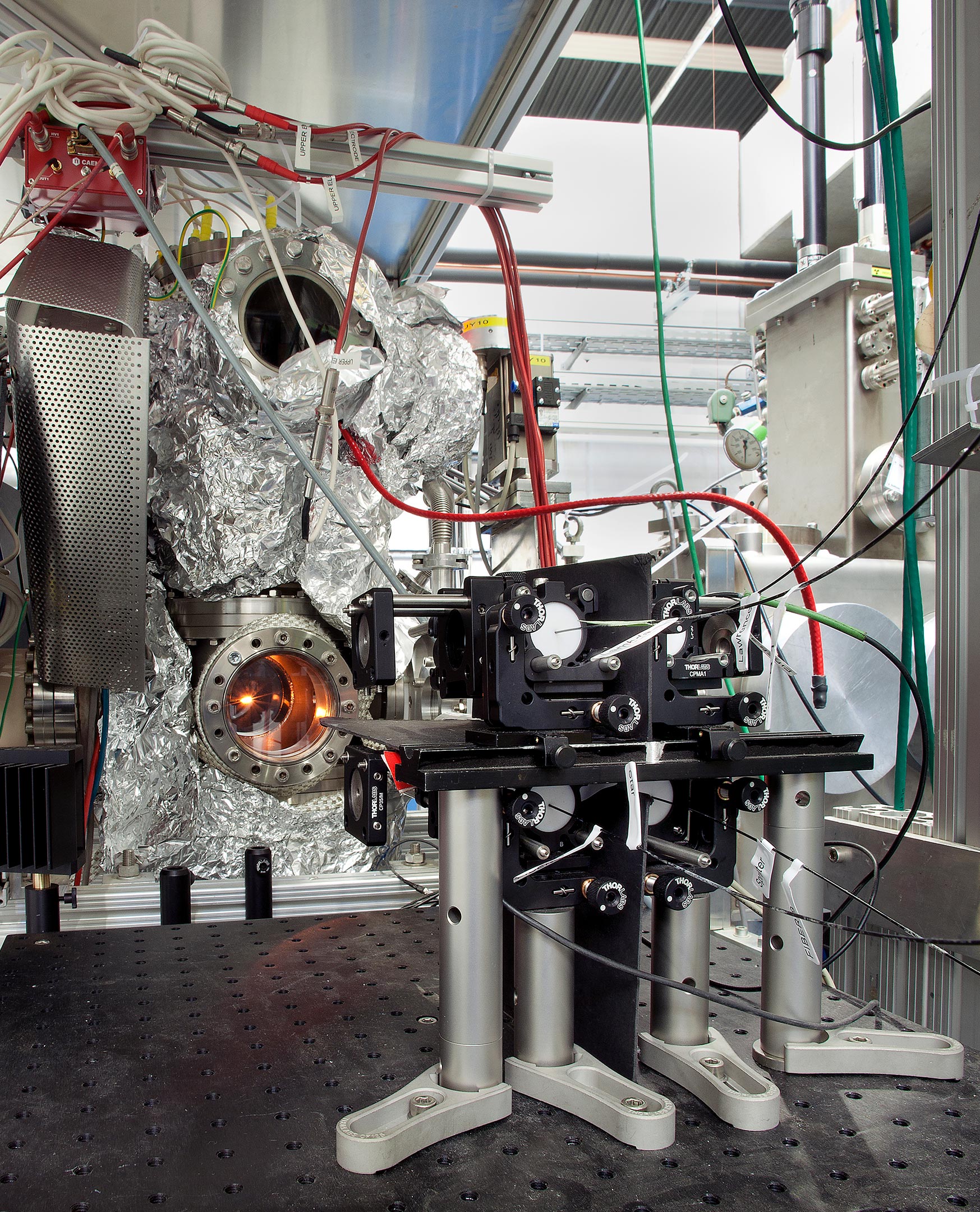
For the current measurements, an international collaboration of 27 institutes from seven countries examined fermium isotopes with lifetimes ranging from a few seconds to a hundred days, using different methods for producing the fermium isotopes and methodological developments in the applied laser spectroscopy techniques. The short-lived isotopes were produced at the GSI/FAIR accelerator facility, with only a few atoms per minute being available for the experiments in some cases. To probe them, a tailored laser spectroscopy method was used that researchers had developed a few years ago for measurements on nobelium isotopes. The produced nuclei were stopped in argon gas and picked up electrons to form neutral atoms, which were then probed by laser light.
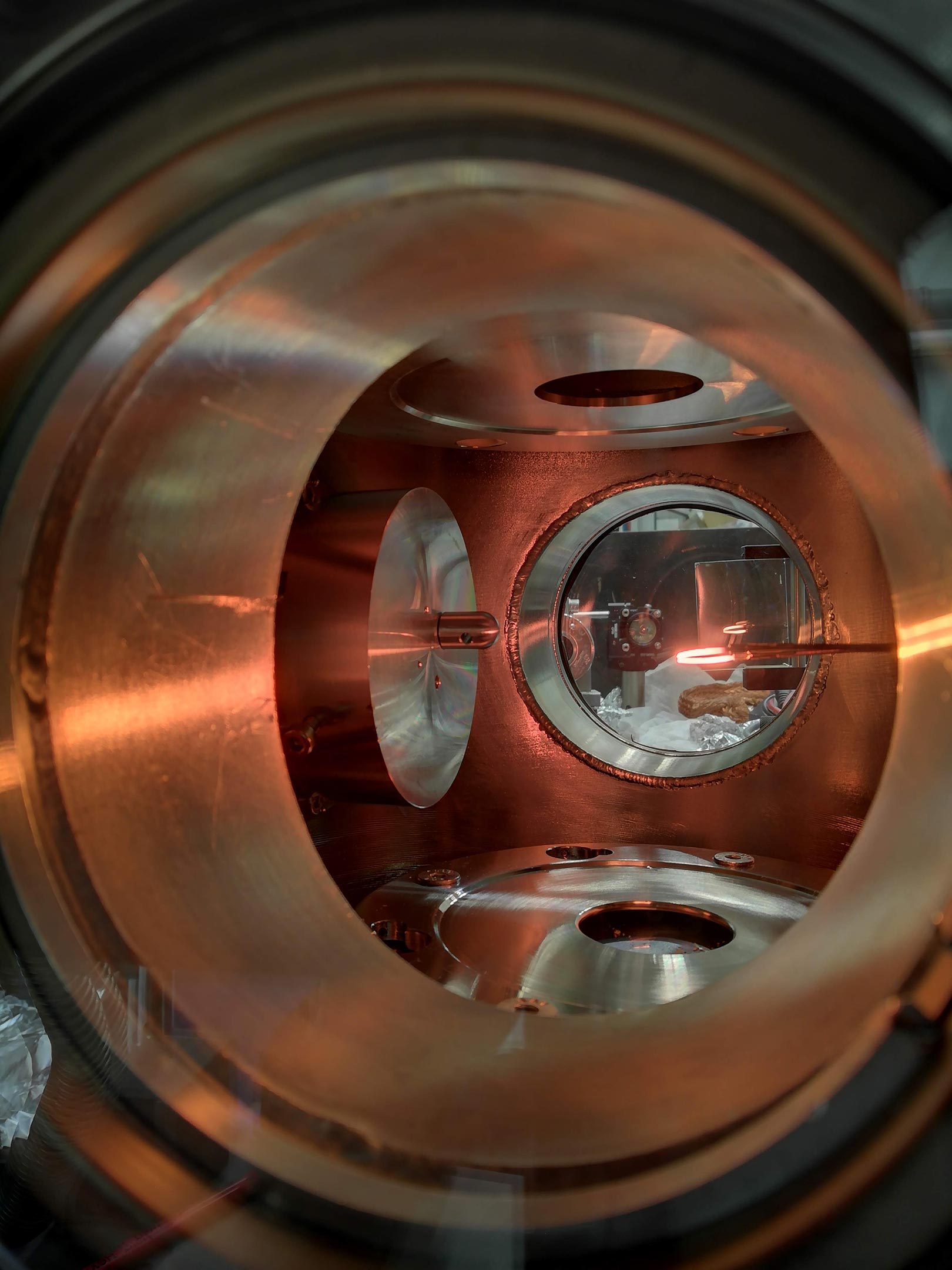
The neutron-rich, long-lived fermium isotopes (fermium-255, fermium-257) were produced in picogram amounts at Oak Ridge National Laboratory in Oak Ridge, USA, and at Institut Laue-Langevinat Grenoble, France. A radiochemical preparation of the samples was performed at Johannes Gutenberg University Mainz (JGU). Using a different method, they were subsequently evaporated in a reservoir and examined in a vacuum with laser light.
Laser light of a suitable wavelength lifts an electron in the fermium atom to a higher-lying orbital, and then removes it from the atom altogether, forming a fermium ion, which can be detected efficiently. The exact energy required for this stepwise ion-formation process varies with neutron number. This small change in excitation energy was measured to obtain information about the change in size of the atomic nuclei.
Macroscopic Properties Dominate
The investigations provided insight into the changes in the nuclear charge radius in fermium isotopes across the neutron number 152 and showed a steady, uniform increase. The comparison of the experimental data with various calculations performed by international collaboration partners using modern theoretical nuclear physics models allows an interpretation of the underlying physical effects. Despite different calculation methods, all models were found to be in good agreement with each other as well as with the experimental data.
“Our experimental results and their interpretation with modern theoretical methods show that in the fermium nuclei, nuclear shell effects have a reduced influence on the nuclear charge radii, in contrast to the strong influence on the binding energies of these nuclei,” says Dr. Jessica Warbinek, doctoral student at GSI/FAIR and JGU at the time of the experiments and first author of the publication. “The results confirm theoretical predictions that local shell effects, which are due to few individual neutrons and protons, lose influence when the nuclear mass increases. Instead, effects dominate that are to be attributed to the full ensemble of all nucleons, with the nuclei rather seen as a charged liquid drop.”
The experimental improvements of the method pave the way to further laser spectroscopic studies of heavy elements in the region around and beyond neutron number 152 and represent a step towards a better understanding of stabilization processes in heavy and superheavy elements. Ongoing developments hold the promise that future studies will be able to also reveal weak effects of nuclear shell structure, which, though, are at the heart of the existence of the heaviest known elements.
Reference: “Smooth trends in fermium charge radii and the impact of shell effects” by Jessica Warbinek, Elisabeth Rickert, Sebastian Raeder, Thomas Albrecht-Schönzart, Brankica Andelic, Julian Auler, Benjamin Bally, Michael Bender, Sebastian Berndt, Michael Block, Alexandre Brizard, Pierre Chauveau, Bradley Cheal, Premaditya Chhetri, Arno Claessens, Antoine de Roubin, Charlie Devlin, Holger Dorrer, Christoph E. Düllmann, Julie Ezold, Rafael Ferrer, Vadim Gadelshin, Alyssa Gaiser, Francesca Giacoppo, Stephane Goriely, Manuel J. Gutiérrez, Ashley Harvey, Raphael Hasse, Reinhard Heinke, Fritz-Peter Heßberger, Stephane Hilaire, Magdalena Kaja, Oliver Kaleja, Tom Kieck, EunKang Kim, Nina Kneip, Ulli Köster, Sandro Kraemer, Mustapha Laatiaoui, Jeremy Lantis, Nathalie Lecesne, Andrea Tzeitel Loria Basto, Andrew Kishor Mistry, Christoph Mokry, Iain Moore, Tobias Murböck, Danny Münzberg, Witold Nazarewicz, Thorben Niemeyer, Steven Nothhelfer, Sophie Péru, Andrea Raggio, Paul-Gerhard Reinhard, Dennis Renisch, Emmanuel Rey-Herme, Jekabs Romans, Elisa Romero Romero, Jörg Runke, Wouter Ryssens, Hervé Savajols, Fabian Schneider, Joseph Sperling, Matou Stemmler, Dominik Studer, Petra Thörle-Pospiech, Norbert Trautmann, Mitzi Urquiza-González, Kenneth van Beek, Shelley Van Cleve, Piet Van Duppen, Marine Vandebrouck, Elise Verstraelen, Thomas Walther, Felix Weber and Klaus Wendt, 30 October 2024, Nature.
DOI: 10.1038/s41586-024-08062-z
Never miss a breakthrough: Join the SciTechDaily newsletter.
Follow us on Google and Google News.