
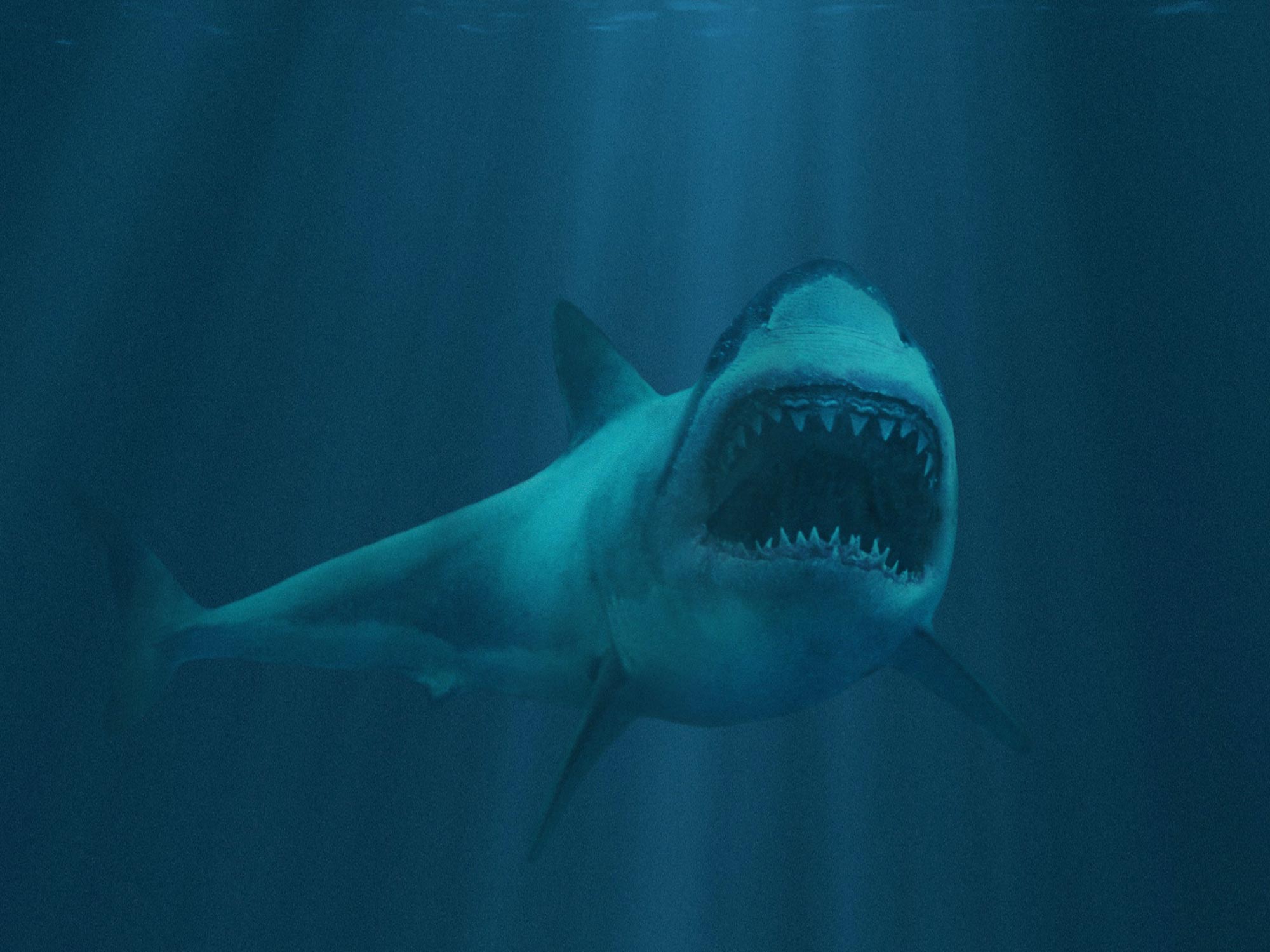
In a scientific whodunnit, researchers have discovered the first known case of a large porbeagle shark eaten by a larger predator.
In a groundbreaking study, scientists have used satellite tracking to identify a large shark as the predator of a pregnant porbeagle in the open sea near Bermuda. This incident highlights not only the unexpected predatory threats these endangered sharks face but also the complex interactions within the marine predator hierarchy that are just beginning to be understood.
Marine Mystery: The Porbeagle Predation Puzzle
Who killed the pregnant porbeagle?
In a marine science version of the game Cluedo, researchers from the US have now accused a larger shark, with its deciduous triangular teeth, in the open sea southwest of Bermuda. This scientific whodunnit is published in Frontiers in Marine Science.

“This is the first documented predation event of a porbeagle shark anywhere in the world,” said lead author Dr. Brooke Anderson, a former graduate student at Arizona State University.
“In one event, the population not only lost a reproductive female that could contribute to population growth, but it also lost all her developing babies. If predation is more widespread than previously thought, there could be major impacts for the porbeagle shark population that is already suffering due to historic overfishing.”
Life Cycle and Conservation Concerns
Porbeagles are sharks from the Atlantic and South Pacific Ocean and the Mediterranean. They are large, active, powerfully built – up to 3.7 meters (12.1 feet) long and weighing up to 230 kg (500 pounds) – and long-lived, living up to 30 or even 65 years. Females don’t reproduce until they are about 13 years old, and then give birth to an average of four pups every one or two years, born live after a gestation period between eight and nine months.
Because of their slow reproductive cycle, porbeagle populations cannot recover quickly from persecution, recreational fishing, bycatch, and habitat loss and degradation to which they currently are exposed. Indeed, Northwest Atlantic porbeagles are listed as endangered on the IUCN Red List of Threatened Species, while the Northeast Atlantic and Mediterranean populations are critically endangered.
Tracking Techniques and Tragic Turn
As part of their research into shark migration, Anderson and colleagues captured porbeagles off Cape Cod in Massachusetts in 2020 and 2022. Each porbeagle was equipped with two satellite tags, a fin-mount satellite transmitter and a pop-off satellite archival tag (PSAT), before being released. Fin-mount tags send the current location to satellites whenever the shark’s fin rises above the surface. PSATs continuously measure depth and temperature and store these data until the tag falls off, typically after a predetermined period, after which they float to the surface and transmit their stored data to satellites.
Among the tagged porbeagles was a pregnant female, 2.2 meters long. Anderson et al. hoped to obtain data from this female to help identify important habitats for porbeagle mothers and their newborns.
But fate intervened. Unexpectedly, this female’s PSAT started to transmit off Bermuda 158 days after its release. This implied that the PSAT had popped off and was now floating at the surface.
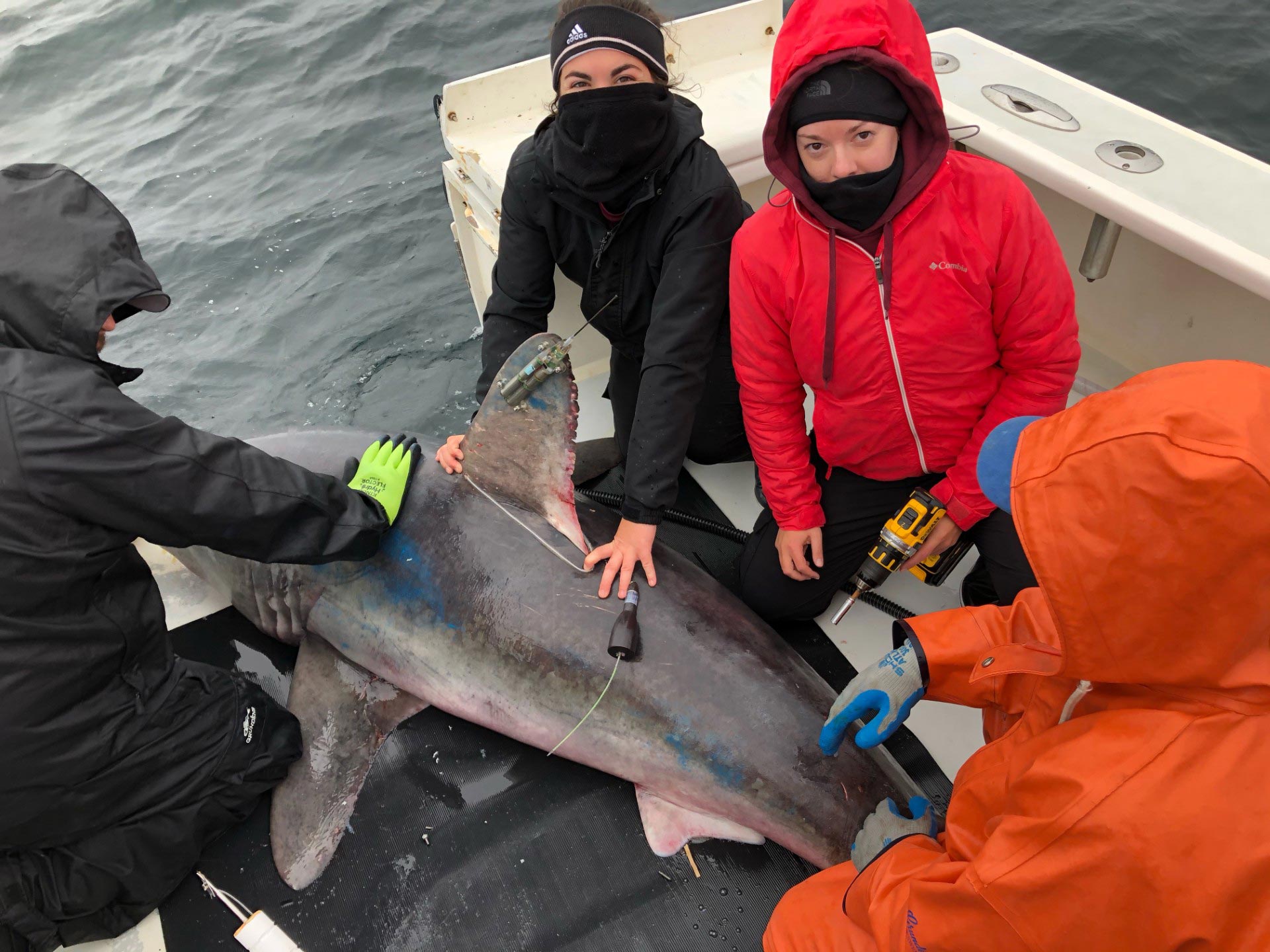
Data then transmitted showed that this female had been cruising for five months at a depth between 100 and 200 meters at night and between 600 and 800 meters during the day, in waters with a temperature between 6.4 and 23.5 °C. During this time, the fin-mount tag had transmitted only once, confirming that she remained underwater most of the time.
But suddenly, from March 24, 2021, onwards over the period of four days, the temperature as measured by the PSAT remained at an approximately constant 22 °C, at a depth between 150 and 600 meters. Only one explanation was possible: that day, the unfortunate porbeagle had been hunted and eaten by a larger predator. The PSAT must then have been excreted about four days later, starting to transmit.
Two Suspects
“Two endothermic predator candidates large enough to predate upon mature porbeagles and located within the vicinity and at the time of year of the predation event include the white shark Carcharodon carcharias and shortfin mako Isurus oxyrhinchus,” wrote the authors.
Shortfin mako sharks are known to feed on cephalopods, bony fish, small sharks, porpoises, sea turtles, and seabirds, while great whites also feast on whales, dolphins, seals, and rays. Of the two candidates, a great white shark was the more likely culprit, as shortfin mako typically make rapid oscillatory dives between the sea surface and deeper depths during the day while in the open ocean – a behavior not registered by the PSAT.
“The predation of one of our pregnant porbeagles was an unexpected discovery. We often think of large sharks as being apex predators. But with technological advancements, we have started to discover that large predator interactions could be even more complex than previously thought,” said Anderson.
“We need to continue studying predator interactions, to estimate how often large sharks hunt each other. This will help us uncover what cascading impacts these interactions could have on the ecosystem.”
Reference: “First evidence of predation on an adult porbeagle equipped with a pop-off satellite archival tag in the Northwest Atlantic” by Brooke N. Anderson, Lauren Horstmyer, Kirsty L. Ballard, Jon F. Dodd and James A. Sulikowski, 16 July 2024, Frontiers in Marine Science.
DOI: 10.3389/fmars.2024.1406973
Fieldwork for this study was supported in part by the American Elasmobranch Society Donald R Nelson award and the Arizona State University Graduate and Professional Student Association Graduate Research and Support Program. The Animal Telemetry Network provided satellite time for tags
Never miss a breakthrough: Join the SciTechDaily newsletter.
Follow us on Google and Google News.