
Close Menu
    Facebook X (Twitter) Instagram
    SciTechDaily
    • Biology
    • Chemistry
    • Earth
    • Health
    • Physics
    • Science
    • Space
    • Technology
    Facebook X (Twitter) Pinterest YouTube RSS
    SciTechDaily
    Home»Science»New Species of Ancient Shark Discovered
    Science

    New Species of Ancient Shark Discovered

    By University of ViennaJune 12, 2021No Comments3 Mins Read
    Facebook Twitter Pinterest Telegram LinkedIn WhatsApp Email Reddit
    Share
    Facebook Twitter LinkedIn Pinterest Telegram Email Reddit

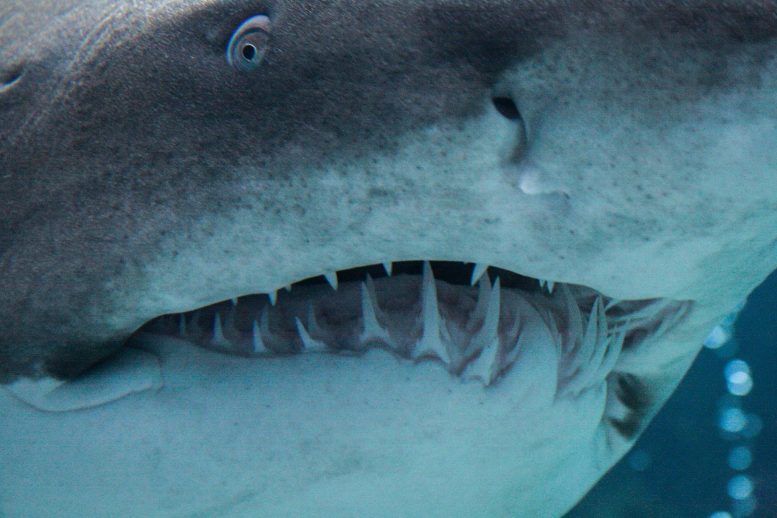
    Shark Head Close Up

    Scientists identified a new Late Jurassic shark species, Durnonovariaodus maiseyi, from a rare fossil in England.

    In a new study, an international team led by Sebastian Stumpf from the University of Vienna describes a fossil skeleton of an ancient shark, which is assigned to a new, previously unknown genus and species.

    This rare fossil find comes from the Kimmeridge Clay Formation in England, a series of sedimentary rocks that was formed in a shallow, tropical-subtropical sea during the Upper Jurassic, about 150 million years ago. The fossil shark skeleton was found more than 20 years ago on the southern coast of England and is now held in the Etches Collection. Additional fossil shark specimens from it will be investigated in the years to come.
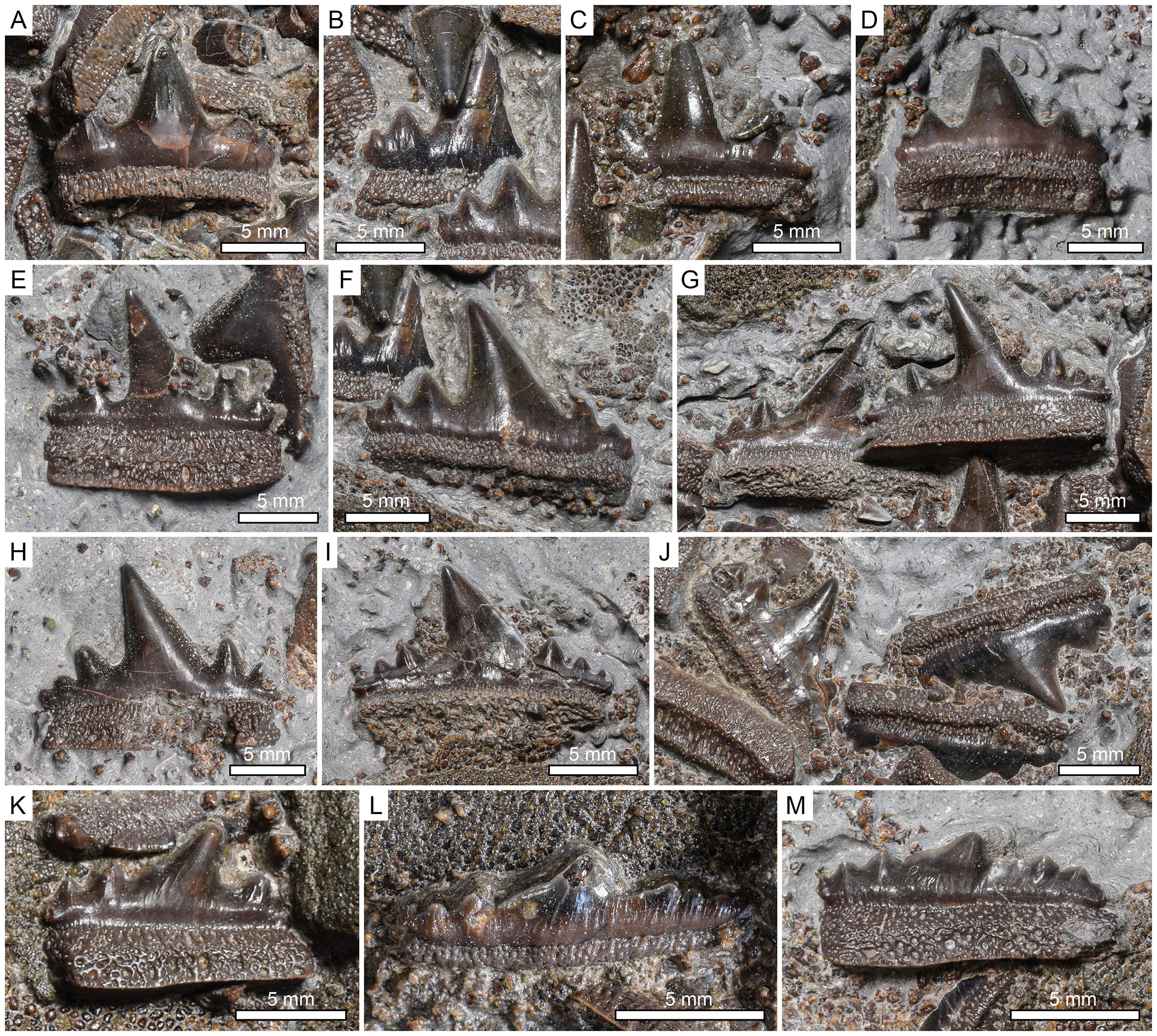
    New Hybodontiform Shark Durnonovariaodus Maiseyi Teeth
    Teeth of the new hybodontiform shark Durnonovariaodus maiseyi from the Upper Jurassic Kimmeridge Clay Formation of England. Credit: © Sebastian Stumpf

    Due to their life-long tooth replacement shark teeth are among the most common vertebrate finds encountered in the fossil record. The low preservation potential of their poorly mineralized cartilaginous skeletons, on the other hand, prevents fossilization of completely preserved specimens in most cases.

    A New Shark Genus and Species

    The new study published in the journal PeerJ and led by Sebastian Stumpf from the University of Vienna now presents the fossil skeleton of a new ancient shark from the Kimmeridge Clay Formation of England, a fossiliferous rock sequence that was formed during the Late Jurassic in a shallow, tropical-subtropical sea.

    The new shark fossil, which is about 150 million years old, is assigned to a previously unknown genus and species of hybodontiform sharks named Durnonovariaodus maiseyi. This extremely rare fossil find was made almost 20 years ago on the southern coast of England and is now held and curated in the Etches Collection, which houses one of the most scientifically significant fossil collections in England.
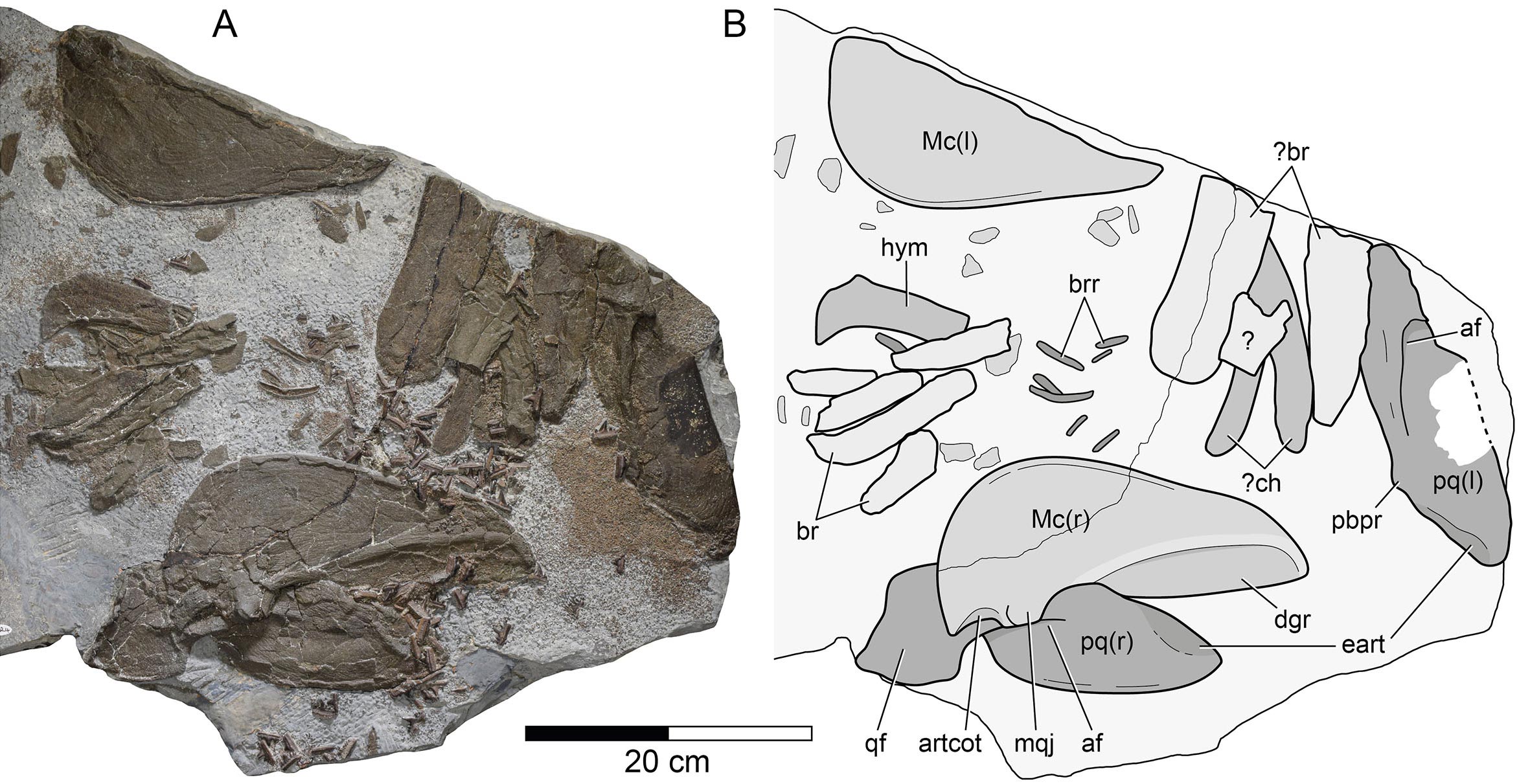
    New Hybodontiform Shark Durnonovariaodus Maiseyi Skull
    Skull of the new hybodontiform shark Durnonovariaodus maiseyi from the Upper Jurassic Kimmeridge Clay Formation of England. Credit: © Sebastian Stumpf

    Extinct Relatives of Modern Sharks

    Hybodontiform sharks are one of the most species-rich groups of extinct sharks and represent the closest relatives to modern sharks. They first appeared during the latest Devonian, about 361 million years ago, and went extinct together with dinosaurs at the end of the Cretaceous, about 66 million years ago. The new genus and species Durnonovariaodus maiseyi differs from all other previously described hybodontiform sharks, including those that are characterized by having similarly shaped teeth. “Durnonovariaodus maiseyi represents an important source of information for better understanding the diversity of sharks in the past as well as for new interpretations of the evolution of hybodontiform sharks, whose relationships are still poorly understood, even after more than 150 years of research,” says Stumpf.

    The scientific importance of the Kimmeridge Clay Formation is underlined by additional, but still undescribed hybodontiform shark skeletons, which are also held in the Etches Collection. The research of fossil sharks from the Kimmeridge Clay Formation of England, which will be continued in the years to come, will certainly contain further surprises to be yet discovered.

    Reference: “Durnonovariaodus maiseyi gen. et sp. nov., a new hybodontiform shark-like chondrichthyan from the Upper Jurassic Kimmeridge Clay Formation of England” by Sebastian Stumpf​1, Steve Etches2, Charlie J. Underwood3, Jürgen Kriwet1 , 11 May 2021, PeerJ.
    DOI: 10.7717/peerj.11362

    Never miss a breakthrough: Join the SciTechDaily newsletter.
    Follow us on Google and Google News.

    New Species Paleontology Popular Sharks University of Vienna
    Share. Facebook Twitter Pinterest LinkedIn Email Reddit

    Related Articles

    Bizarre Manta-Like Sharks Once Soared Through Late Cretaceous Oceans

    Discovery of a Bizarre, Winged “Eagle Shark” in the Cretaceous Seas

    Pioneering Research Reveals How Teeth Functioned and Evolved in Giant Mega-Sharks

    Mysterious Prehistoric “Sea Dragon” Discovered on English Channel Coast Is Identified As New Species

    Dinosaurs Once Crossed Oceans: First Duckbill Dinosaur Fossil Discovered in Africa

    Evolved to Strike Terror: Paleontologists Identify New Species of Mosasaur

    Body Size of Extinct Gigantic Megatooth Shark – Otodus Megalodon – Indeed off the Charts in the Shark World

    Finally Revealed: Gargantuan True Size of Legendary Prehistoric Mega-Shark Megalodon

    “Seriously Strange” New Extinct Family of Giant Wombat Relatives Discovered in Australian Desert

    Leave A Reply Cancel Reply

    • Facebook
    • Twitter
    • Pinterest
    • YouTube

    Don't Miss a Discovery

    Subscribe for the Latest in Science & Tech!

    Trending News

    Breakthrough Bowel Cancer Trial Leaves Patients Cancer-Free for Nearly 3 Years

    Natural Compound Shows Powerful Potential Against Rheumatoid Arthritis

    100,000-Year-Old Neanderthal Fossils in Poland Reveal Unexpected Genetic Connections

    Simple “Gut Reset” May Prevent Weight Gain After Ozempic or Wegovy

    2.8 Days to Disaster: Scientists Warn Low Earth Orbit Could Suddenly Collapse

    Common Food Compound Shows Surprising Power Against Superbugs

    5 Simple Ways To Remember More and Forget Less

    The Atomic Gap That Could Cost the Semiconductor Industry Billions

    Follow SciTechDaily
    • Facebook
    • Twitter
    • YouTube
    • Pinterest
    • Newsletter
    • RSS
    SciTech News
    • Biology News
    • Chemistry News
    • Earth News
    • Health News
    • Physics News
    • Science News
    • Space News
    • Technology News
    Recent Posts
    • Study Reveals Malaria’s Hidden Role in Human Evolution
    • Scientists Print Artificial Neurons That Can Talk to the Brain
    • Bowel and Ovarian Cancers Are Dramatically Rising in Young Adults and Scientists Aren’t Sure Why
    • Alzheimer’s May Begin Decades Earlier Than You Think, New Mayo Clinic Study Finds
    • The Hidden Risk of Taking Breaks From Weight-Loss Drugs Like Ozempic
    Copyright © 1998 - 2026 SciTechDaily. All Rights Reserved.
    • Science News
    • About
    • Contact
    • Editorial Board
    • Privacy Policy
    • Terms of Use

    Type above and press Enter to search. Press Esc to cancel.