

A new study uncovers how volatile-rich magmas propel diamond-bearing kimberlites from Earth’s depths.
If you’ve ever admired a diamond, chances are it originated from a kimberlite. More than 70% of all natural diamonds are extracted from these rare volcanic formations. Despite decades of research, scientists are still trying to unravel how kimberlites rise from deep within Earth’s mantle to reach the surface.
Kimberlites are carrot-shaped volcanic pipes that form from depths greater than 150 km. They have long captivated geologists because they offer a rare glimpse into the planet’s deep interior. The molten rock that creates them travels upward through the mantle and crust at remarkable speeds, possibly as fast as 80 miles per hour, before erupting violently at the surface. During this rapid ascent, the magma gathers fragments of rock and minerals, known as xenoliths and xenocrysts, from the layers it passes through.
“They’re very interesting and still very enigmatic rocks,” despite being well-studied, says Ana Anzulović, a doctoral research fellow at the University of Oslo’s Centre for Planetary Habitability.
Modeling the Forces Behind an Eruption
A new study published in the journal Geology by Anzulović and her team at the University of Oslo brings scientists closer to understanding this long-standing geological mystery. Using computer models, the researchers examined how volatile substances such as carbon dioxide and water affect the buoyancy of proto-kimberlite melts compared with surrounding materials. Their findings quantify, for the first time, the precise conditions required for a kimberlite to erupt.
Diamonds make it to the surface in kimberlites because their rapid ascent prevents them from reverting to graphite, which is more stable at shallow pressures and temperatures. But the composition of the kimberlite’s original melt—and how it rises so fast—has remained mysterious.
“They start off as something that we cannot measure directly,” says Anzulović. “So we don’t know what a proto-kimberlite, or parental, melt would be like. We know approximately, but everything we know basically comes from the very altered rocks that get emplaced.”
Simulating the Deep Earth
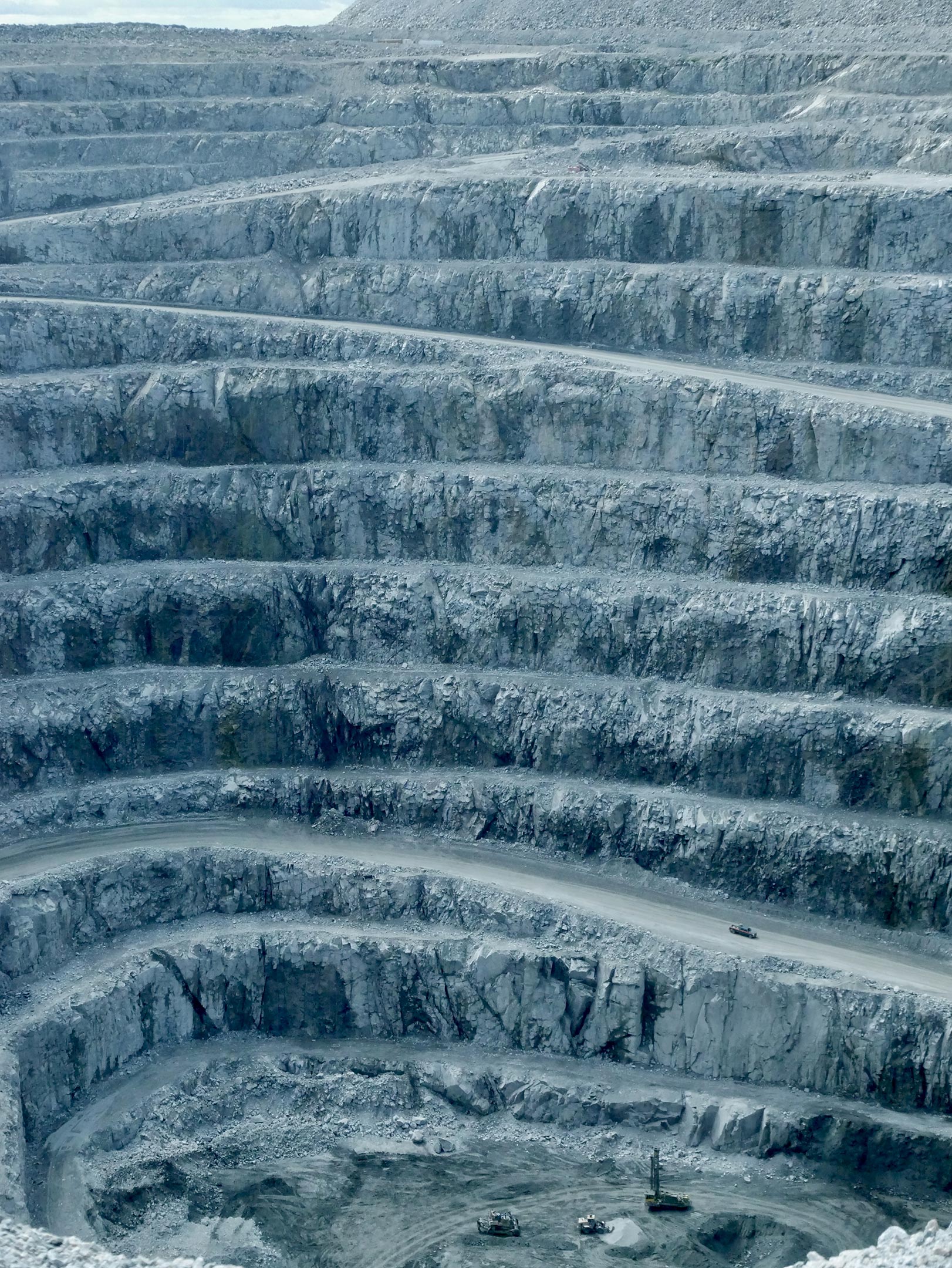
To constrain the composition of these parental melts, the team focused on the Jericho kimberlite, which erupted into the Slave craton of far northwest Canada. Using chemical modelling, they tested different original mixtures of carbon dioxide and water.
“Our idea was, well, let’s try to create a chemical model of a kimberlite, then vary CO2 and H2O,” says Anzulović. “Think of it as trying to sample a kimberlite as it ascends at different pressure and temperature points.”
The researchers used molecular dynamics software to simulate atomic forces and track how atoms in a kimberlite melt move under varying depths. From these calculations, they determined the density of the melt at different conditions and whether it remained buoyant enough to rise.
“The most important takeaway from this study is that we managed to constrain the amount of CO2 that you need in the Jericho kimberlite to successfully ascend through the Slave craton,” Anzulović says. “Our most volatile-rich composition can carry up to 44% of mantle peridotite, for example, to the surface, which is really an impressive number for such a low viscosity melt.”
The study also shows how volatiles play distinct roles. Water increases diffusivity, keeping the melt fluid and mobile. Carbon dioxide helps structure the melt at high pressures but, near the surface, it degasses and drives the eruption upward. For the first time, researchers demonstrated that the Jericho kimberlite needs at least 8.2% CO2 to erupt; without it, diamonds would remain locked in the mantle.
“I was actually pretty surprised that I can take such a small-scale system and actually observe, ‘Okay, if I don’t put any carbon in, this melt will be denser than the craton, so this will not erupt,’” says Anzulović. “It’s great that modeling kimberlite chemistry can have implications for such a large-scale process.”
Reference: “Buoyancy of volatile-rich kimberlite melts, magma ascent, and xenolith transport” by Ana Anzulović, Anne H. Davis, Carmen Gaina and Razvan Caracas, 21 August 2025, Geology.
DOI: 10.1130/G53387.1
Never miss a breakthrough: Join the SciTechDaily newsletter.
Follow us on Google and Google News.
1 Comment
WoWsA!