
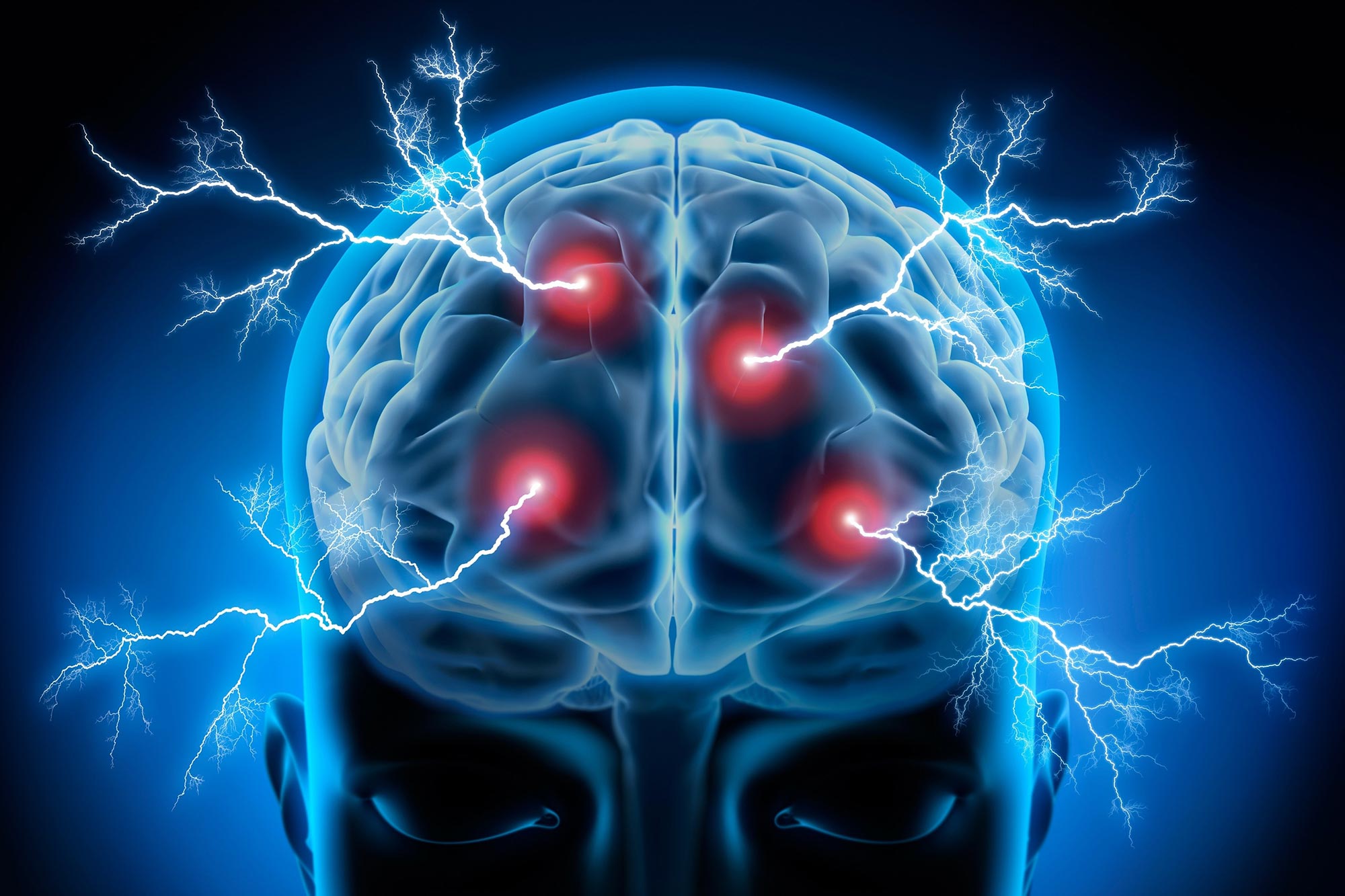
Scientists from UC San Diego may have solved the century-old mystery of why this controversial treatment works.
Electroconvulsive therapy (ECT), formerly known as electroshock therapy, involves triggering a short seizure in the brain using controlled electrical currents. ECT is notably effective in treating certain mental disorders, especially depression, but the reasons for its efficacy have long puzzled the fields of psychiatry and neuroscience.
Recent research conducted by the University of California San Diego offers a potential explanation. In two new studies published in the journal Translational Psychiatry, they propose a new hypothesis that ECT alleviates depression symptoms by increasing aperiodic activity, a type of electrical activity in the brain that doesn’t follow a consistent pattern and is generally considered to be the brain’s background noise.
“We’re solving a puzzle that’s stumped scientists and doctors since electroconvulsive therapy was first developed nearly a century ago,” said first author Sydney Smith, a PhD candidate in the Voytek Lab at UC San Diego. “On top of that, we’re also helping to demystify one of the most effective, yet stigmatized treatments for severe depression.”
ECT: Effective Treatment, Misunderstood Reputation
Electroconvulsive therapy has a great track record, but a bad reputation. The therapy is effective in up to 80% of patients who receive the treatment, most often for depression but occasionally for bipolar disorder or schizophrenia. However, despite this high success rate, electroconvulsive therapy is frequently associated with frightening images of people receiving painful, high-voltage shocks.
“A lot of people are surprised to learn that we still use electroconvulsive therapy, but the modern procedure uses highly controlled dosages of electricity and is done under anesthesia,” said Smith. “It really doesn’t look like what you see in movies or television.”
While generally safe and effective, ECT does have drawbacks, including temporary confusion and cognitive impairment. It also requires multiple outpatient visits, which can present a barrier to some people who might otherwise benefit from the treatment.
“One of the reasons ECT isn’t more popular is that for a lot of people, it’s easier and more convenient to just take a pill,” said senior author Bradley Voytek, PhD, professor of cognitive science at UC San Diego. “However, in people for whom medications don’t work, electroconvulsive therapy can be life-saving. Understanding how it works will help us discover ways to increase the benefits while minimizing side effects.”
A Closer Look at Brain Activity
The researchers used electroencephalography (EEG) scans to study the brain activity of patients who received ECT therapy for depression. They also looked at another similar form of treatment called magnetic seizure therapy, which induces a seizure with magnets instead of electrodes. Both therapies showed increased aperiodic activity levels in patients’ brains post-treatment.
“Aperiodic activity is like the brain’s background noise, and for years scientists treated it that way and didn’t pay much attention to it,” said Smith. “However, we’re now seeing that this activity actually has an important role in the brain, and we think electroconvulsive therapy helps restore this function in people with depression.”
One of the functions of aperiodic activity in the brain is helping control how neurons turn on and off. Our neurons are constantly going through cycles of excitation and inhibition that correspond with different mental states. Aperiodic activity helps boost inhibitory activity in the brain, effectively slowing it down.
“Something we see regularly in the EEG scans of people who receive electroconvulsive or magnetic seizure therapy is a slowing pattern in the brain’s electrical activity,” said Smith. “This pattern has gone unexplained for many years, but accounting for the inhibitory effects of aperiodic activity helps explain it. It also suggests that these two forms of therapy are causing similar effects in the brain.”
While these findings establish a link between aperiodic activity and ECT benefits, the researchers stress the need for further investigation to leverage these insights in clinical applications. They are currently exploring the possibility of using aperiodic activity as a metric of treatment effectiveness in other depression treatments, such as medications.
“At the end of the day, what’s most important to patients and to doctors is that the treatment works, which in the case of ECT, it does,” said Voytek. “However, it’s our job as scientists to dig into what’s really going on in the brain during these treatments, and continuing to answer those questions will help us find ways to make these treatments even more effective while reducing negative effects.”
References:
“Clinical EEG slowing induced by electroconvulsive therapy is better described by increased frontal aperiodic activity” by Sydney E. Smith, Vincent Ma, Celene Gonzalez, Angela Chapman, David Printz, Bradley Voytek and Maryam Soltani, 16 November 2023, Translational Psychiatry.
DOI: 10.1038/s41398-023-02634-9
“Magnetic seizure therapy and electroconvulsive therapy increase aperiodic activity” by Sydney E. Smith, Eena L. Kosik, Quirine van Engen, Jordan Kohn, Aron T. Hill, Reza Zomorrodi, Daniel M. Blumberger, Zafiris J. Daskalakis, Itay Hadas and Bradley Voytek, 16 November 2023, Translational Psychiatry.
DOI: 10.1038/s41398-023-02631-y
The first study was supported, in part, by National Institute of General Medicine Science (grant R01GM134363-01) and the Veterans Medical Research Foundation. The second study was supported, in part, by National Institute of General Medicine Science (grant R01GM134363-01).
Never miss a breakthrough: Join the SciTechDaily newsletter.
Follow us on Google and Google News.
2 Comments
It burns some brain cells
Law suits now around the devices used in ECT. Every ECT procedure is an acquired TBI misrepresented. The temporary euphoria, memory loss of problems, and failure to recognize incurred damages are NOT a mental health improvement. It is a known and anticipated outcome from an electrical mechanism of trauma inducing an acquired TBI with short and long term systemic risks. These risks can include CTE and ALS. Every bodily system down to a cellular level impacted by electrical trauma. Damages from electrical trauma evolve over time. None of this is mentioned in consent. There is now also medical malpractice interest around this lack of informed consent and medical battery. NFL expert Dr Omalu is now expert for plaintiffs in these ECT law suits. This is fraud at best. No FDA testing of devices used nor the procedure itself for safety or rven effectiveness. I think they know the truth of this harm and to test risks big monies involved. Increase risk for suicide after ECT as patients gave a hard time getting their brain injuries addressed. See site ectjustice and articles as it relates on site Mad in America.