
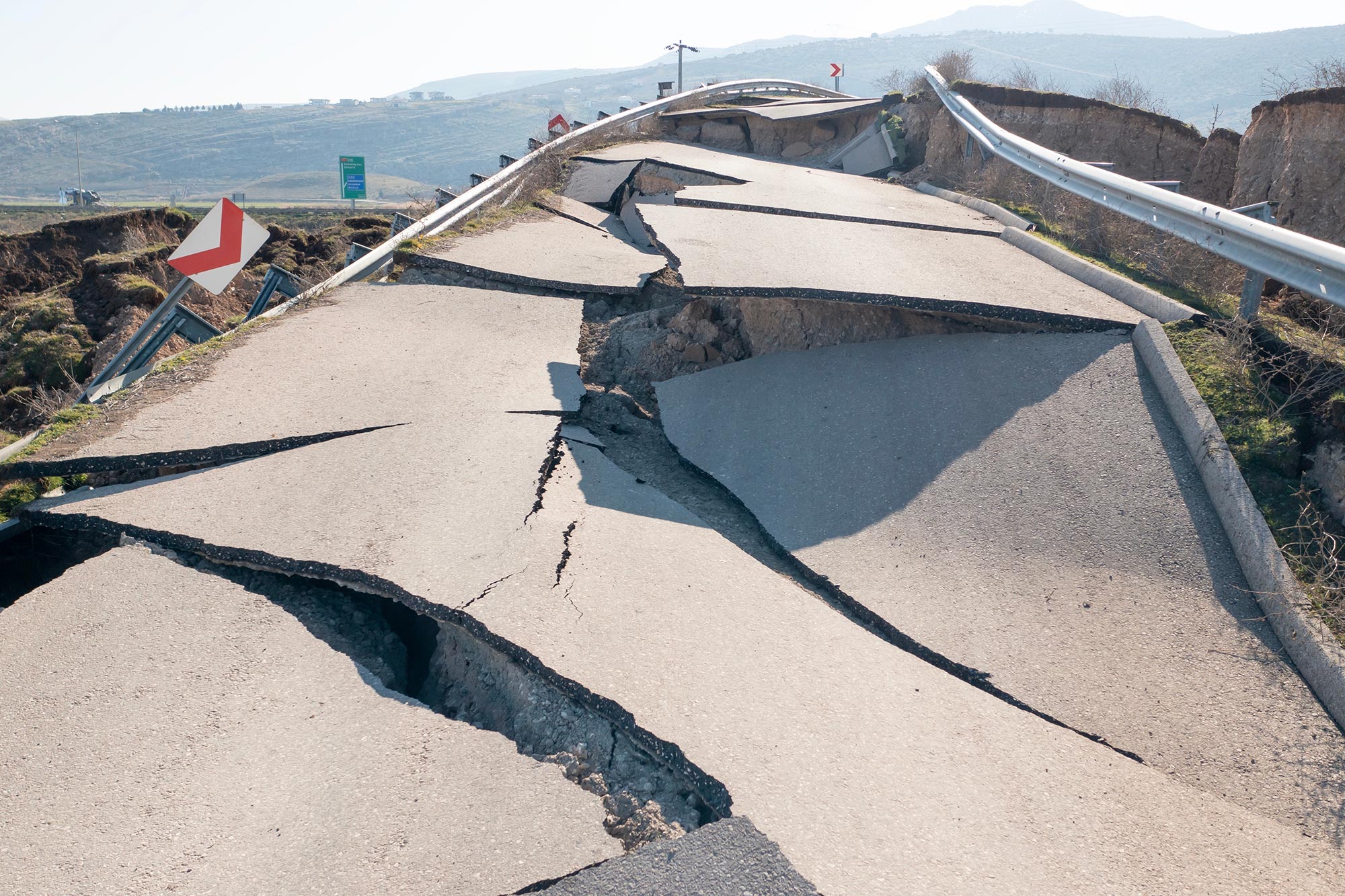
Researchers have solved the mystery of earthquakes striking supposedly stable regions. Long-dormant faults slowly regain strength over millions of years, storing stress until one sudden break releases it.
These shallow quakes are often triggered by human activities and can be surprisingly damaging. The good news: once the stress is released, the fault settles and won’t rupture again in the same way.
The Paradox of “Impossible” Earthquakes
Earthquakes in places such as Utah (USA), Soultz-sous-Forêts (France), and Groningen (the Netherlands) are not supposed to happen, even after decades of human activity beneath the surface. Geological theory holds that in shallow layers of the Earth, faults strengthen once they begin to move, making further motion less likely. That should, in principle, prevent earthquakes from forming. Yet tremors still occur in these supposedly stable regions. To understand why, researchers from Utrecht University investigated the mystery.
Their study, published in Nature Communications, found that after millions of years of inactivity, stress can quietly build up along faults until it is suddenly released in a single event. This finding is key for identifying safe sites for geothermal energy, energy storage, and other subsurface technologies.
“Faults can be found almost everywhere. Faults in the shallow subsurface are usually stable, so we do not expect shock movements to occur along them,” says Dr. Ylona van Dinther, who supervised the research. Nevertheless, shock movements often do occur in the stable first few kilometres of the subsurface. In such instances, we generally find a correlation with human activities. What exactly explains that paradox of shallow faults, which become stronger with movement, but then suddenly become weak and are subsequently released with a tremor?
Inactive Faults Heal Slowly
Many human-induced earthquakes occur on faults that have remained still for millions of years. Over that time, the rock surfaces on either side of the fault slowly “heal,” growing stronger and more resistant to movement. This gradual strengthening stores up stress that can later cause a sudden acceleration once the fault begins to move again. That acceleration produces an earthquake, even in regions long thought immune to them.
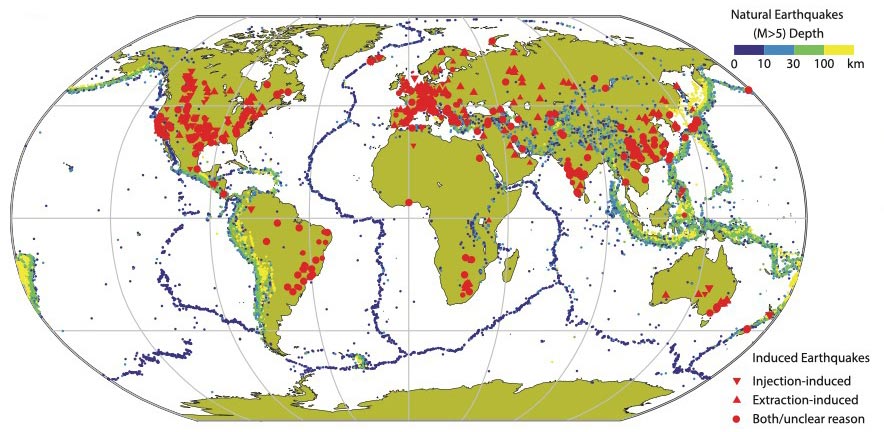
Shallow Quakes, Greater Risk
Communities in these areas are often unprepared because they lack a history of damaging earthquakes. Buildings and infrastructure are typically not designed to withstand shaking. “Furthermore, these earthquakes take place at a depth where human activities occur, in other words, no more than several kilometers deep. That is considerably less deep than the majority of natural earthquakes.” Because they originate so close to the surface, such quakes can generate stronger ground motion and cause more harm.
When Strength Becomes Stability Again
The good news is that this kind of earthquake appears to be a one-time event. Once the built-up stress accumulated over millions of years is released, the fault settles into a stable state.
“As a result, there is no more earthquake activity at that spot,” says Van Dinther. “This means that, although the subsurface in such areas will not settle immediately after human operations stop, the strength of the earthquakes — including the maximum expected magnitude — will gradually decrease.”
When a fault finally breaks, its newly fractured surfaces tend to slide more easily past one another in the future, creating a natural barrier that prevents large earthquakes from spreading. As a result, the overall risk and potential maximum magnitude are reduced.
Lessons for a Sustainable Subsurface
These discoveries have important implications for future underground projects. They show that earthquakes can occur even in regions once considered stable, but only once on a given fault. Afterward, the area becomes safer as the fault stabilizes through either an earthquake or slow slippage. Understanding how faults behave—whether they speed up or slow down when moving—and how “fault healing” affects their motion is essential for predicting and managing seismic risk.
By developing new computational models, researchers at Utrecht University are working to better assess one-time hazards and communicate them more effectively to ensure safer and more sustainable use of the subsurface.
Reference: “Frictional healing and induced earthquakes on conventionally stable faults” by Meng Li, Andre R. Niemeijer and Ylona van Dinther, 15 October 2025, Nature Communications.
DOI: 10.1038/s41467-025-63482-3
Never miss a breakthrough: Join the SciTechDaily newsletter.
Follow us on Google and Google News.