
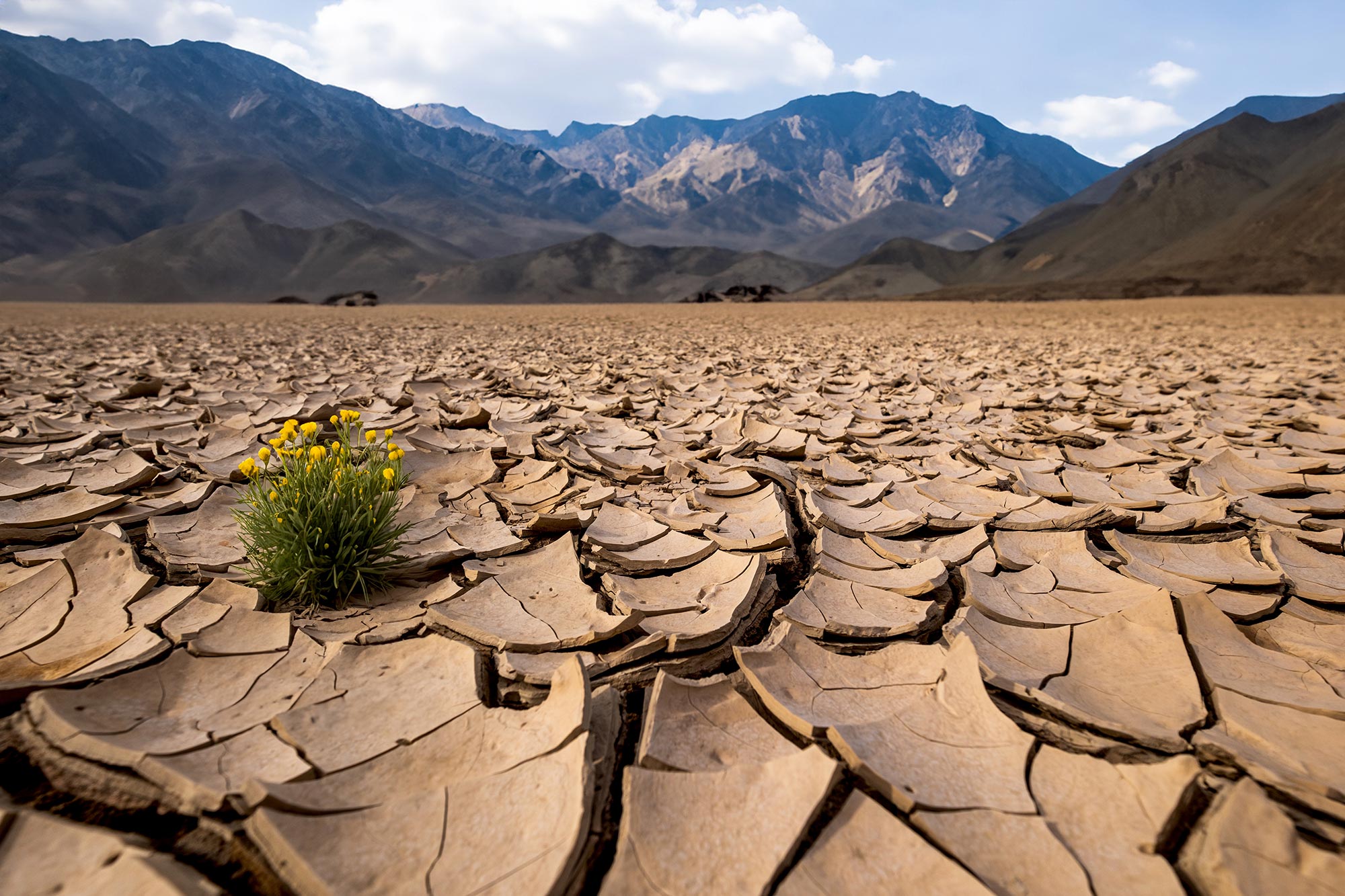
For decades, scientists have warned that climate change could trigger simultaneous droughts across multiple continents. But a century-long analysis of global climate data suggests a more complex picture.
Scientists at the Indian Institute of Technology Gandhinagar (IITGN), working with international collaborators, report that patterns in ocean temperatures play a key role in preventing droughts from spreading across the globe at the same time. Their findings, published in Communications Earth & Environment, are based on climate records from 1901–2020. The analysis shows that synchronized droughts covered between 1.8% and 6.5% of the world’s land surface, far less than earlier suggestions that as much as one-sixth of the planet could face drought simultaneously.
The research was led by Dr. Udit Bhatia, with contributions from scientists at IITGN and the Helmholtz Centre for Environmental Research – UFZ in Leipzig, Germany. The team investigated how droughts in distant regions overlap in timing and what factors influence their spread.
“We treated drought onsets as events in a global network. If two distant regions entered drought within a short time window, they were considered synchronised,” explained Dr. Bhatia, the lead author and the principal investigator of the Machine Intelligence and Resilience Lab and the AI Resilience and Command (ARC) Centre at IITGN.
Impacts on Major Crops
Using this network-based approach, the researchers pinpointed several ‘drought hubs’ including Australia, South America, southern Africa, and parts of North America. These areas frequently experience drought conditions at the same time as other regions. The team also reviewed historical production data for wheat, rice, maize, and soybean to determine how moderate drought influences crop yields.
“In many major agricultural regions, when moderate drought occurs, the probability of crop failure rises sharply—often above 25%, and in some areas, above 40–50% for crops like maize and soybean,” said Hemant Poonia, an AI Scientist at IITGN who completed his undergraduate and postgraduate degrees in Civil Engineering from the Institute. While this could be catastrophic if many regions dried out at once, the study shows that natural climate processes, especially changes in sea‑surface temperatures in the Pacific and other oceans, limit how far and how uniformly droughts can spread.

One of the most important influences is the El Niño–Southern Oscillation, a recurring warming and cooling pattern in Pacific Ocean waters that affects rainfall patterns around the world. During El Niño phases, Australia often emerges as a central drought hub, while other parts of the world experience different effects. In La Niña periods, drought patterns shift and are typically more geographically scattered.
“These ocean-driven swings create a patchwork of regional responses, limiting the emergence of a single, global drought covering many continents at once,” said co-author Danish Mansoor Tantary, a former IITGN master’s student who is now pursuing his PhD at Northeastern University (USA).
Rainfall Still Dominates—But Temperature Is Rising in Influence
The scientists also examined how rainfall and temperature together shape drought intensity. Their findings indicate that in recent decades, roughly two-thirds of long-term changes in drought severity are linked to changes in precipitation. The remaining one-third is associated with higher temperatures that increase evaporative demand.
“Rainfall remains the dominant driver globally, especially in regions like Australia and South America, but the influence of temperature is clearly growing in several mid‑latitude regions, such as Europe and Asia,” noted Dr. Rohini Kumar, the corresponding author and senior scientist from the Helmholtz Centre for Environmental Research, who works at the water-land-climate nexus.
The study highlights how data-driven research about climatic impact on global agricultural zones can transform our approach to safeguarding the world’s food supply. By moving beyond isolated weather reports and looking at the Earth as an interconnected network, the team has created avenues to identify ‘early warning’ regions before a local dry spell becomes a global crisis.
Highlighting the broader implications, Prof Vimal Mishra said, “These findings underline the importance of international trade, storage, and flexible policies. Because droughts do not hit all regions at the same time, smart planning can use this natural diversity to buffer global food supplies.” Prof Mishra is a leading expert in water and climate at IITGN and a recipient of the Shanti Swarup Bhatnagar Prize, India’s highest multidisciplinary science award.
“Our research highlights that we are not helpless in the face of a warming planet,” said Dr. Bhatia. “By understanding the delicate balance between oceans, rainfall, and temperatures, policymakers can focus their resources on specific drought hubs and create pipelines to stabilize the global market before crop failures in one region trigger price spikes in another.”
Reference: “Regional responses to oceanic variability constrain global drought synchrony” by Udit Bhatia, Hemant Poonia, Danish Mansoor Tantary, Vimal Mishra and Rohini Kumar, 6 January 2026, Communications Earth & Environment.
DOI: 10.1038/s43247-025-03111-5
The authors acknowledge support from the Anusandhan National Research Foundation (SERB) Network of Networks grant, Projekt DEAL, and AI Centre of Excellence (AICoE) in sustainable cities.
Never miss a breakthrough: Join the SciTechDaily newsletter.
Follow us on Google and Google News.
1 Comment
If well-mixed anthropogenic CO2 is driving global warming, and global warming determines the tendency for evaporation and the holding capacity for water vapor, why does the ENSO cycle seem to play such an important role? For that matter, what causes the timing, intensity, and duration of warming El Niño events? We can’t predict them.