
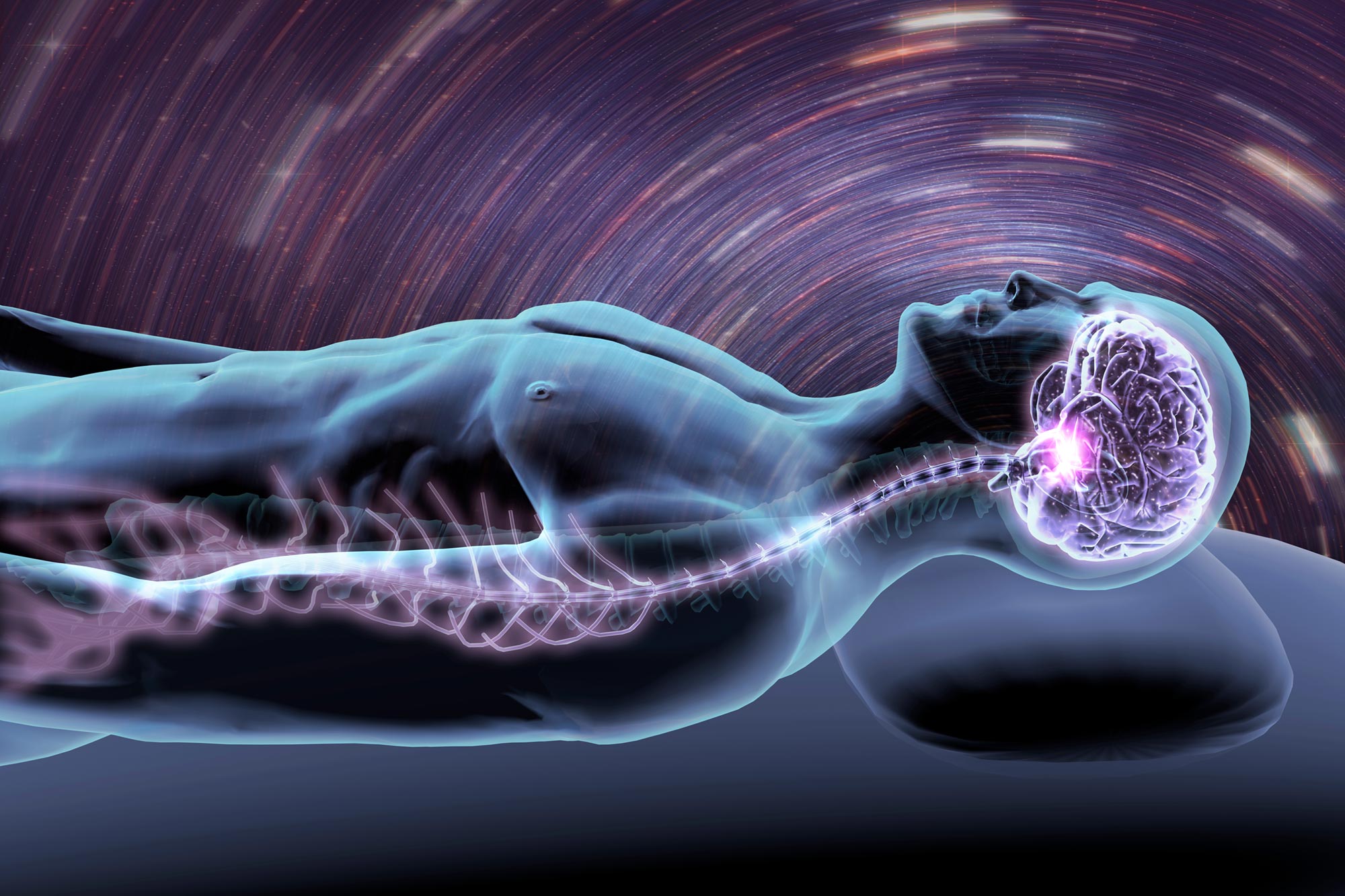
Researchers at Washington State University have uncovered evidence that sleep may not be entirely a function of the brain but also the microbes living within us. They discovered that bacterial cell wall molecules, known as peptidoglycan, exist naturally in the brain and fluctuate with the sleep cycle.
This finding supports a groundbreaking view that sleep arises from the interplay between the brain and the microbiome — a partnership that could reshape how we understand consciousness, evolution, and health. The work opens a new frontier in sleep science, suggesting that the key to our rest may lie as much in our gut as in our heads.
What Drives Sleep? A New Look at the Gut-Brain Connection
What causes us to sleep? The answer may lie not only in the brain itself, but also in how it interacts with the microorganisms that develop in the gut.
New research from Washington State University points to a shift in how scientists think about sleep. The study found that peptidoglycan, a material that forms part of bacterial cell walls, appears naturally in the brains of mice and aligns closely with their sleep patterns.
These results build on a long-running scientific idea at WSU that suggests sleep may emerge from communication between the body’s systems that regulate rest and the large community of microbes that live inside us.
“This added a new dimension to what we already know,” said Erika English, a PhD candidate at WSU and lead author on two recently published scientific papers introducing the findings.
Rethinking Sleep Through the “Holobiont Condition”
This perspective, which places sleep within what researchers call the “holobiont condition,” adds to growing evidence that the gut microbiome influences cognition, appetite, sex drive, and other behaviors. It challenges long-standing brain-centered models of cognition and raises new questions about evolution, free will, and future approaches to treating sleep disorders.
The discovery of peptidoglycan (PG) in the brain supports this evolving view and suggests that components of bacterial cell walls may help regulate sleep. Scientists have known that PG can induce sleep when injected into animals, but it had not been widely accepted that the molecule could naturally reach the brain.
English’s research showed that PG and the receptors involved in PG-related signaling appear in several brain regions, with levels that shift based on the time of day and whether an animal is sleep-deprived.
These findings were published in Frontiers in Neuroscience, with longtime WSU sleep researcher and Regents Professor James Krueger as co-author. English and Krueger also collaborated on a recent Sleep Medicine Reviews paper that further develops the “holobiont condition” model of sleep.
Uniting Two Major Theories of How Sleep Works
That paper synthesizes two leading theories. The first proposes that sleep is controlled by the brain and nervous system. The second describes “local sleep,” where small groups of cells throughout the body gradually enter sleep-like states. Experiments have shown these states occurring in isolated cells, leading to the “sleep in a dish” concept.
As more of these local pockets of inactivity arise, much like lights turning off one room at a time, the body shifts from wakefulness into sleep.
The new hypothesis blends these perspectives, suggesting that sleep is a shared outcome of interactions between the body and its resident micro-organisms, with both systems acting independently yet influencing each other.
“It’s not one or the other, it’s both. They have to work together,” English said. “Sleep really is a process. It happens at many different speeds for different levels of cellular and tissue organization and it comes about because of extensive coordination.”
Microbes, Behavior, and the Origins of Sleep
Researchers increasingly find that gut microbes are deeply tied to human behavior and cognition. This emerging understanding challenges the traditional view of the brain as the sole driver of thought and behavior, suggesting instead that many aspects of our activity may originate from the needs and evolution of the microbes that inhabit us.
“We have a whole community of microbes living within us. Those microbes have a much longer evolutionary history than any mammal, bird or insect – much longer, billions of years longer,” said Krueger, who was named a “Living Legend in Sleep Research” by the Sleep Research Society in 2023. “We think sleep evolution began eons ago with the activity/inactivity cycle of bacteria, and the molecules that were driving that are related to the ones driving cognition today.”
English’s research also adds to established links between bacteria and sleep. For example, sleep patterns are known to influence the health of the gut microbiome, and bacterial infections are associated with increased sleep.
A New Frontier in Understanding Sleep and the Microbiome
These new findings open the door to many additional questions that English hopes to investigate.
“Now that the world has come to appreciate how important microbes are, not just for disease but also for health, it’s a very exciting time to start to expand on our understanding of how we are communicating with our microbes and how our microbes are communicating with us,” she said.
Reference: “Bacterial peptidoglycan levels have brain area, time of day, and sleep loss-induced fluctuations” by Erika L. English and James M. Krueger, 26 June 2025, Frontiers in Neuroscience.
DOI: 10.3389/fnins.2025.1608302
Never miss a breakthrough: Join the SciTechDaily newsletter.
Follow us on Google and Google News.