
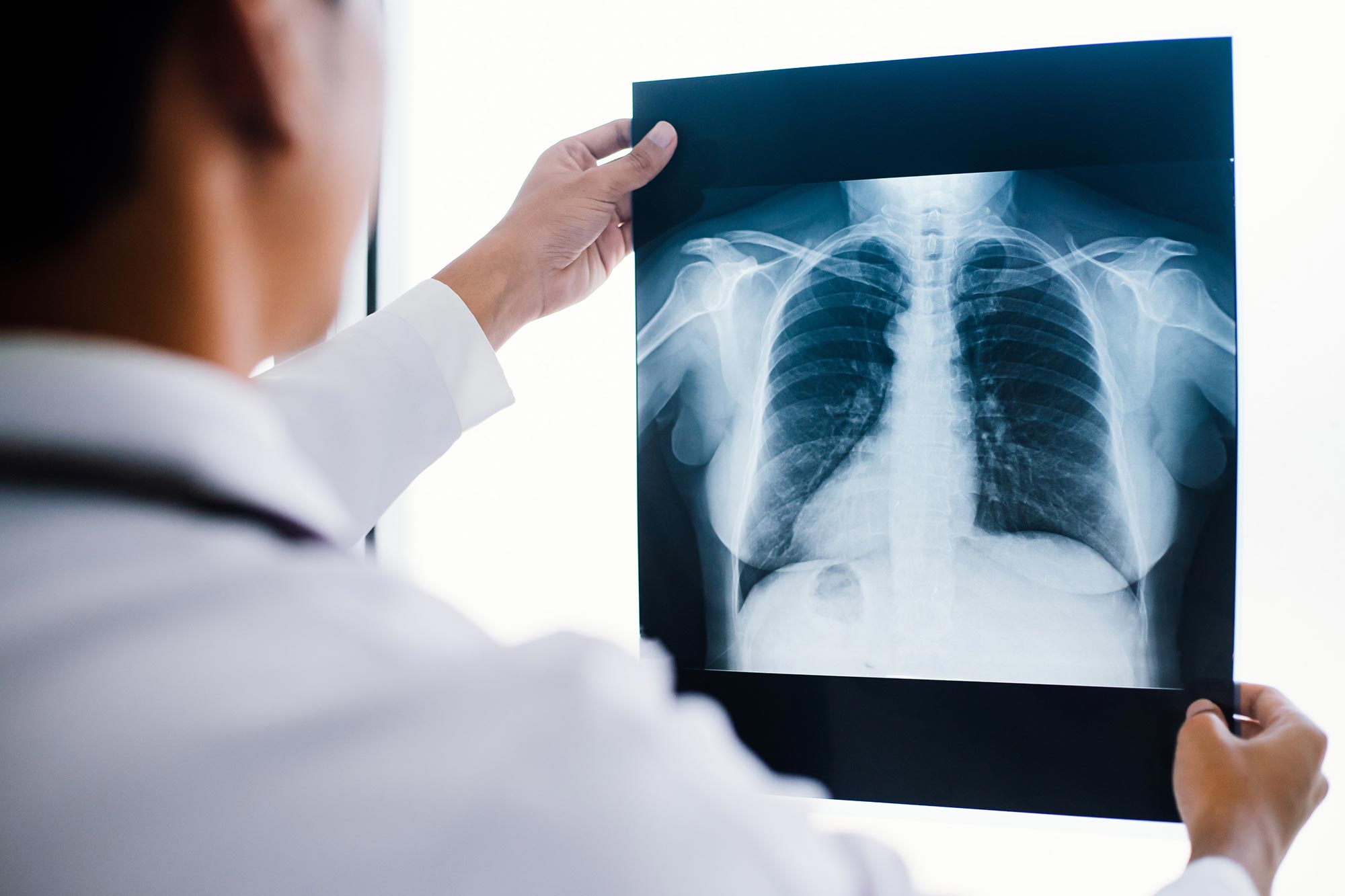
A new study found that wildfire smoke from Canadian wildfires significantly impacted health across the United States, with a marked increase in medical visits for heart and lung issues in Maryland.
The research, which utilized satellite and EPA data alongside health records, highlighted the broader implications of air quality on public health and underscored the need for improved healthcare access and resources, particularly for economically disadvantaged groups, during such environmental crises.
Wildfire Smoke and Health Impacts
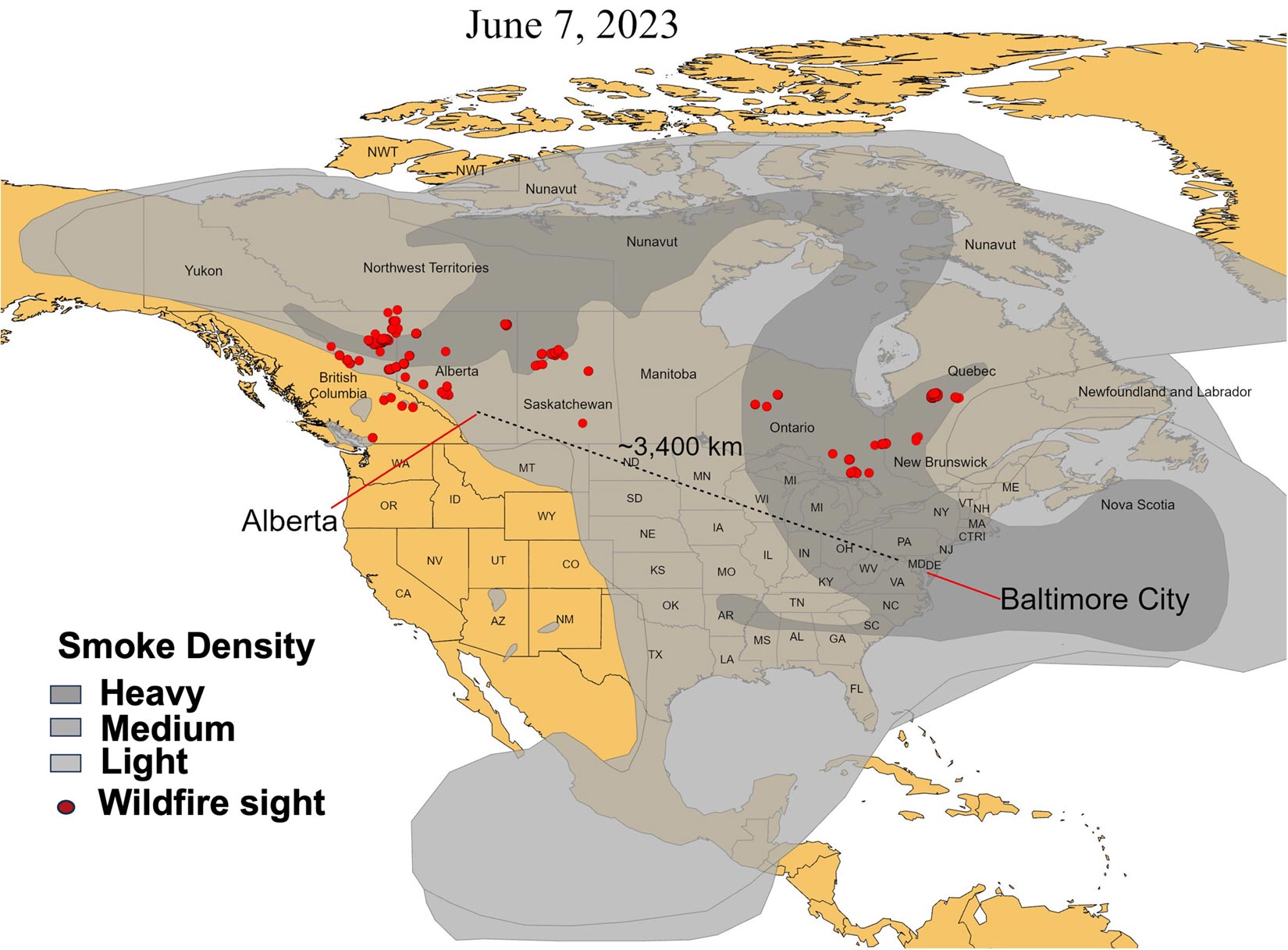
Wildfire smoke is well known for worsening conditions like heart disease, lung problems, and asthma. Now, a new study reveals that its health effects can stretch thousands of miles. Researchers from the University of Maryland Institute for Health Computing (UM-IHC) discovered a nearly 20% increase in medical visits for heart and lung issues during six smoky days in June 2023. This spike occurred when smoke from Western Canadian wildfires drifted across the U.S., causing hazardous air quality in Baltimore and surrounding areas.
These findings were published today (December 13) in the journal JAMA Network Open.
Detailed Observations from Healthcare Professionals
During the summer of 2023, severe Canadian wildfires created a vast plume that drifted 2000 miles across the country, leading to poor air quality on the East Coast of the United States, and many individuals experiencing breathing issues that led them to the doctor’s office.
“Baltimore had very dark skies, and we could all smell the smoke in the air,” said Mary Maldarelli, MD, pulmonary critical care fellow at the University of Maryland School of Medicine (UMSOM) who is the first author on the study. “But most importantly, my patients came in to me saying they were coughing quite a bit more and needed their medications more often, so they felt much sicker than they usually did when these wildfires occurred.” Dr. Maldarelli is also a resident in Pulmonary and Critical Care Medicine at the University of Maryland Medical Center.
Analysis of Health Records and Pollution Data
To determine whether the smoke-filled days led to quantifiable health consequences, she partnered with data scientists and visualization experts at the UM-IHC, which has access to nearly 2 million de-identified patient records from the University of Maryland Medical System (UMMS).
The researchers analyzed satellite data and Environmental Protection Agency (EPA) data to identify six “hotspot” days in June 2023 with high levels of wildfire smoke-related air pollution in the Maryland area. These were days that exceeded the EPA’s standards for safe air quality in all 23 counties in Maryland.
Increased Medical Visits During Smoke Events
The team then culled through the de-identified electronic health records from UMMS, comparing medical visits for heart-lung or cardiopulmonary conditions from June 2023 with medical visits during June 2018 and June 2019. These included emergency department visits, hospital admissions, and outpatient clinic visits.
“We found that hotspot days were associated with an 18 percent increased likelihood of patients going to the doctor for complications related to a cardiopulmonary condition,” said study corresponding author Bradley Maron, MD, Professor of Medicine at UMSOM and Co-Executive Director of the UM-IHC. “We also found a 55 percent increase in the risk for an outpatient visit for heart and lung conditions; these patients tended to be older, non-smokers, and more socio-economically affluent than typical patients who see their doctors for cardiovascular conditions on good air quality days.”
That finding could highlight the importance of healthcare access and may indicate that more economically disadvantaged patients are not getting the medical care they need on high-risk days filled with wildfire smoke.
Future Directions for Health Management in Smoke Events
With more climate events expected in the future, doctors may require better tools to help disadvantaged patients on hotspot days.
“We have the opportunity to leverage the capabilities of the UM-IHC to proactively identify patients who are most at risk and provide them with anticipatory care,” said UMSOM Dean Mark T. Gladwin, MD, who is the John Z. and Akiko K. Bowers Distinguished Professor and vice president for medical affairs at the University of Maryland, Baltimore. “There may be crucial ways we can prevent cardiovascular complications on polluted smoke air days simply by providing them with telehealth visits or other ways to access care.”
Amir Sapkota, PhD, and Hyeonjin Song, PhD, of the University of Maryland School of Public Health, performed the satellite and EPA analyses for the study. Study co-authors also included faculty from the University of Maryland, College Park, the University of Maryland School of Pharmacy, and the University of Maryland Medical System.
Leveraging Technology for Better Health Outcomes
“Being able to access clinical data at a granular level and our ability to apply advanced analytical tools such as this is critical and essential to the future of health care and enables UMMS to be at the forefront of innovative medicine that will help drive patient care in the years ahead,” said study co-author Warren D’Souza, PhD, Co-Director of the UM-IHC and Senior Vice President/Chief Innovation Officer at UMMS.
Reference: “Polluted Air from Canadian Wildfires and Cardiopulmonary Disease in the Eastern US” by Mary E. Maldarelli, Hyeonjin Song, Clayton H. Brown, Madhurika Situt, Colleen Reilly, Anup A. Mahurkar, Victor Felix, Jonathan Crabtree, Evan Ellicott, Martha O. Jurczak, Binod Pant, Abba Gumel, Zafar Zafari, Warren D’Souza, Amir Sapkota and Bradley A. Maron, 13 December 2024, JAMA Network Open.
DOI: 10.1001/jamanetworkopen.2024.50759
Funding for the study was provided by Montgomery County, Maryland, and The University of Maryland Strategic Partnership: MPowering the State, a formal collaboration between the University of Maryland, College Park and the University of Maryland, Baltimore.
Never miss a breakthrough: Join the SciTechDaily newsletter.
Follow us on Google and Google News.