
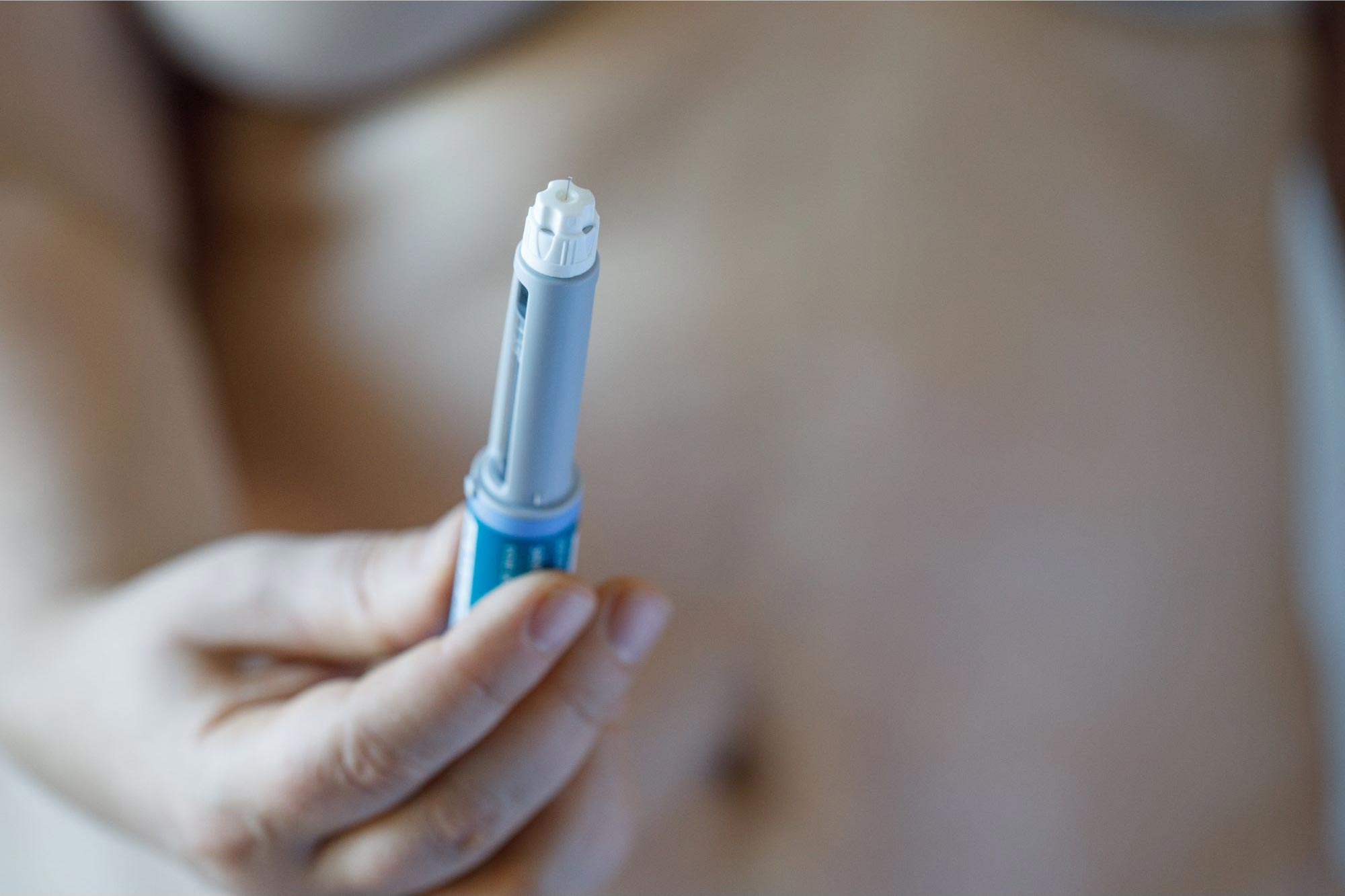
New research indicates GLP1-RA medications do not increase thyroid cancer risk, reassuring users and clinicians.
A new study, published in the peer-reviewed journal Thyroid, the official journal of the American Thyroid Association, found no evidence linking the use of glucagon-like peptide-1 receptor agonists (GLP-1 RAs) to an increased risk of thyroid cancer.
What are GLP1-RAs?
Glucagon-like peptide 1 receptor agonists (GLP1-RAs) are incretin-based glucose-lowering medications commonly used in the management of type 2 diabetes and obesity. They function by mimicking the action of glucagon-like peptide-1, a hormone naturally released from the gut after eating. GLP1-RAs help to regulate blood glucose levels by:
- Stimulating insulin release from the pancreas when blood glucose levels are elevated.
- Slowing down gastric emptying, thus promoting a feeling of fullness and reducing appetite.
- Reducing glucagon secretion, which lowers glucose production in the liver.
Commonly prescribed GLP1-RAs include Ozempic (semaglutide), Victoza (liraglutide), and Trulicity (dulaglutide).
Why Were There Concerns About Thyroid Cancer?
Initial concerns regarding thyroid cancer risks associated with GLP1-RAs emerged primarily from preclinical animal studies. In rodents, exposure to certain GLP1-RAs was associated with increased incidence of thyroid C-cell tumors. These findings prompted regulatory agencies, including the U.S. Food and Drug Administration (FDA), to require thyroid cancer risk warnings on GLP1-RA medication labeling.
Professor Anton Pottegård, from the University of Southern Denmark, and coauthors analyzed databases from six countries, comparing patients with type 2 diabetes between 2007 and 2023 for the risk of thyroid cancer among GLP1-RA users compared with dipeptidyl peptidase-4 inhibitors (DPP-4is). The investigators examined data from 92,497 users of GLP1-RA and 2,484,408 users of DPP-4i.
“In this large multisite study, utilizing data from six population-based databases, we found no evidence that GLP1-RA use is associated with an increased risk of thyroid cancer with follow-up ranging from 1.8-3.0 years, providing some reassurance to patients and clinicians about the short-term safety of these drugs,” concluded the investigators.
Reference: “Glucagon-Like Peptide 1 Receptor Agonists and Risk of Thyroid Cancer: An International Multisite Cohort Study” by Sarah M. Baxter, Lars Christian Lund, Jacob H. Andersen, Thomas H. Brix, Laszlo Hegedüs, Miyuki Hsing-Chun Hsieh, Chris Tzu-Ting Su, Michael Chun-Yuan Cheng, Zoe Chi-Jui Chang, Edward Chia-Cheng Lai, Swaleh Hussain, Cherry Chu, Tara Gomes, Tony Antoniou, Antoine Eskander, Zachary Bouck, Mina Tadrous, Sungho Bea, Eun-Young Choi, Ju-Young Shin, Karin Modig, Mats Talbäck, Rickard Ljung, Hanne Løvdal Gulseth, Øystein Karlstad, Blánaid Hicks and Anton Pottegård, 16 January 2025, Thyroid.
DOI: 10.1089/thy.2024.0387
Never miss a breakthrough: Join the SciTechDaily newsletter.
Follow us on Google and Google News.
1 Comment
“Our study has limitations. First, GLP1-RAs are relatively new drugs, limiting potential duration for follow-up. In our study, the median duration of follow-up for the GLP1-RA cohort ranged from 1.8 to 3.0 years and in the context of cancer latency this may be too short to investigate cancer risk.” That’s a problem.
“In summary, the results of this large multinational cohort study and meta-analysis suggest that patients with type 2 diabetes newly treated with GLP1-RA were not at an increased risk of thyroid cancer compared with patients newly treated with DPP-4is.” So these two types of drugs may both cause thyroid cancer. This study just compared the possible thyroid cancer incidence between these two drugs. There does not seem to be a control group of diabetics who do not take any drugs.
This means this article’s opening lead is inaccurate. “New research shows GLP1-RA medications do not increase thyroid cancer risk, reassuring users and clinicians.” It should indicate these are short-term results only, and only in comparison with another drug.