
Close Menu
    Facebook X (Twitter) Instagram
    SciTechDaily
    • Biology
    • Chemistry
    • Earth
    • Health
    • Physics
    • Science
    • Space
    • Technology
    Facebook X (Twitter) Pinterest YouTube RSS
    SciTechDaily
    Home»Technology»World Record in Solar Efficiency, Over 40% of Sunlight Converted Into Electricity
    Technology

    World Record in Solar Efficiency, Over 40% of Sunlight Converted Into Electricity

    By University of New South WalesDecember 8, 2014No Comments3 Mins Read
    Facebook Twitter Pinterest Telegram LinkedIn WhatsApp Email Reddit
    Share
    Facebook Twitter LinkedIn Pinterest Telegram Email Reddit
    New World Record in Solar Energy Efficiency
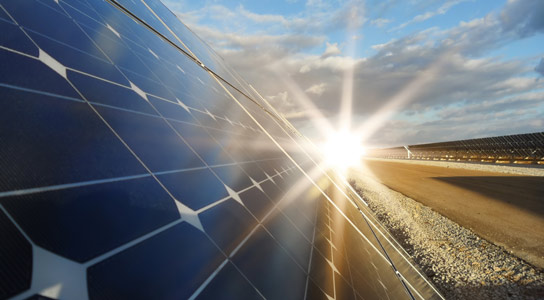
    Researchers at the University of New South Wales have achieved a world record in solar energy efficiency, converting over 40% of sunlight into electricity.

    Researchers from the University of New South Wales have set world record in solar energy efficiency, converting over 40% of the sunlight hitting a solar system into electricity.

    The world-beating efficiency was achieved in outdoor tests in Sydney, before being independently confirmed by the National Renewable Energy Laboratory (NREL) at their outdoor test facility in the United States.

    The work was funded by the Australian Renewable Energy Agency (ARENA) and supported by the Australia–US Institute for Advanced Photovoltaics (AUSIAPV).

    “This is the highest efficiency ever reported for sunlight conversion into electricity,” UNSW Scientia Professor and Director of the Australian Center for Advanced Photovoltaics (ACAP) Professor Martin Green said.

    “We used commercial solar cells, but in a new way, so these efficiency improvements are readily accessible to the solar industry,” added Dr Mark Keevers, the UNSW solar scientist who managed the project.

    The 40% efficiency milestone is the latest in a long line of achievements by UNSW solar researchers spanning four decades. These include the first photovoltaic system to convert sunlight to electricity with over 20% efficiency in 1989, with the new result doubling this performance.

    “The new results are based on the use of focused sunlight, and are particularly relevant to photovoltaic power towers being developed in Australia,” Professor Green said.

    Power towers are being developed by Australian company, RayGen Resources, which provided design and technical support for the high-efficiency prototype. Another partner in the research was Spectrolab, a US–based company that provided some of the cells used in the project.

    A key part of the prototype’s design is the use of a custom optical bandpass filter to capture sunlight that is normally wasted by commercial solar cells on towers and convert it to electricity at a higher efficiency than the solar cells themselves ever could.

    Such filters reflect particular wavelengths of light while transmitting others.

    ARENA CEO Ivor Frischknecht said the achievement is another world first for Australian research and development and further demonstrates the value of investing in Australia’s renewable energy ingenuity.

    “We hope to see this homegrown innovation take the next steps from prototyping to pilot scale demonstrations. Ultimately, more efficient commercial solar plants will make renewable energy cheaper, increasing its competitiveness.”

    The 40% efficiency achievement is outlined in a paper expected to be published soon by the Progress in Photovoltaics journal. It will also be presented at the Australian PV Institute’s Asia-Pacific Solar Research Conference, which begins at UNSW today (Monday 8 December).

    Never miss a breakthrough: Join the SciTechDaily newsletter.
    Follow us on Google and Google News.

    Green Technology Solar Energy Solar Power University of New South Wales
    Share. Facebook Twitter Pinterest LinkedIn Email Reddit

    Related Articles

    Photosynthesis Design Principles Could Improve Solar Technology

    Light-Capturing Nanomaterials to Boost Efficiency of Photovoltaic Solar Cells

    MIT Energy Initiative Report Highlights the Future of Solar Energy

    Spherical Glass Amplifies Solar Energy Collection

    3D Solar Towers, The future of Photovoltaics?

    Teaming Up to Slash Solar Cell Cost

    Polymer Solar Cell Efficiency Improved With Infrared-Absorbing Polymer

    Lithium Iron Phosphate Batteries Could Lead to Cheaper, More Efficient Solar Energy

    Researchers Develop IE2 for Analyzing Solar Cell Materials

    Leave A Reply Cancel Reply

    • Facebook
    • Twitter
    • Pinterest
    • YouTube

    Don't Miss a Discovery

    Subscribe for the Latest in Science & Tech!

    Trending News

    One of the Universe’s Largest Stars May Be Getting Ready To Explode

    Scientists Discover Enzyme That Could Supercharge Ozempic-Like Weight Loss Drugs

    Popular Sweetener Linked to DNA Damage – “It’s Something You Should Not Be Eating”

    Ancient “Rock” Microbes May Reveal How Complex Life Began

    Researchers Capture Quantum Interference in One of Nature’s Rarest Atoms

    “A Plague Is Upon Us”: The Mass Death That Changed an Ancient City Forever

    Scientists Discover Game-Changing New Way To Treat High Cholesterol

    This Small Change to Your Exercise Routine Could Be the Secret to Living Longer

    Follow SciTechDaily
    • Facebook
    • Twitter
    • YouTube
    • Pinterest
    • Newsletter
    • RSS
    SciTech News
    • Biology News
    • Chemistry News
    • Earth News
    • Health News
    • Physics News
    • Science News
    • Space News
    • Technology News
    Recent Posts
    • Revolutionary Imaging Technique Unlocks Secrets of Matter at Extreme Speeds
    • Where Does Mass Come From? Scientists Find Evidence of a New Exotic Nuclear State
    • Quantum Breakthrough: Unhackable Keys Sent Over 120 km Using Quantum Dots
    • Researchers Discover Unknown Beetle Species Just Steps From Their Lab
    • Jellyfish Caught Feasting on Exploding Sea Worms for the First Time
    Copyright © 1998 - 2026 SciTechDaily. All Rights Reserved.
    • Science News
    • About
    • Contact
    • Editorial Board
    • Privacy Policy
    • Terms of Use

    Type above and press Enter to search. Press Esc to cancel.