
Close Menu
    Facebook X (Twitter) Instagram
    SciTechDaily
    • Biology
    • Chemistry
    • Earth
    • Health
    • Physics
    • Science
    • Space
    • Technology
    Facebook X (Twitter) Pinterest YouTube RSS
    SciTechDaily
    Home»Space»XRISM Unveils the Invisible: A New Era in X-Ray Astronomy
    Space

    XRISM Unveils the Invisible: A New Era in X-Ray Astronomy

    By Jeanette Kazmierczak, NASA’s Goddard Space Flight CenterJanuary 8, 2024No Comments6 Mins Read
    Facebook Twitter Pinterest Telegram LinkedIn WhatsApp Email Reddit
    Share
    Facebook Twitter LinkedIn Pinterest Telegram Email Reddit
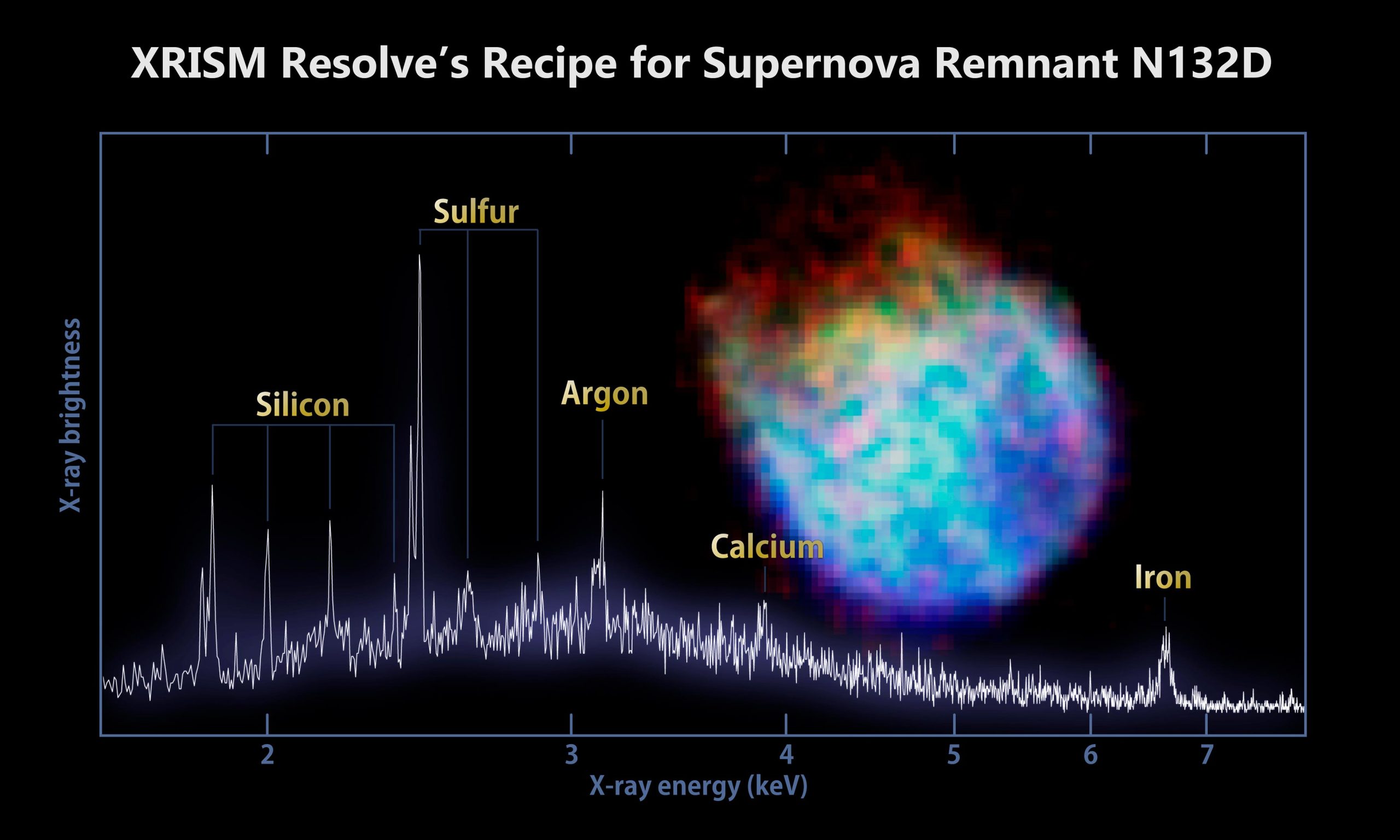
    XRISM Resolve Supernova Remnant N132D
    XRISM’s Resolve instrument captured data from supernova remnant N132D in the Large Magellanic Cloud to create the most detailed X-ray spectrum of the object ever made. The spectrum reveals peaks associated with silicon, sulfur, argon, calcium, and iron. Inset at right is an image of N132D captured by XRISM’s Xtend instrument. Credit: JAXA/NASA/XRISM Resolve and Xtend

    XRISM, a collaborative mission between Japan, NASA, and ESA, is set to revolutionize X-ray astronomy with its advanced instruments, offering unprecedented insights into the universe’s hottest and most massive structures.

    The Japan-led XRISM (X-ray Imaging and Spectroscopy Mission) observatory has released a first look at the unprecedented data it will collect when science operations begin later this year.

    The satellite’s science team released a snapshot of a cluster of hundreds of galaxies and a spectrum of stellar wreckage in a neighboring galaxy, which gives scientists a detailed look at its chemical makeup.

    Details of the XRISM Mission

    “XRISM will provide the international science community with a new glimpse of the hidden X-ray sky,” said Richard Kelley, the U.S. principal investigator for XRISM at NASA’s Goddard Space Flight Center in Greenbelt, Maryland. “We’ll not only see X-ray images of these sources, but also study their compositions, motions, and physical states.”

    XRISM (pronounced “crism”) is led by JAXA (Japan Aerospace Exploration Agency) in collaboration with NASA, along with contributions from ESA (European Space Agency). It launched on September 6, 2023.
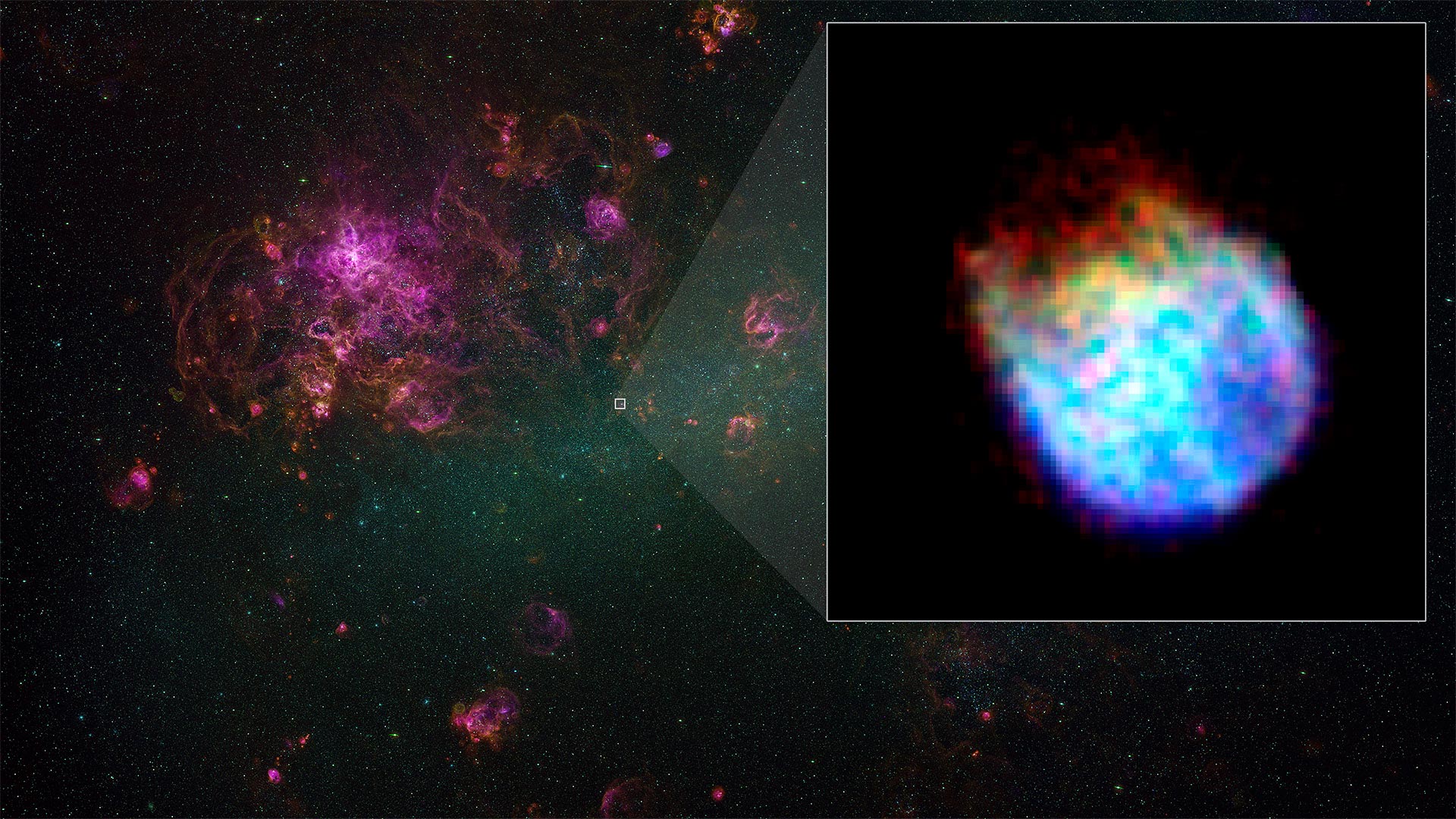
    Supernova Remnant N132D in Large Magellanic Cloud
    Supernova remnant N132D lies in the central portion of the Large Magellanic Cloud, a dwarf galaxy about 160,000 light-years away. XRISM’s Xtend captured the remnant in X-rays, displayed in the inset. At its widest, N132D is about 75 light-years across. Although bright in X-rays, the stellar wreckage is almost invisible in the ground-based background view taken in optical light. Credit: Inset, JAXA/NASA/XRISM Xtend; background, C. Smith, S. Points, the MCELS Team and NOIRLab/NSF/AURA

    It’s designed to detect X-rays with energies up to 12,000 electron volts and will study the universe’s hottest regions, largest structures, and objects with the strongest gravity. For comparison, the energy of visible light is 2 to 3 electron volts.

    Instruments and Early Achievements

    The mission has two instruments, Resolve and Xtend, each at the focus of an X-ray Mirror Assembly designed and built at Goddard.

    Resolve is a microcalorimeter spectrometer developed by NASA and JAXA. It operates at just a fraction of a degree above absolute zero inside a refrigerator-sized container of liquid helium.

    When an X-ray hits Resolve’s 6-by-6-pixel detector, it warms the device by an amount related to its energy. By measuring each individual X-ray’s energy, the instrument provides information previously unavailable about the source.
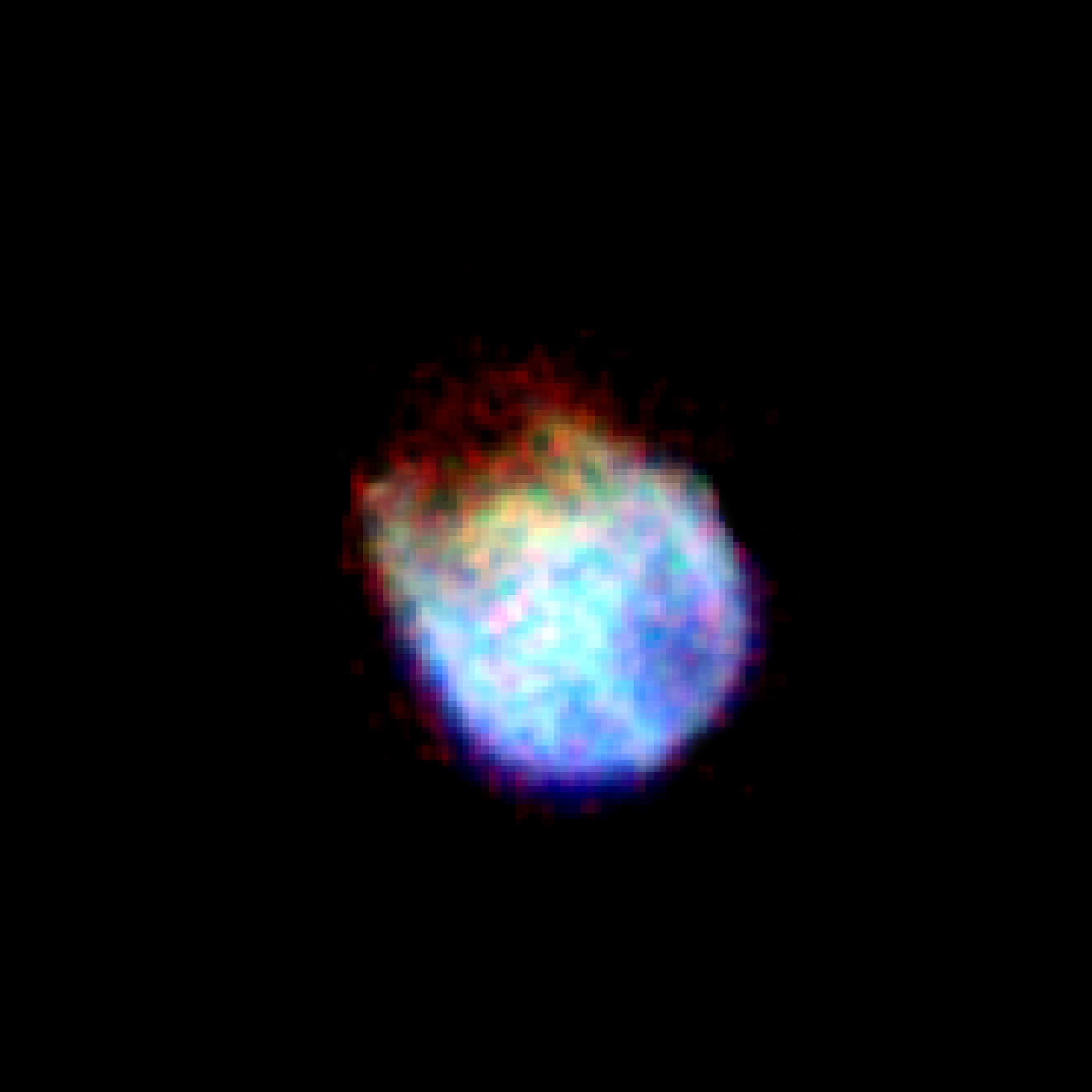
    XRISM Xtend Imager Supernova Remnant N132D Snapshot
    XRISM’s Xtend imager collected this snapshot of supernova remnant N132D. The expanding wreckage is estimated to be about 3,000 years old and was created when a star roughly 15 times the Sun’s mass ran out of fuel, collapsed, and exploded. At its widest, N132D is about 75 light-years across. Credit: JAXA/NASA/XRISM Xtend

    The mission team used Resolve to study N132D, a supernova remnant and one of the brightest X-ray sources in the Large Magellanic Cloud, a dwarf galaxy around 160,000 light-years away in the southern constellation Dorado. The expanding wreckage is estimated to be about 3,000 years old and was created when a star roughly 15 times the Sun’s mass ran out of fuel, collapsed, and exploded.

    The Resolve spectrum shows peaks associated with silicon, sulfur, calcium, argon, and iron. This is the most detailed X-ray spectrum of the object ever obtained and demonstrates the incredible science the mission will do when regular operations begin later in 2024.

    “These elements were forged in the original star and then blasted away when it exploded as a supernova,” said Brian Williams, NASA’s XRISM project scientist at Goddard. “Resolve will allow us to see the shapes of these lines in a way never possible before, letting us determine not only the abundances of the various elements present, but also their temperatures, densities, and directions of motion at unprecedented levels of precision. From there, we can piece together information about the original star and the explosion.”
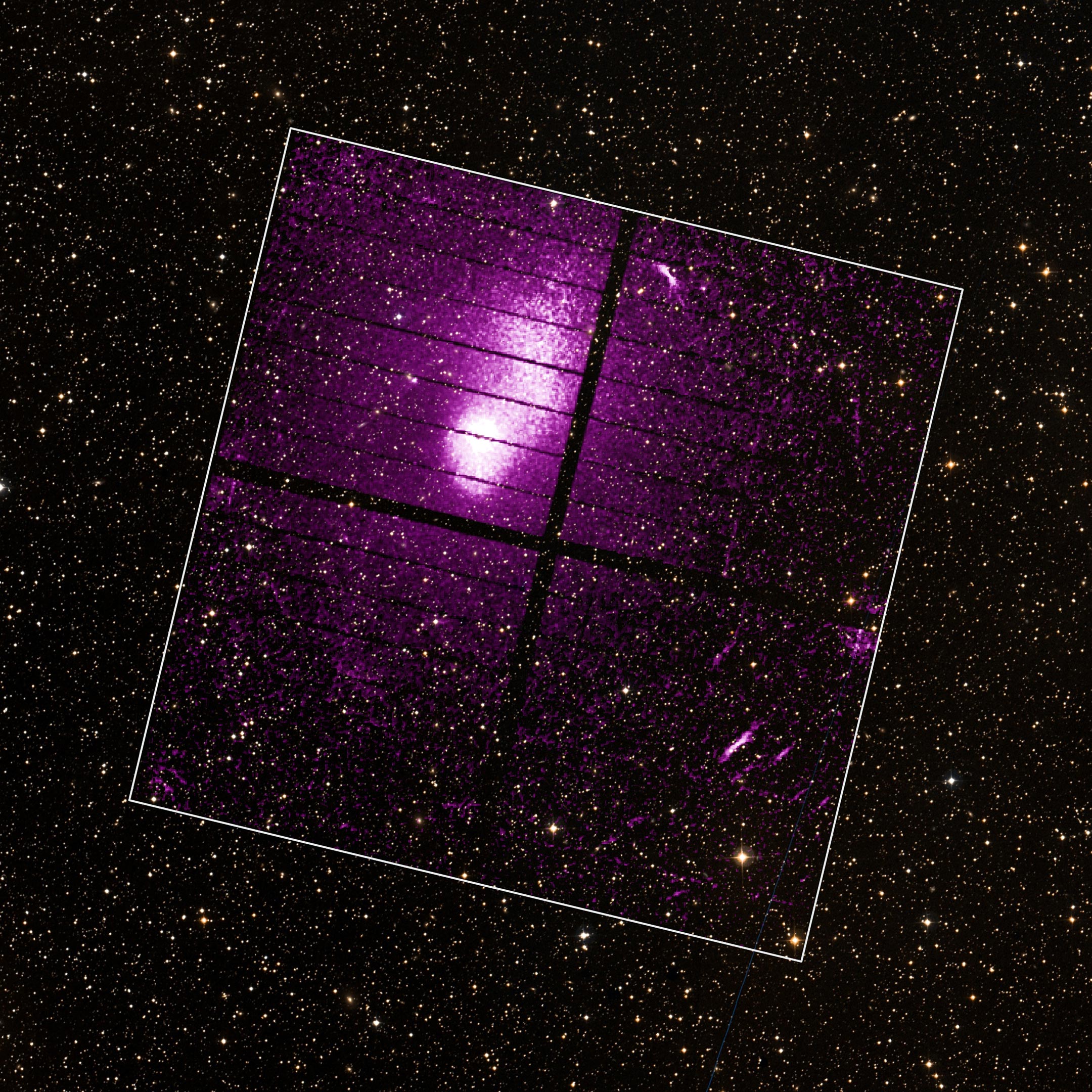
    XRISM Xtend Instrument Galaxy Cluster Abell 2319
    XRISM’s Xtend instrument captured galaxy cluster Abell 2319 in X-rays, shown here in purple and outlined by a white border representing the extent of the detector. The background is a ground-based image showing the area in visible light. Credit: JAXA/NASA/XRISM Xtend; background, DSS

    XRISM’s second instrument, Xtend, is an X-ray imager developed by JAXA. It gives XRISM a large field of view, allowing it to observe an area about 60% larger than the average apparent size of the full moon.

    Xtend captured an X-ray image of Abell 2319, a rich galaxy cluster about 770 million light-years away in the northern constellation Cygnus. It’s the fifth brightest X-ray cluster in the sky and is currently undergoing a major merger event.

    The cluster is 3 million light-years across and highlights Xtend’s wide field of view.
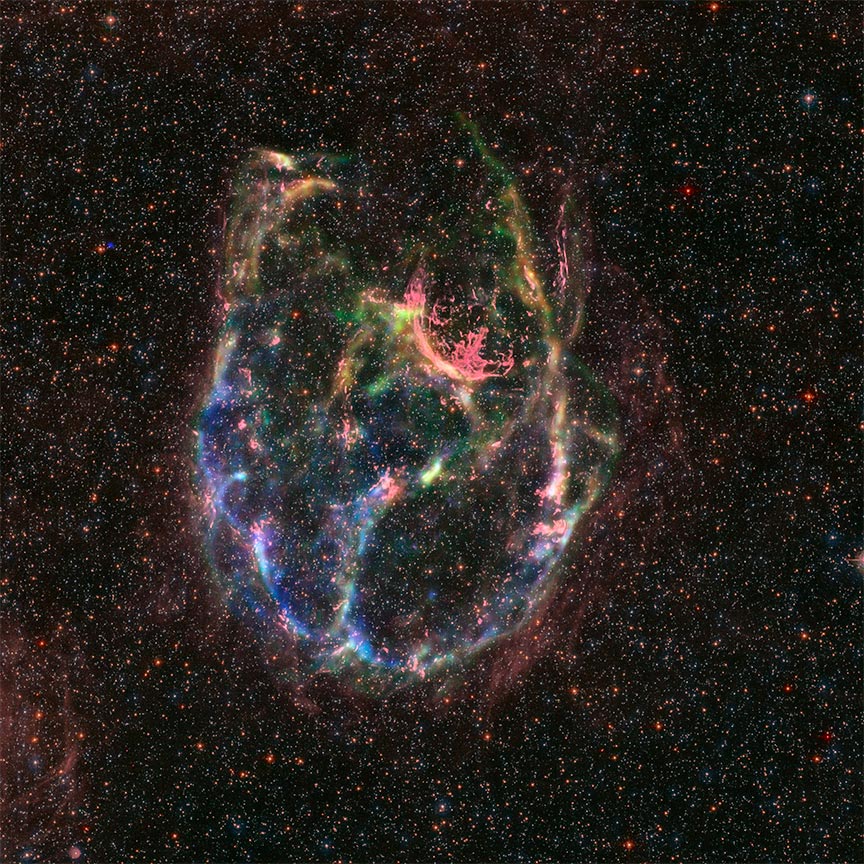
    Supernova Remnant N132D Composite
    This composite image shows supernova remnant N132D. It uses data from NASA’s Chandra X-ray Observatory (purple and green) and Hubble Space Telescope (red). N132D is among the brightest X-ray remnants in the Large Magellanic Cloud, a nearby dwarf galaxy. Credit: NASA/STScI/CXC/SAO, processing by Judy Schmidt, CC BY-NC-SA

    Technical Challenges and Future Plans

    “Even before the end of the commissioning process, Resolve is already exceeding our expectations,” said Lillian Reichenthal, NASA’s XRISM project manager at Goddard. “Our goal was to achieve a spectral resolution of 7 electron volts with the instrument, but now that it’s in orbit, we’re achieving 5. What that means is we’ll get even more detailed chemical maps with each spectrum XRISM captures.”

    Resolve is performing exceptionally and already conducting exciting science despite an issue with the aperture door covering its detector. The door, designed to protect the detector before launch, has not opened as planned after several attempts. The door blocks lower-energy X-rays, effectively cutting the mission off at 1,700 electron volts compared to the planned 300. The XRISM team will continue to explore the anomaly and is investigating different approaches to opening the door. The Xtend instrument is unaffected.

    NASA’s XRISM General Observer Facility, hosted at Goddard, is accepting proposals for observations from members of U.S. and Canadian institutions through Thursday, April 4. Cycle 1 of XRISM General Observer investigations will begin in the summer of 2024.

    XRISM is a collaborative mission between JAXA and NASA, with participation by ESA. NASA’s contribution includes science participation from the Canadian Space Agency.

    Never miss a breakthrough: Join the SciTechDaily newsletter.
    Follow us on Google and Google News.

    Astronomy Astrophysics NASA NASA Goddard Space Flight Center Popular XRISM
    Share. Facebook Twitter Pinterest LinkedIn Email Reddit

    Related Articles

    XRISM Spacecraft Detects Iron Signatures in Nearby Active Galaxy

    X-Ray Vision to the Cosmos: JAXA, NASA XRISM Mission Ready for Liftoff!

    NASA’s Roman Space Telescope Will Probe Galaxy’s Core for Hot Jupiters and Brown Dwarfs

    Astronomers Rewind the Clock to Calculate Age of Supernova Blast From Massive Star Explosion

    Astronomers May Have Spotted a Nanoflare on the Sun – First Predicted 48 Years Ago to Solve a Major Mystery

    Hubble Space Telescope Explains Oddball Galaxy’s Missing Dark Matter

    NASA Discovers “Very Weird” Molecule in Titan’s Atmosphere

    NASA STEREO Spacecraft’s Lone View of Betelgeuse Reveals More Strange Behavior – Is Supernova Imminent?

    “Deflated Croissant” – Uncovering the True Shape of Our Solar System

    Leave A Reply Cancel Reply

    • Facebook
    • Twitter
    • Pinterest
    • YouTube

    Don't Miss a Discovery

    Subscribe for the Latest in Science & Tech!

    Trending News

    Your Blood Pressure Reading Could Be Wrong Because of One Simple Mistake

    Astronomers Stunned by Ancient Galaxy With No Spin

    Physicists May Be on the Verge of Discovering “New Physics” at CERN

    Scientists Solve 320-Million-Year Mystery of Reptile Skin Armor

    Scientists Say This Daily Walking Habit May Be the Secret to Keeping Weight Off After Dieting

    New Therapy Rewires the Brain To Restore Joy in Depression Patients

    Giant Squid Detected off Western Australia in Stunning Deep-Sea Discovery

    Popular Sugar-Free Sweetener Linked to Liver Disease, Study Warns

    Follow SciTechDaily
    • Facebook
    • Twitter
    • YouTube
    • Pinterest
    • Newsletter
    • RSS
    SciTech News
    • Biology News
    • Chemistry News
    • Earth News
    • Health News
    • Physics News
    • Science News
    • Space News
    • Technology News
    Recent Posts
    • A Crucial Atlantic Current Is Weakening and Weather Could Change Worldwide
    • Scientists Stunned As Volcano Removes Methane From the Air
    • Scientists Discover Signs Africa May Be Splitting Apart Beneath Zambia
    • New Stroke Study Challenges Decades-Old Medical Beliefs
    • These Simple Plant Foods Are Linked to Lower Blood Pressure
    Copyright © 1998 - 2026 SciTechDaily. All Rights Reserved.
    • Science News
    • About
    • Contact
    • Editorial Board
    • Privacy Policy
    • Terms of Use

    Type above and press Enter to search. Press Esc to cancel.