
Close Menu
    Facebook X (Twitter) Instagram
    SciTechDaily
    • Biology
    • Chemistry
    • Earth
    • Health
    • Physics
    • Science
    • Space
    • Technology
    Facebook X (Twitter) Pinterest YouTube RSS
    SciTechDaily
    Home»Biology»Yale Researchers Identify Gene That Regulates the Growth of Melanoma
    Biology

    Yale Researchers Identify Gene That Regulates the Growth of Melanoma

    By Ziba KashefFebruary 29, 2016No Comments2 Mins Read
    Facebook Twitter Pinterest Telegram LinkedIn WhatsApp Email Reddit
    Share
    Facebook Twitter LinkedIn Pinterest Telegram Email Reddit
    Yale Identifies Gene That Regulates the Growth of Melanoma
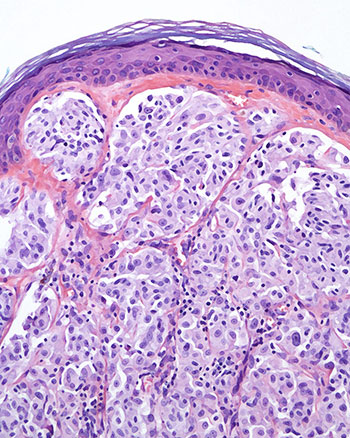
    Microscopic view of malignant melanoma. (Image by Marcus Bosenberg)

    New research from Yale University identifies a gene in melanoma that can dramatically affect the growth of the disease. The findings, published in the journal Cell Reports, provide new insight into how melanoma grows and identifies a new target for treatment of melanoma and other cancers.

    Enzymes that chemically modify DNA, known as DNA methyltranferases, play critical roles in regulating gene expression during development, but their role in cancer formation is less clear. The new Yale study has uncovered a novel role for a specific DNA methyltransfearase enzyme — DNMT3B — in regulating melanoma growth.

    Abnormally high expression of DNA methyltransferases is common in cancers, including melanoma. High expression of DNA methyltransferases can inappropriately switch genes off or on, which can contribute to tumor formation and growth. However, little is known about the specific growth-signaling pathways affected by DNA methyltransferase enzymes like DNMT3B. Yale researchers identified a specific cell-signaling pathway that is dependent on DNMT3B. They found that reducing DNMT3B delayed melanoma formation in mice by affecting mTORC2, a protein complex that is important for controlling cell growth, size, and survival.

    “We have identified a new target for drug development as well as a new way of targeting an existing pathway. These findings identify DNMT3B as an attractive target for cancer therapy,” said Dr. Marcus W. Bosenberg, associate professor of dermatology and pathology at Yale School of Medicine, and senior author on the study.

    Malignant melanoma is the most deadly form of skin cancer, accounting for 80% of all skin cancer deaths. The research, published early online by Cell Reports, could lead to the development of new strategies to slow melanoma growth by targeting DNMT3B, say the researchers.

    All authors are from Yale; they are Goran Micevic, Viswanathan Muthusamy, William Damsky, Nicholas Theodosakis, Xiaoni Liu, Katrina Meeth, and Dr. Manjula Santhanakrishnan.

    The Sokoloff Family-Melanoma Research Alliance Team Science Award, Yale Cancer Center, National Cancer Institute, and Joanna M. Nicolay Melanoma Foundation funded the study.

    Reference: “DNMT3b Modulates Melanoma Growth by Controlling Levels of mTORC2 Component RICTOR ” by Goran Micevic, Viswanathan Muthusamy, William Damsky, Nicholas Theodosakis, Xiaoni Liu, Katrina Meeth, Emily Wingrove, Manjula Santhanakrishnan and Marcus Bosenberg, 25 February 2016, Cell Reports.
    DOI: 10.1016/j.celrep.2016.02.010

    Never miss a breakthrough: Join the SciTechDaily newsletter.
    Follow us on Google and Google News.

    Cancer Cell Biology Melanoma Pathology Yale University
    Share. Facebook Twitter Pinterest LinkedIn Email Reddit

    Related Articles

    Yale Research Provides New Clues to How Cancer Cells Spread

    Yale Study Shows Gut Bacteria Aggressively Protect Their Territory

    Biologists Identify a New Approach to Cancer Immunotherapy

    Yale Study Shows T Cell Lymphoma Caused by Gene Deletions

    Scientists Uncover a Pathway for Silencing Tumor Suppressor Genes

    New Genome Analysis Reveals Dozens of Cancer Triggers

    Cancer Scientists Prove Long-Standing Theory on How Cancer Spreads

    Combination of Immune Stimulating Antibodies Shows Promising Results Against Advanced Melanoma

    Immune System May Trigger Melanoma Growth

    Leave A Reply Cancel Reply

    • Facebook
    • Twitter
    • Pinterest
    • YouTube

    Don't Miss a Discovery

    Subscribe for the Latest in Science & Tech!

    Trending News

    Bone-Strengthening Discovery Could Reverse Osteoporosis

    Scientists Uncover Hidden Trigger Behind Stem Cell Aging

    Scientists Find Way to Reverse Fatty Liver Disease Without Changing Diet

    Could Humans Regrow Limbs? New Study Reveals Promising Genetic Pathway

    Scientists Reveal Eating Fruits and Vegetables May Increase Your Risk of Lung Cancer

    Scientists Reverse Brain Aging With Simple Nasal Spray

    Scientists Uncover Potential Brain Risks of Popular Fish Oil Supplements

    Scientists Discover a Surprising Way To Make Bread Healthier and More Nutritious

    Follow SciTechDaily
    • Facebook
    • Twitter
    • YouTube
    • Pinterest
    • Newsletter
    • RSS
    SciTech News
    • Biology News
    • Chemistry News
    • Earth News
    • Health News
    • Physics News
    • Science News
    • Space News
    • Technology News
    Recent Posts
    • This Student Recreated the Universe in a Bottle. What She Discovered Could Help Reveal How Life Started on Earth
    • Alzheimer’s Symptoms May Start Outside the Brain, Study Finds
    • Cancer’s Secret Weapon? Scientists Reveal How Tumors “Learn” To Survive Treatment
    • Millions Take This Popular Supplement – Scientists Discover a Concerning Link to Heart Failure
    • What Makes Rubber So Strong? Scientists Finally Solve 100-Year-Old Mystery
    Copyright © 1998 - 2026 SciTechDaily. All Rights Reserved.
    • Science News
    • About
    • Contact
    • Editorial Board
    • Privacy Policy
    • Terms of Use

    Type above and press Enter to search. Press Esc to cancel.