
Close Menu
    Facebook X (Twitter) Instagram
    SciTechDaily
    • Biology
    • Chemistry
    • Earth
    • Health
    • Physics
    • Science
    • Space
    • Technology
    Facebook X (Twitter) Pinterest YouTube RSS
    SciTechDaily
    Home»Biology»Yale Scientists Open Up New World for Biologics
    Biology

    Yale Scientists Open Up New World for Biologics

    By Bill Hathaway, Yale UniversityJanuary 8, 20192 Comments2 Mins Read
    Facebook Twitter Pinterest Telegram LinkedIn WhatsApp Email Reddit
    Share
    Facebook Twitter LinkedIn Pinterest Telegram Email Reddit
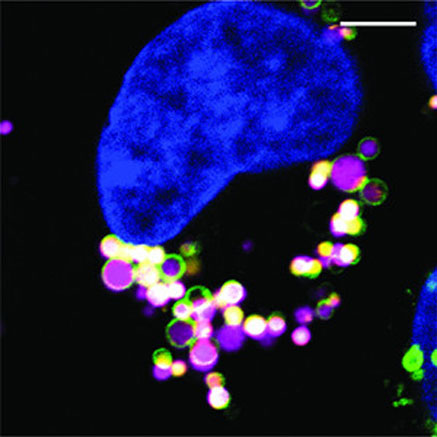
    Scientists Open Up NewWorld for Biologics
    Yale researchers have discovered a way to get biologics drugs into the interior of a cell.

    The vast majority of top-selling drugs are biologics — also known as proteins. Proteins are used today to treat many debilitating diseases, including arthritis, Crohn’s disease, and several forms of cancer. They have helped to improve the lives of many millions of people worldwide. And proteins have the potential to help many millions more, but they can’t, because most are unable to pass through the cell boundary to reach the regions of the cell where they are needed: the cell interior.

    “It’s been known for decades that proteins can be internalized from the cell boundary into cellular compartments known as endosomes,” said Yale’s Alanna Schepartz, Sterling Professor of Chemistry and professor of molecular, cellular & developmental biology. “Getting these molecules out of endosomes and into the cell interior was the big problem.”

    Schepartz and colleagues here at Yale now report the identity of a molecular key that effectively unlocks the endosome, allowing the selective passage into the cell interior of potentially life-saving protein drugs. This discovery was reported in the journal Proceedings of the National Academy of Science, USA.

    Schepartz — working with graduate students Angela Steinauer, Jonathan LaRochelle, and Susan Knox, postdoctoral associate Rebecca Wissner, and undergraduate Samuel Berry — reports that the endosome unlocking key is the homotypic fusion and vacuole protein sorting (HOPS) complex — a multi-protein assembly that tethers certain endosomes together to allow them to fuse. When the HOPS complex is functional, protein therapeutics escape from endosomes. When it is not functional, they remain trapped within.

    The discovery that protein therapeutics can hijack the HOPS complex to gain access to the cell interior should help scientists design therapeutic proteins to treat diseases that are not adequately treated using other approaches, Schepartz said.

    Reference: “HOPS-dependent endosomal fusion required for efficient cytosolic delivery of therapeutic peptides and small proteins” by  Angela Steinauer, Jonathan R. LaRochelle, Susan L. Knox, Rebecca F. Wissner, Samuel Berry, and Alanna Schepartz, 4 January 2019, PNAS.
    DOI:10.1073/pnas.1812044116

    Never miss a breakthrough: Join the SciTechDaily newsletter.
    Follow us on Google and Google News.

    Cell Biology Molecular Biology Yale University
    Share. Facebook Twitter Pinterest LinkedIn Email Reddit

    Related Articles

    Optical Illusions Have Long Mystified Neuroscientists – Now Explained in a Fly’s Eyes

    Scientists Provide New Insights Into the Origins of Genetic Diseases

    Natural Sorting Mechanism Allows Bacteria to Preserve Diversity

    Yale Researchers Track How Cells Repair Rips in DNA

    Yale Research Shows Leptin Spurs Body to Shift from Burning Carbs to Fat

    Scientists Create an Organism with a New Genetic Code

    New Research Changes the View about the Genetics of Leukemia Risk

    Researchers Identify Molecular Factors that Push the Domino of Life into Motion

    A Closer Look at the Antifreeze Protein That Allows Siberian Beetles to Survive

    2 Comments

    1. IT Support Dallas on January 13, 2019 7:29 pm

      Wonderful website. Here’s a lot of useful information. I’m sending it to a few shared friends. And of course, thanks for your sweetness!

      IT Support Dallas

      Reply
      • Suraj Mehar on January 29, 2019 9:31 pm

        😊😊😊

        Reply
    Leave A Reply Cancel Reply

    • Facebook
    • Twitter
    • Pinterest
    • YouTube

    Don't Miss a Discovery

    Subscribe for the Latest in Science & Tech!

    Trending News

    Popular Supplement Ingredient Linked to Shorter Lifespan in Men

    Scientists May Have Found a Way To Repair Nerve Damage in Multiple Sclerosis

    “Totally Unexpected” – Scientists Discover Pancreatic Cancer’s Fatal Addiction

    A Strange Quantum Effect May Explain One of Biology’s Greatest Mysteries

    James Webb Telescope Reveals the Universe’s Hidden Cosmic Web in Stunning Detail

    Scientists Identify Simple Supplement That Greatly Reduces Alzheimer’s Damage

    You May Have a Dangerous Type of Cholesterol Even if Your Tests Look Normal

    Your Blood Pressure Reading Could Be Wrong Because of One Simple Mistake

    Follow SciTechDaily
    • Facebook
    • Twitter
    • YouTube
    • Pinterest
    • Newsletter
    • RSS
    SciTech News
    • Biology News
    • Chemistry News
    • Earth News
    • Health News
    • Physics News
    • Science News
    • Space News
    • Technology News
    Recent Posts
    • Scientists Say a 40-Year-Old Childhood Obesity Warning May Be Completely Wrong
    • Marijuana Use May Raise Lung Cancer Risk, Researchers Warn
    • This Common Type of Food May Be Raising Your Risk of Heart Disease
    • Fur Seals’ Hearts Suddenly Spike Hours After Returning to Land
    • Scientists Say Cognitive Decline Isn’t Inevitable — Your Brain Can Improve at Any Age
    Copyright © 1998 - 2026 SciTechDaily. All Rights Reserved.
    • Science News
    • About
    • Contact
    • Editorial Board
    • Privacy Policy
    • Terms of Use

    Type above and press Enter to search. Press Esc to cancel.