
Close Menu
    Facebook X (Twitter) Instagram
    SciTechDaily
    • Biology
    • Chemistry
    • Earth
    • Health
    • Physics
    • Science
    • Space
    • Technology
    Facebook X (Twitter) Pinterest YouTube RSS
    SciTechDaily
    Home»Science»Yale Scientists Shed Light on the Warburg Effect
    Science

    Yale Scientists Shed Light on the Warburg Effect

    By Bill Hathaway, Yale UniversityAugust 18, 2015No Comments3 Mins Read
    Facebook Twitter Pinterest Telegram LinkedIn WhatsApp Email Reddit
    Share
    Facebook Twitter LinkedIn Pinterest Telegram Email Reddit
    Yale Researchers Shed Light on the Warburg Effect
    Yale Scientists shed light on the Warburg Effect

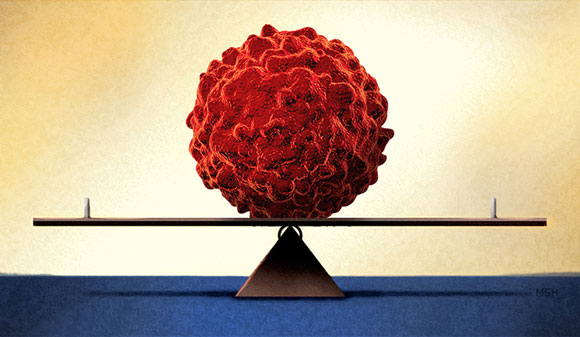
    A newly published study details how two Yale scientists used magnetic resonance measurements to answer the puzzle of the “Warburg Effect.”

    Given plenty of glucose and oxygen, yeast and cancer cells do not burn it all to produce energy but convert much of it to the byproducts of ethanol and lactate, respectively.

    In the 1920s Nobel laureate Otto Heinrich Warburg asked why these cells were so wasteful of energy. He suggested that this seemingly inefficient cellular use of resources was a root cause of cancer, a hypothesis that has been the subject of research ever since.

    Almost a century later, two Yale scientists have used magnetic resonance measurements showing how glucose is metabolized in yeast to answer the puzzle of the “Warburg Effect.” The production of these byproducts is a result of the cell’s need to keep its internal state constant during glucose consumption, they report August 17 in the Proceedings of the National Academy of Sciences.

    This biochemical response is an example of homeostasis, a fundamental need of all life forms.

    “It’s the cell’s way of saying it has enough to eat,” said Robert Shulman, professor emeritus of molecular biophysics and biochemistry.

    In the 1980s, Shulman conducted pioneering studies of metabolism in yeast using magnetic resonance spectroscopy, a method then confined to the study of cells but now used routinely in patients.

    More recently, Shulman and co-author Douglas Rothman, professor of diagnostic radiology and of biomedical engineering, reviewed the data by applying new methods of analyzing metabolic control. They found key intermediate molecular steps involved in the conversion of glucose to ethanol as well as to ATP, the chief energy source of cells. When these molecular switches that maintained homeostasis were disabled by mutations, the cells died from accumulated excesses of both byproducts and ATP.

    This chemical balancing act explains why yeast and likely cancer cells do not convert all available fuel to energy that they could use to divide and flourish.

    “Cancer cells have to survive first,” Rothman said.

    Shulman and Rothman point out that their results open a new direction for cancer researchers — identifying metabolic homeostasis mechanisms and targeting them for treatment.

    “By taking another look at the in vivo data available from magnetic resonance experiments, I think we can revitalize research efforts in a host of areas,” Shulman said.

    Primary funding for the research came from the National Institutes of Health.

    Reference: “Homeostasis and the glycogen shunt explains aerobic ethanol production in yeast” by Robert G. Shulman and Douglas L. Rothman, 17 August 2015, PNAS.
    DOI: 10.1073/pnas.1510730112

    Never miss a breakthrough: Join the SciTechDaily newsletter.
    Follow us on Google and Google News.

    Biochemistry Biophysics Molecular Biology Yale University
    Share. Facebook Twitter Pinterest LinkedIn Email Reddit

    Related Articles

    Neutron Crystallography Takes a Deep Dive Into Water Networks Surrounding DNA

    Scientists Discover Tiny Protein Has Big Impact in Times of Stress

    Biochemists Reveal Secrets of a Little-Known Cancer Ally

    Laminin Alpha 5 is Crucial to Adolescent Brain Maturation

    DNA2 Molecule Helps Repair Chromosome Rearrangements Linked to Cancer

    Yale Study Reveals Why BRCA Gene Resists Cancer Treatment

    New Evidence on the Origins of Life on Earth

    Conformational Changes of EF-G on the Ribosome During tRNA Translocation

    Yale Researchers Create a 21st Amino Acid

    Leave A Reply Cancel Reply

    • Facebook
    • Twitter
    • Pinterest
    • YouTube

    Don't Miss a Discovery

    Subscribe for the Latest in Science & Tech!

    Trending News

    The Universe Is Expanding Too Fast and Scientists Can’t Explain Why

    “Like Liquid Metal”: Scientists Create Strange Shape-Shifting Material

    Early Warning Signals of Esophageal Cancer May Be Hiding in Plain Sight

    Common Blood Pressure Drug Shows Surprising Power Against Deadly Antibiotic-Resistant Superbug

    Scientists Uncover Dangerous Connection Between Serotonin and Heart Valve Disease

    Scientists Discover a “Protector” Protein That Could Help Reverse Hair Loss

    Bone-Strengthening Discovery Could Reverse Osteoporosis

    Scientists Uncover Hidden Trigger Behind Stem Cell Aging

    Follow SciTechDaily
    • Facebook
    • Twitter
    • YouTube
    • Pinterest
    • Newsletter
    • RSS
    SciTech News
    • Biology News
    • Chemistry News
    • Earth News
    • Health News
    • Physics News
    • Science News
    • Space News
    • Technology News
    Recent Posts
    • A Common Diabetes Drug May Hold the Key to Stopping HIV From Coming Back
    • Ancient “Syphilis-Like” Disease in Vietnam Challenges Key Scientific Assumptions
    • Drinking Alcohol To Cope in Your 20s Could Damage Your Brain for Life
    • Scientists Crack Alfalfa’s Chromosome Mystery After Decades of Debate
    • Ancient Ant-Plant Alliance Collapses As Predatory Wasps Move In
    Copyright © 1998 - 2026 SciTechDaily. All Rights Reserved.
    • Science News
    • About
    • Contact
    • Editorial Board
    • Privacy Policy
    • Terms of Use

    Type above and press Enter to search. Press Esc to cancel.