
Close Menu
    Facebook X (Twitter) Instagram
    SciTechDaily
    • Biology
    • Chemistry
    • Earth
    • Health
    • Physics
    • Science
    • Space
    • Technology
    Facebook X (Twitter) Pinterest YouTube RSS
    SciTechDaily
    Home»Earth»Young Impact Crater Uncovered in Yilan, China
    Earth

    Young Impact Crater Uncovered in Yilan, China

    By Sara E. Pratt, NASA Earth ObservatoryFebruary 28, 20221 Comment2 Mins Read
    Facebook Twitter Pinterest Telegram LinkedIn WhatsApp Email Reddit
    Share
    Facebook Twitter LinkedIn Pinterest Telegram Email Reddit
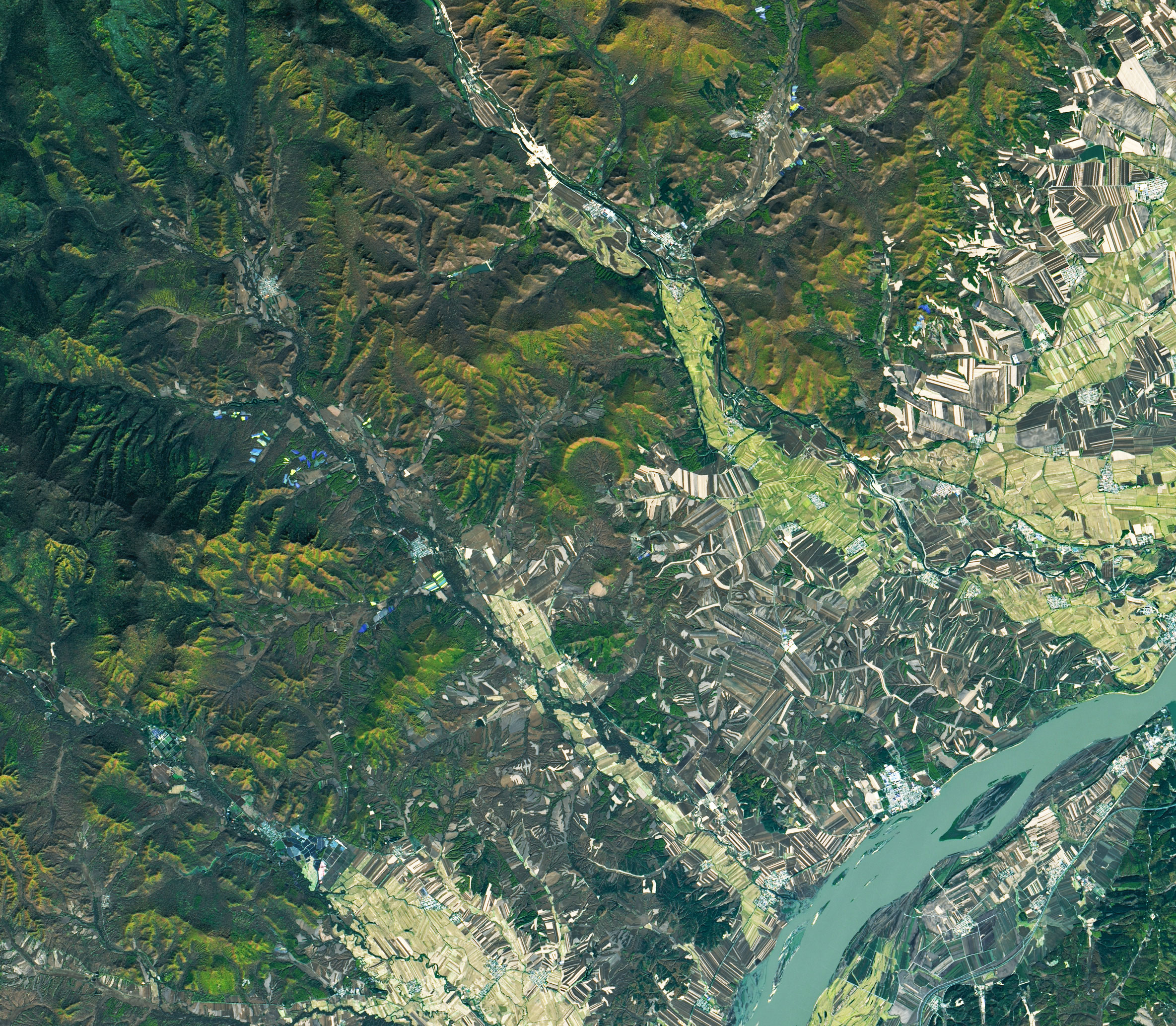
    Yilan Crater Annotated
    October 8, 2021

    The 50,000-year-old crater is relatively young, and only the second discovered in China.

    Despite China’s large land area, only one impact crater—the relatively small Xiuyan crater in Liaoning province—had been discovered there prior to 2020. Then, last year, a team of geologists found another crater northwest of Yilan in Heilongjiang Province. The crater was discovered in the heavily forested Lesser Xing’an mountain range, where local residents knew it as “Quanshan,” or “circular mountain ridge.”

    The Yilan crater, slightly larger than Xiuyan, spans about 1.85 kilometers (1.15 miles), making it the largest crater on Earth under 100,000 years old. Carbon-14 dating of charcoal and organic lake sediments suggests the crater formed between 46,000 and 53,000 years ago. Meteor (or Barringer) Crater in Arizona is also roughly 50,000 years old, but its diameter is 1.2 kilometers (0.75 miles).

    In the image above, acquired by the Operational Land Imager (OLI) on Landsat 8 on October 8, 2021, the scalloped northern rim of Yilan crater is highlighted by fall foliage. The northern rim—which rises 150 meters (500 feet) above the crater floor—is well-preserved, but the southern third of the crater rim is missing.

    Although the asteroid that created the crater struck relatively recently in geologic time, the granite rocks it impacted were much older, having formed about 200 million years ago in the Early Jurassic Period. To investigate the impact structure, the research team drilled down 438 meters (1,440 feet) into the center of the crater, where they found hundreds of meters of ancient lake sediments and shattered granite. The team also found unambiguous evidence that the structure was indeed an impact crater, they reported in Meteoritics & Planetary Science. The core revealed shocked quartz, melted granite, glass containing holes formed by gas bubbles, and tear-drop shaped glass fragments—all indications of a high-intensity impact event.

    The researchers continue to investigate the cause of the missing southern rim. However, the presence of lakebed sediments inside the crater suggests the rim was intact long enough for significant deposits to build up on the lake bottom. Such deposits often produce rich, organic soil; some farm fields can be seen inside the southern part of the crater. The rest of the crater interior is covered with swamps and forest wetlands.

    NASA Earth Observatory image by Lauren Dauphin, using Landsat data from the U.S. Geological Survey.

    Never miss a breakthrough: Join the SciTechDaily newsletter.
    Follow us on Google and Google News.

    Crater Geography Meteors NASA NASA Earth Observatory Popular
    Share. Facebook Twitter Pinterest LinkedIn Email Reddit

    Related Articles

    600 Million Years Ago, an Asteroid Strike Shook the Planet – And Its Effects May Still Linger

    A Geologist’s Dream: A Short Journey to the Center of the Earth

    Spied by Satellite: Phytoplankton Factory in the Argentine Sea

    Elephant Island: The Incredible Survival Story of Ernest Shackleton and the Crew of HMS Endurance

    Robinson Crusoe Island Captured by Landsat 8 Satellite

    Huacachina: The Only Natural Oasis in South America

    NASA Picturing Earth: Astronaut Photography In Focus [Video]

    NASA Scientists Map Beirut Blast Damage – Devastating Explosion Rocked Port Area

    NASA Advanced Rapid Imaging Satellite Maps Blast Damage: Beirut Explosion Aftermath

    1 Comment

    1. Prince of Peace on March 5, 2022 1:19 am

      I have a crater too with diamond in it

      Reply
    Leave A Reply Cancel Reply

    • Facebook
    • Twitter
    • Pinterest
    • YouTube

    Don't Miss a Discovery

    Subscribe for the Latest in Science & Tech!

    Trending News

    Largest-Ever Study Finds Medicinal Cannabis Ineffective for Anxiety, Depression, PTSD

    250-Million-Year-Old Egg Solves One of Evolution’s Biggest Mysteries

    Living With Roommates Might Be Changing Your Gut Microbiome Without You Knowing

    Century-Old Cleaning Chemical Linked to 500% Increased Risk of Parkinson’s Disease

    What if Your Memories Never Happened? Physicists Take a New Look at the Boltzmann Brain Paradox

    One of the Universe’s Largest Stars May Be Getting Ready To Explode

    Scientists Discover Enzyme That Could Supercharge Ozempic-Like Weight Loss Drugs

    Popular Sweetener Linked to DNA Damage – “It’s Something You Should Not Be Eating”

    Follow SciTechDaily
    • Facebook
    • Twitter
    • YouTube
    • Pinterest
    • Newsletter
    • RSS
    SciTech News
    • Biology News
    • Chemistry News
    • Earth News
    • Health News
    • Physics News
    • Science News
    • Space News
    • Technology News
    Recent Posts
    • Scientists Prove There Are Just Six Degrees of Separation in a Social Network
    • Bee Bacteria Could Fix a Major Flaw in Plant-Based Milk
    • Scientists Discover a Surprising Way To Make Bread Healthier and More Nutritious
    • Natural Compounds Boost Bone Implant Success While Killing Bacteria and Cancer Cells
    • After 60 Years, Scientists Uncover Unexpected Brain Effects of Popular Diabetes Drug Metformin
    Copyright © 1998 - 2026 SciTechDaily. All Rights Reserved.
    • Science News
    • About
    • Contact
    • Editorial Board
    • Privacy Policy
    • Terms of Use

    Type above and press Enter to search. Press Esc to cancel.