
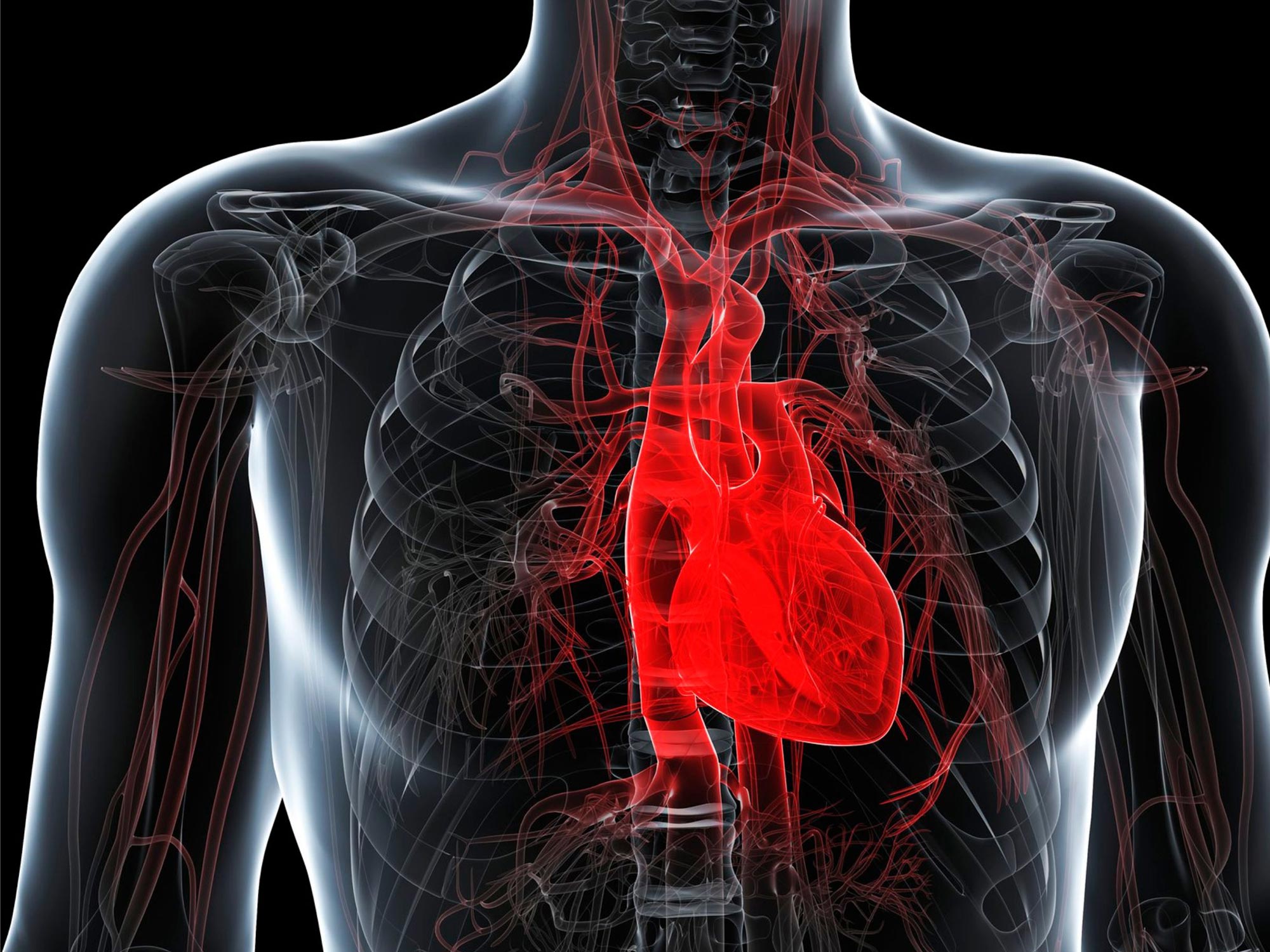
MRI technology reveals that unhealthy lifestyles can prematurely age your heart by decades.
Scientists at the University of East Anglia (UEA) have created a powerful new way to uncover your heart’s true age using a simple MRI scan.
This breakthrough can reveal how well your heart is actually functioning, not just how old you are on paper. And for people with unhealthy habits or conditions like high blood pressure or diabetes, the results might be a wake-up call.
The new research shows that lifestyle choices can dramatically speed up how fast your heart ages, but now, doctors may be able to catch warning signs before it’s too late.
The team calls their new method a true “game changer” and could help millions prevent heart disease before symptoms even begin.
Lead researcher Dr. Pankaj Garg, from UEA’s Norwich Medical School and a consultant cardiologist at the Norfolk and Norwich University Hospital, said: “Imagine finding out that your heart is ‘older’ than you are. For people with conditions like high blood pressure, diabetes, or obesity, this is often the case.
“Our new MRI approach doesn’t just count your birthdays – it measures how well your heart is holding up.”
Led by UEA, the research team collaborated with hospitals in the UK, Spain, and Singapore. They studied MRI scans from 557 people – 191 healthy individuals and 366 with conditions like high blood pressure, diabetes, or obesity.
How the Technique Works
Using advanced imaging, they measured things like the size and strength of the heart’s chambers. Then, they built a formula to calculate the heart’s ‘functional age’ and checked it against healthy hearts to make sure it was accurate.
Dr. Garg said: “We found that an MRI scan can reveal your heart’s ‘functional age’ — how old it acts, not how old you are. In healthy people, we found that heart age was similar to chronological age. But for patients with things like diabetes, hypertension, obesity, and atrial fibrillation, their functional heart age was significantly higher.
He continues, “For example, a 50-year-old with high blood pressure might have a heart that works like it’s 55. People with health issues like diabetes or obesity often have hearts that are aging faster than they should — sometimes by decades. So, this could help doctors step in early to stop heart disease in its tracks. This is a game-changer for keeping hearts healthier, longer.”
Implications for Prevention and Public Health
Dr. Garg states, “Heart disease is one of the world’s biggest killers. Our new MRI method gives doctors a powerful tool to look inside the heart like never before and spot trouble early — before symptoms even start. By knowing your heart’s true age, patients could get advice or treatments to slow down the aging process, potentially preventing heart attacks or strokes.”
“It could also be the wake-up call people need to take better care of themselves — whether that’s eating healthier, exercising more, or following their doctor’s advice. It’s about giving people a fighting chance against heart disease,” he added.
PhD Student Hosam Assadi, also from UEA’s Norwich Medical School, said: “It’s thrilling to see how this MRI technique could change lives. We’ve found a way to spot hearts that are aging too fast, and that could mean catching problems early enough to fix them. I hope this could become a standard check-up for hearts in the future.”
Reference: “Cardiovascular magnetic resonance imaging markers of ageing: a multi-centre, cross-sectional cohort study” by Hosamadin S Assadi, Xiaodan Zhao, Gareth Matthews, Rui Li, Jordi Broncano Cabrero, Bahman Kasmai, Samer Alabed, Javier Royuela Del Val, Hilmar Spohr, Yashoda Gurung-Koney, Nay Aung, Sunil Nair, Andrew J Swift, Vassilios S Vassiliou, Liang Zhong, Abdallah Al-Mohammad, Rob J van der Geest, Peter P Swoboda, Sven Plein and Pankaj Garg, 2 May 2025, European Heart Journal Open.
DOI: 10.1093/ehjopen/oeaf032
This research was led by UEA in collaboration with the Norfolk and Norwich University Hospitals NHS Foundation Trust, the National Heart Research Institute Singapore, the University of Sheffield, the Hospital San Juan de Dios (Spain), Barts Health NHS Trust, Leiden University Medical Center (The Netherlands), the University of Leeds, and the National University of Singapore.
Funding: Wellcome Trust
Never miss a breakthrough: Join the SciTechDaily newsletter.
Follow us on Google and Google News.
3 Comments
“By knowing your heart’s true age, patients could get advice or treatments to slow down the aging process, potentially preventing heart attacks or strokes.” “I hope this could become a standard check-up for hearts in the future.”
By taking expensive MRIs of the heart, especially with no symptoms?
Why not just give heart healthy advice to everyone, without using an MRI as a sales visual? heart healthy advice does not require a diagnosis of pre-heart disease. This is another example of the over-medicalization of everything. But I suppose there are wealthy people who fear heart disease who are willing to shell out thousands of dollars for an MRI of their heart, to then get the same advice everyone should get, like paying attention to diet, reducing stress, and exercising. As the circus promoter Barnum once said, there’s a sucker born every minute. And they are buying longevity sales pitches like this one.
You know how I strengthened my heart? I stopped taking unnecessary doctor prescribed drugs, switched to supplements and drastically changed my diet. Life is soooo much better!……no doctor required.
We don’t know the details of your condition or your medication. We don’t know whether or not your doctor was any good. We don’t know how you figured your heart is stronger now that you’ve stopped your medication. We don’t know if yours is a special case, or others like you will get the same results.
A single case case study is not actionable. We need details of your case so that we can determine what’s going on, we also need lots of similar cases.
In the meantime, it’s dangerous to ignore advice of medical doctors.