

- An analysis of more than 6,500 adults found a clear link between high cardiovascular health — as measured by the American Heart Association’s Life’s Essential 8 checklist — and slower biological aging.
- After accounting for a range of socioeconomic factors, adults with high cardiovascular health were about six years younger biologically than their chronological age.
Study Highlights Potential Benefits of Cardiovascular Health on Aging
Having high cardiovascular health may slow the pace of biological aging, which may reduce the risk of developing cardiovascular and other age-related diseases while extending life, according to a preliminary study to be presented at the American Heart Association’s Scientific Sessions 2023. The meeting, to be held November 11-13, in Philadelphia, is a premier global exchange of the latest scientific advancements, research, and evidence-based clinical practice updates in cardiovascular science.
Assessing Heart and Brain Health
Researchers examined the association between heart and brain health, as measured by the American Heart Association’s Life’s Essential 8 checklist and the biological aging process, as measured by phenotypic age.
Instead of a calendar to assess chronological (actual) age, phenotypic age is a robust measure of biological (physiological) age calculated based on your chronological age plus the results of nine blood markers (routinely captured during clinical visits) for metabolism, inflammation, and organ function (including glucose, C-reactive protein, and creatinine). Phenotypic age acceleration is the difference between one’s phenotypic age and actual age. A higher phenotypic age acceleration value indicates faster biological aging.
Key Study Findings and Implications
“We found that higher cardiovascular health is associated with decelerated biological aging, as measured by phenotypic age. We also found a dose-dependent association – as heart health goes up, biological aging goes down,” said study senior author Nour Makarem, Ph.D., an assistant professor of epidemiology at the Mailman School of Public Health at Columbia University Irving Medical Center in New York City. “Phenotypic age is a practical tool to assess our body’s biological aging process and a strong predictor of future risk of disease and death.”
Impact of Cardiovascular Health on Biological Age
After calculating phenotypic age and phenotypic age acceleration for more than 6,500 adults who participated in the 2015-2018 National Health and Nutrition Examination Survey (NHANES), the analysis found:
- Participants with high cardiovascular health had a negative phenotypic age acceleration — meaning that they were younger than expected physiologically. In contrast, those with low cardiovascular health had a positive phenotypic age acceleration — meaning that they were older than expected physiologically. For example, the average actual age of those with high cardiovascular health was 41, yet their average biological age was 36; and the average actual age of those who had low cardiovascular health was 53, though their average biological age was 57.
- After accounting for social, economic and demographic factors, having the highest Life’s Essential 8 score (high cardiovascular health) was associated with having a biological age that is on average six years younger than the individual’s actual age when compared to having the lowest score (low cardiovascular health).
“Greater adherence to all Life’s Essential 8 metrics and improving your cardiovascular health can slow down your body’s aging process and have a lot of benefits down the line. Reduced biologic aging is not just associated with lower risk of chronic disease such as heart disease, it is also associated with longer life and lower risk of death,” Makarem said.
Study Demographics and Criteria
Additional study details:
- Study participants were average age of 47 years; 50% were women; and were self-identified as 6% Asian adults, 10% were Black adults, 16% were Hispanic adults and 64% were White adults.
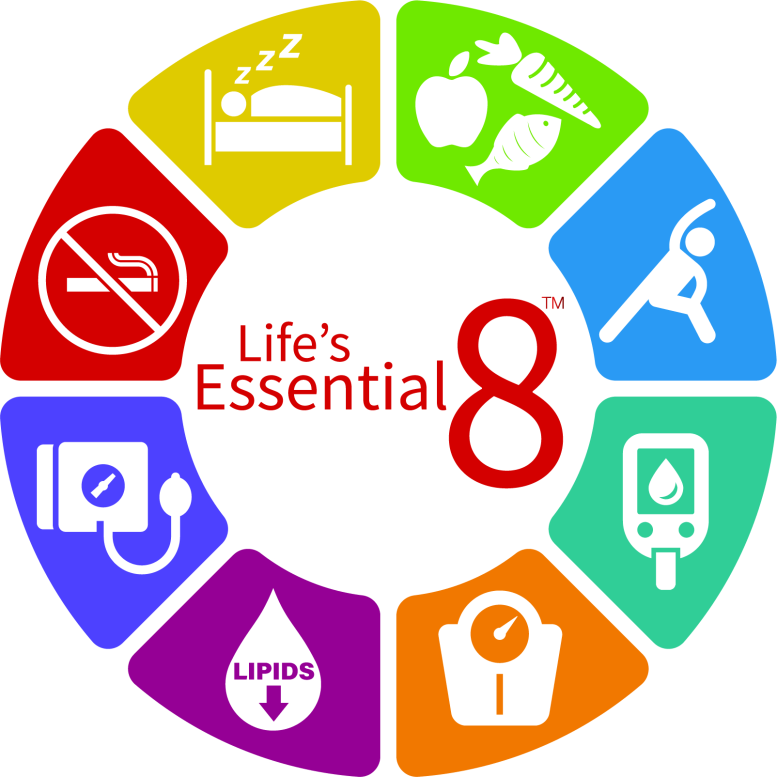
- Life’s Essential 8 is a checklist of healthy lifestyle behaviors and health measures that drive optimal cardiovascular health. The 8-item scoring tool includes healthy sleep, not smoking, regular physical activity, healthy diet, healthy body weight, and blood glucose, cholesterol, and blood pressure. A person’s overall score is calculated using an average of all eight metrics, resulting in scores within three categories: high, moderate, or low cardiovascular health.
Insights on Healthy Aging
“These findings help us understand the link between chronological age and biological age and how following healthy lifestyle habits can help us live longer. Everyone wants to live longer, yet more importantly, we want to live healthier longer so we can really enjoy and have good quality of life for as many years as possible,” said Donald M. Lloyd-Jones, M.D., Sc.M., FAHA, chair of the writing group for Life’s Essential 8 and a past volunteer president of the American Heart Association. Lloyd-Jones is also the chair of the department of preventive medicine, the Eileen M. Foell Professor of Heart Research and professor of preventive medicine, medicine and pediatrics at Northwestern University’s Feinberg School of Medicine in Chicago.
Study Limitations
A limitation of the study is that the cardiovascular metrics were measured at only one-point in time. Therefore, changes in cardiovascular health were not measured, and their potential influence on phenotypic age over time could not be gauged.
Co-authors, disclosures and funding sources are listed in the manuscript. The American Heart Association and the National Institutes of Health funded the study.
Never miss a breakthrough: Join the SciTechDaily newsletter.
Follow us on Google and Google News.
1 Comment
Excellent