
Close Menu
    Facebook X (Twitter) Instagram
    SciTechDaily
    • Biology
    • Chemistry
    • Earth
    • Health
    • Physics
    • Science
    • Space
    • Technology
    Facebook X (Twitter) Pinterest YouTube RSS
    SciTechDaily
    Home»Space»Zero Gravity Genius: ISS Marks 25 Years With Cutting-Edge Health Research
    Space

    Zero Gravity Genius: ISS Marks 25 Years With Cutting-Edge Health Research

    By NASADecember 6, 2023No Comments3 Mins Read
    Facebook Twitter Pinterest Telegram LinkedIn WhatsApp Email Reddit
    Share
    Facebook Twitter LinkedIn Pinterest Telegram Email Reddit
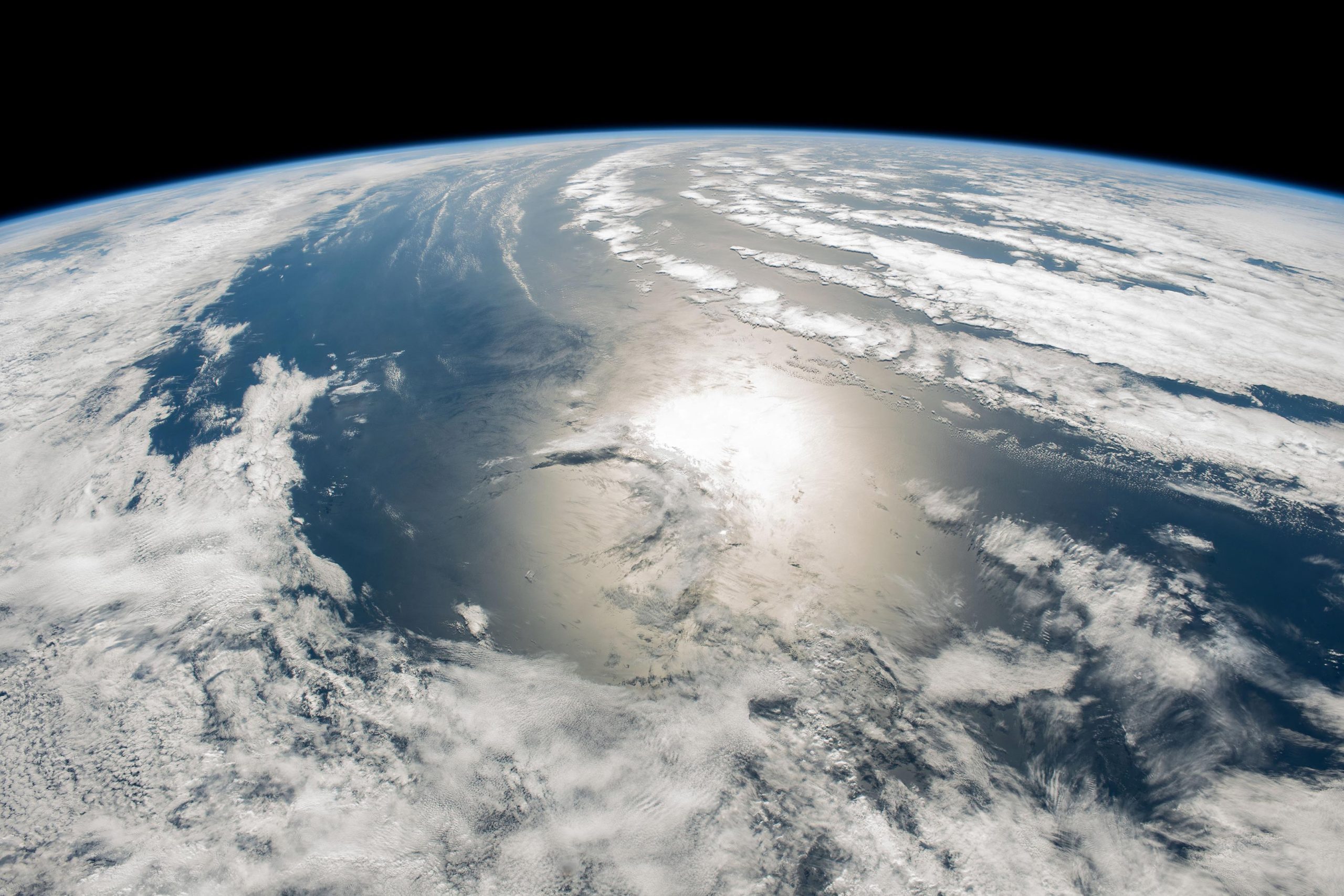
    Sun’s Glint Beams on the South Atlantic Ocean From ISS
    The sun’s glint beams in between a cloudy stretch of the south Atlantic Ocean off the coast of Argentina. Credit: NASA

    Research to promote health and advance manufacturing were the top science activities aboard the International Space Station (ISS) on Tuesday, December 5. The Expedition 70 crew will also commemorate 25 years since the first two station modules were connected on orbit.

    Neurodegenerative Research in Space

    NASA Flight Engineer Jasmin Moghbeli began her day in the Kibo laboratory module working on the Cerebral Aging study that is exploring neurodegenerative processes. She processed brain cell-like samples inside Kibo’s Life Science Glovebox to understand the effects of microgravity at a molecular and cellular level. Results may advance research techniques, reduce drug development costs, and improve health on Earth and in space.

    Caldera of Nemrut From ISS
    In the caldera of Nemrut, a dormant volcano in Turkey, is Lake Nemrut. Fed by hot springs, the freshwater lake sits at an elevation of roughly 7,300 feet (~2,200 meters). Near the bottom of the image is the alkaline Lake Van, the largest in the country. The International Space Station orbited 260 miles above as this photograph was taken. Credit: NASA

    International Collaboration and Robotics

    Moghbeli later joined astronaut Satoshi Furukawa on Wednesday afternoon transferring cargo in and out of the SpaceX Dragon cargo spacecraft. Furukawa from JAXA (Japan Aerospace Exploration Agency) finalized his day checking the performance of a spherical robot camera that can operate remotely or autonomously inside Kibo.

    Fiber Optics and Laboratory Maintenance

    Commander Andreas Mogensen worked in the Destiny laboratory module on fiber optics research installing experiment hardware in the Microgravity Science Glovebox. The advanced physics study may benefit Earth and space-based applications such as laser surgery, remote-sensing, atmospheric monitoring, and optical data communications. Mogensen from ESA (European Space Agency) wrapped up his day cleaning orbital plumbing hardware.
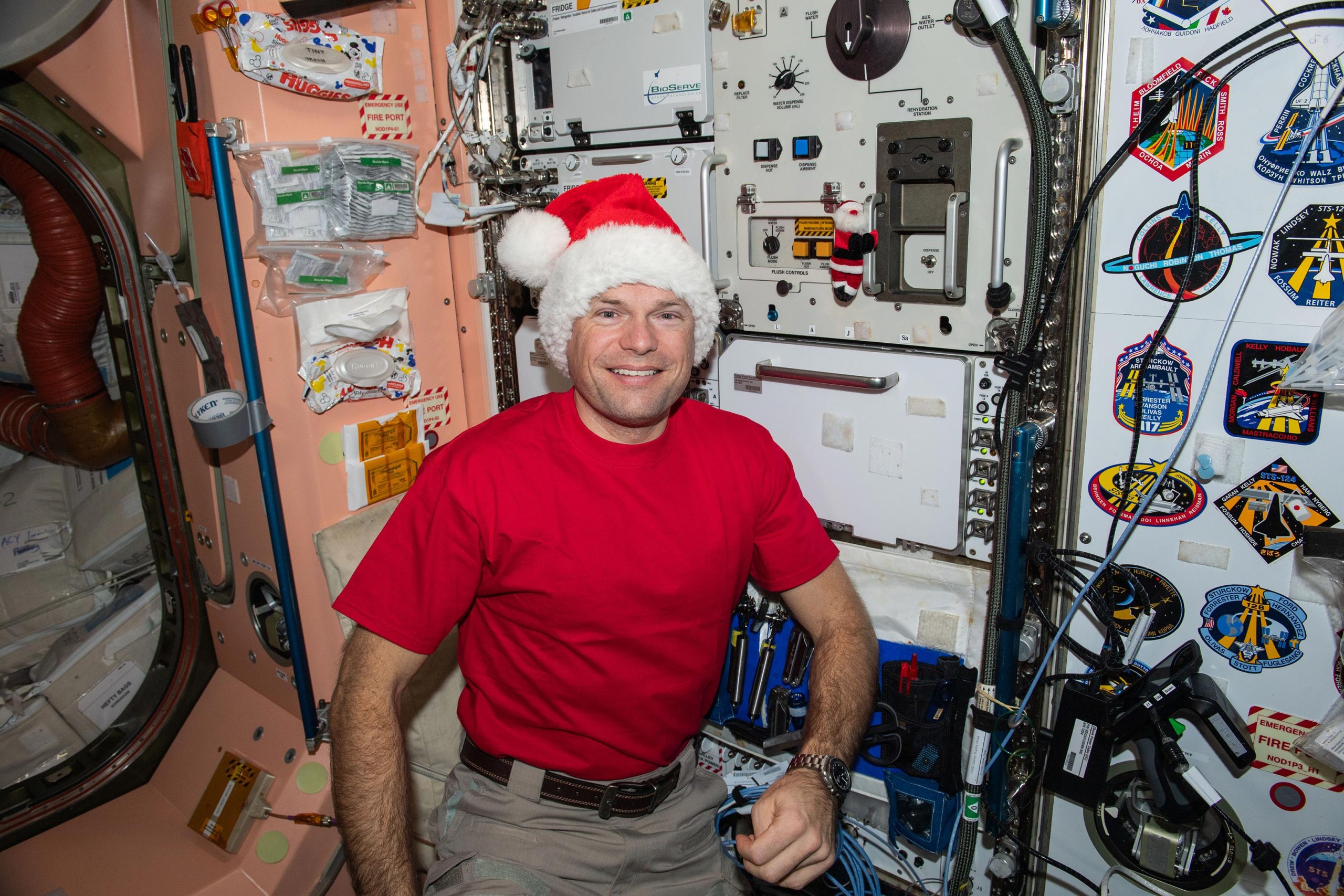
    Astronaut Andreas Mogensen Poses Wearing Santa Claus Hat
    ESA (European Space Agency) astronaut and Expedition 70 Commander Andreas Mogensen gets ready for the Christmas season and poses for a fun portrait wearing a Santa Claus hat. Credit: NASA

    Life Science Experiments and Space Botany

    NASA Flight Engineer Loral O’Hara from NASA began her day inside the Columbus laboratory module removing electronic components from life science hardware. Afterward, she spent the rest of the day inside Kibo supporting more space biology work.

    In the orbital outpost’s Roscosmos segment, veteran cosmonaut Oleg Kononenko serviced a carbon dioxide removal device and then repositioned eggs in an incubator for a new biology experiment. Flight Engineer Nikolai Chub worked on cargo and water transfers from the newly docked Progress 86 cargo craft. Flight Engineer Konstantin Borisov worked on an oxygen generator, cleaned ventilation systems, and then watered and photographed plants growing for a Roscosmos space botany study.

    Commemorating a Milestone in Space

    At 12:25 p.m. EST on Wednesday, all seven space station crew members will gather in the Harmony module for a live television conference commemorating 25 years of space station assembly. The orbital septet will receive a call from NASA Associate Administrator Bob Cabana and International Space Station Program Manager Joel Montalbano discussing the station’s evolution and its impact on Earth and space industries. Cabana commanded the space shuttle Endeavour during the STS-88 mission on December 6, 1998, when the Zarya and Unity modules were mated. The shuttle’s Canadarm robotic arm grappled Zarya and mated it to Unity stowed in Endeavour’s payload bay.

    Never miss a breakthrough: Join the SciTechDaily newsletter.
    Follow us on Google and Google News.

    Astronaut International Space Station NASA
    Share. Facebook Twitter Pinterest LinkedIn Email Reddit

    Related Articles

    NASA’s Crew-9 Returns After 286-Day Mission With a Spectacular Splashdown in the Gulf of America

    NASA’s SpaceX Crew-9 Splashes Down Off Coast of Florida

    SpaceX Dragon Undocks With NASA Crew-9 Members for Return to Earth

    Liftoff! NASA’s SpaceX Crew-10 Blasts Off From Kennedy Space Center [Video]

    Rocket Ready: NASA’s SpaceX Crew-10 Set for Liftoff

    NASA’s SpaceX Crew-10 Was Moments From Liftoff – Then a Last-Minute Malfunction Shut It Down

    NASA’s SpaceX Crew-10: Four Astronauts, a 17,500 MPH Rocket, and 200+ Experiments

    No Treadmill, No Problem – NASA’s Space Workout Experiment Could Change Fitness Forever

    NASA and SpaceX’s Unexpected Spacecraft Swap Sends Crew-10 to Space Sooner

    Leave A Reply Cancel Reply

    • Facebook
    • Twitter
    • Pinterest
    • YouTube

    Don't Miss a Discovery

    Subscribe for the Latest in Science & Tech!

    Trending News

    Scientists May Have Found the Key to Jupiter and Saturn’s Moon Mystery

    Scientists Uncover Brain Changes That Link Pain to Depression

    Saunas May Do More Than Raise Body Temperature – They Activate Your Immune System

    Exercise in a Pill? Metformin Shows Surprising Effects in Cancer Patients

    Hidden Oceans of Magma Could Be Protecting Alien Life

    New Study Challenges Alzheimer’s Theories: It’s Not Just About Plaques

    Artificial Sweeteners May Harm Future Generations, Study Suggests

    Splashdown! NASA Artemis II Returns From Record-Breaking Moon Mission

    Follow SciTechDaily
    • Facebook
    • Twitter
    • YouTube
    • Pinterest
    • Newsletter
    • RSS
    SciTech News
    • Biology News
    • Chemistry News
    • Earth News
    • Health News
    • Physics News
    • Science News
    • Space News
    • Technology News
    Recent Posts
    • Physicists Discover a Strange New Kind of One-Dimensional Particle
    • Scientists Discover Unexpected Climate Benefit Hidden in Forest Soils
    • The Grand Canyon’s “Swiss Cheese” Rocks Hold a Critical Secret
    • Scientists Discover 430,000-Year-Old Wooden Tools, Rewriting Human History
    • Scientists Make Breakthrough on 40-Year-Old 2D Physics Puzzle
    Copyright © 1998 - 2026 SciTechDaily. All Rights Reserved.
    • Science News
    • About
    • Contact
    • Editorial Board
    • Privacy Policy
    • Terms of Use

    Type above and press Enter to search. Press Esc to cancel.