
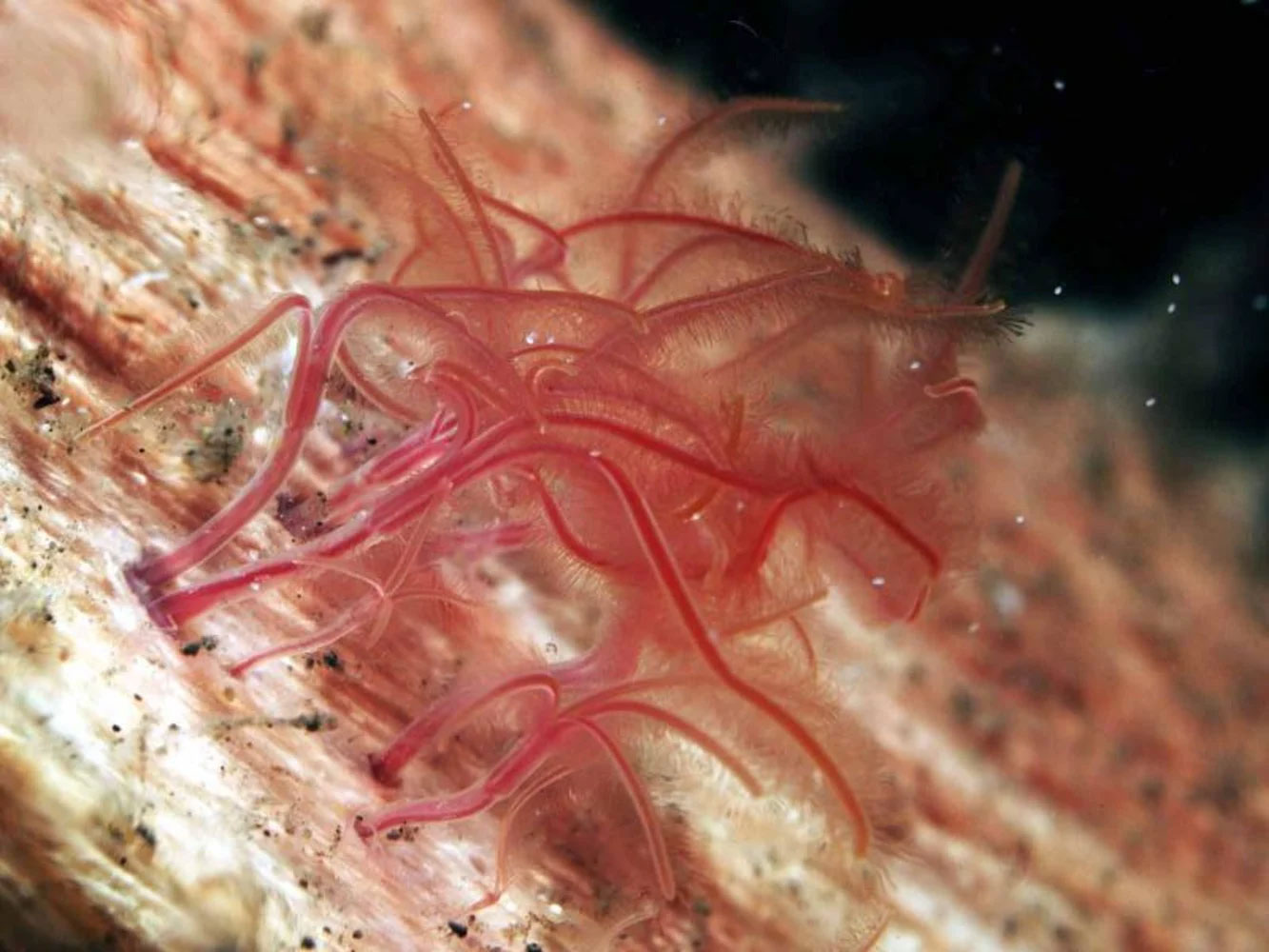
A long-term deep-sea experiment revealed that a crucial species failed to appear where it should have thrived.
In many horror films, the most unsettling moments come from creatures that can’t always be seen.
In deep-sea science, however, it is the absence of a creature that can be even more alarming. When researchers fail to find the zombie worm, or “the bone devourer” Osedax, it can signal potential species decline and broader ecosystem disruption linked to long-term climate change.
Fabio De Leo, a senior staff scientist with Ocean Networks Canada (ONC) and an adjunct assistant professor in the University of Victoria’s (UVic) Department of Biology, helped lead an experiment that placed humpback whale bones on the seafloor off the British Columbia (BC) coast. Over the course of the study, the team found no sign of Osedax, a species that normally plays a vital part in breaking down whale skeletons.
A Missing Ecosystem Engineer
Osedax has no mouth, anus or digestive tract, yet it survives by anchoring rootlike structures into bones and relying on microbes to draw out nutrients. This unusual biology makes it an important ecosystem engineer.
According to De Leo, the complete lack of zombie worm colonization captured by ONC’s high-resolution underwater cameras after 10 years of monitoring is a significant and concerning result. He notes that such a long-term absence, known in science as a negative result, raises important questions about what may be changing in these deep environments.
“This was a remarkable observation in such a long-term experiment,” he says, noting it may be explained by the low concentrations of oxygen present at the observation site.
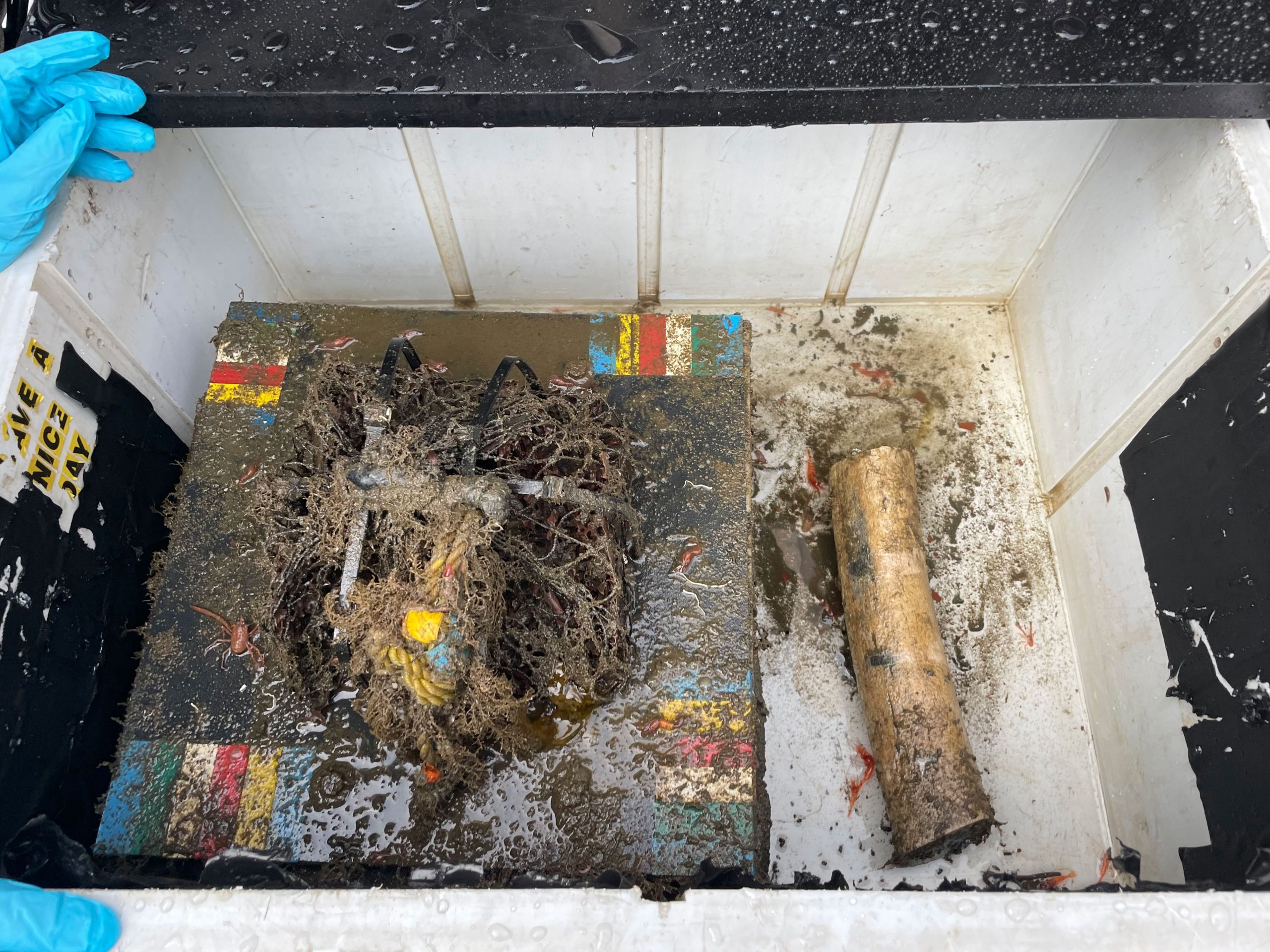
Barkley Canyon, the site where researchers placed the whale bones nearly a thousand metres beneath the Pacific Ocean’s surface, lies within a natural low-oxygen region that overlaps with the migration paths of humpback and grey whales. When whales die due to natural events or hazards such as ship strikes or entanglement in fishing gear, their bodies often sink and form “whale falls.” These carcasses create rich feeding grounds that can spark new pockets of biodiversity.
However, the lack of zombie worms on the bones in this study hints at a larger issue. Expanding oxygen minimum zones (OMZs) in the northeast Pacific and other regions, influenced by climate change, may be interfering with these deep-sea habitats in ways that threaten their long-term stability.
Early observations from another whale fall study at a separate ONC NEPTUNE location indicate that zombie worms could be under pressure in additional areas as well.
Why we need bone devourers
If the “bone devourer” isn’t there to carry out its tasks and promote the succession process around the whale, other species may be unable to colonize and further utilize whale-carcass nutrients. Whale falls are “almost like islands,” De Leo says, “and a stepping-stone habitat for this and many other whale bone specialist species.”
“Basically, we’re talking about potential species loss,” he says, explaining that the adult Osedax generally grow on whale bones and their larvae are dispersed large distances in the ocean to populate other whale fall ecosystems even hundreds of kilometers away. “So, this connectivity, these island habitats, will not be connected anymore, and then you could start losing a diversity of Osedax species across regional spatial scales.”
Furthermore, the researchers found that another ecosystem engineer, wood-boring Xylophaga bivalves, also appears affected by low-oxygen stress. While these bivalves were seen on the experiment’s submerged wood samples at Barkley Canyon, they colonized at much lower rates than more oxygenated ocean areas, with implications for slowed carbon decomposition and colonization by the many species typically inhabiting Xylophaga burrows.
“It looks like the OMZ expansion, which is a consequence of ocean warming, will be bad news for these amazing whale-fall and wood-fall ecosystems along the northeast Pacific Margin,” said Craig Smith, professor emeritus from University of Hawaii, who co-led the experiment.
De Leo and Smith used ONC’s NEPTUNE observatory Barkley Canyon Mid-East video camera platform and oceanographic sensors, as well as high-definition video surveys from remotely operated vehicle surveys, to collect the environmental data. In the coming months, they will release additional research findings about a whale fall being monitored at NEPTUNE’s Clayoquot Slope site.
Reference: “High-frequency study of megafaunal communities on whale bone, wood and carbonate in hypoxic Barkley Canyon” by Craig R. Smith, Paulo V. F. Correa, Aharon G. Fleury, Lisa A. Levin and Fabio C. De Leo, 26 August 2024, Frontiers in Marine Science.
DOI: 10.3389/fmars.2024.1464095
This research was supported by the Canada Foundation for Innovation Major Science Initiative Fund and in part by a US National Science Foundation grant. It aligns with United Nations Sustainable Development Goal 14, life below water.
Never miss a breakthrough: Join the SciTechDaily newsletter.
Follow us on Google and Google News.