
Close Menu
    Facebook X (Twitter) Instagram
    SciTechDaily
    • Biology
    • Chemistry
    • Earth
    • Health
    • Physics
    • Science
    • Space
    • Technology
    Facebook X (Twitter) Pinterest YouTube RSS
    SciTechDaily
    Home»Biology»Canadian Man in Vegetative State Communicates That He’s Not in Pain
    Biology

    Canadian Man in Vegetative State Communicates That He’s Not in Pain

    By SciTechDailyNovember 19, 20121 Comment2 Mins Read
    Facebook Twitter Pinterest Telegram LinkedIn WhatsApp Email Reddit
    Share
    Facebook Twitter LinkedIn Pinterest Telegram Email Reddit
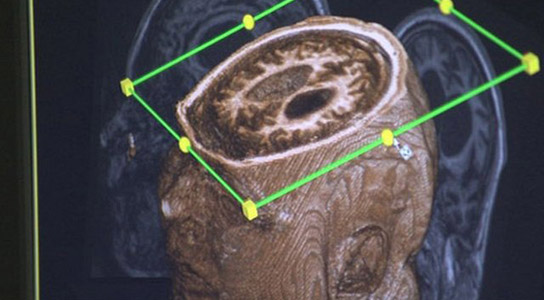
    fmri-scan-vegetative-state-patient
    fMRI scan of vegetative state patient.

    A Canadian man who was thought to have been in a persistent vegetative state for more than a decade has been able to communicate to scientists that he isn’t in any pain. This marks the first time that an uncommunicative, severely brain-injured patient has been able to give clinically-relevant answers to physicians.

    Scott Routley, 39, was asked questions while having his brain activity scanned in a functional magnetic resonance imaging (fMRI) machine. Vegetative patients emerge from a coma into a condition where they have lucid periods, but have no perception of themselves or the outside world.

    Routley suffered a severe brain injury in a car accident 12 years ago and none of his physical assessments since then have shown any sign of awareness.

    Adrian Owen, a neuroscientist at the Brain and Mind Institute, University of Western Ontario, believed that Routley was clearly not vegetative.

    Routley has a conscious, thinking mind. He was scanned several times and his pattern of brain activity shows that he is choosing to answer questions. “Scott has been able to show he has a conscious, thinking mind. We have scanned him several times and his pattern of brain activity shows he is clearly choosing to answer our questions. We believe he knows who and where he is.”

    Another Canadian patient, Steven Graham, was able to show that he had laid down new memories since his brain injury. Graham answered yes when asked whether his sister had a daughter. His niece was born after his accident, five years ago.

    Never miss a breakthrough: Join the SciTechDaily newsletter.
    Follow us on Google and Google News.

    Brain Brain Activity Cognition Neuroscience University of Western Ontario
    Share. Facebook Twitter Pinterest LinkedIn Email Reddit

    Related Articles

    Magnesium Supplements Could Improve Memory and Cognitive Ability

    Young Blood Reverses Some of the Effects of Age-Related Cognitive Decline

    Scientists Discover Link Between TBI and PTSD

    Researchers Use FDDNP–PET Scanning to Predict Cognitive Decline

    Neuroscientists Create Model to Study Burst Suppression and Brain States

    Researchers Record Detailed Live Images Inside the Brain of a Living Mouse

    Synchronized Brain Oscillations Crucial for Short-Term Memory

    Researchers Use fMRI to Study How Humor Activates Kids’ Brain Regions

    Neuroscientists Study Cortical Areas Specialized in Processing Visual Inputs in Mice

    1 Comment

    1. John on November 20, 2012 9:34 am

      I guess the term, “quality of life” differs from person to person.What machines are keeping these men alive?

      Reply
    Leave A Reply Cancel Reply

    • Facebook
    • Twitter
    • Pinterest
    • YouTube

    Don't Miss a Discovery

    Subscribe for the Latest in Science & Tech!

    Trending News

    Fossilized Vomit Reveals a Surprising Secret About Plesiosaur Behavior

    Scientists Put Anti-Aging Treatments to the Test – These Ones Actually Changed Biological Age

    Vitamin C Supplements Tied to Fewer Deaths in Blood Disorder Trial

    Scientists Hunt for Tiny Black Holes Hidden in LHC Collisions

    More Men Are Getting MRI Before Prostate Biopsy, but a Major Gap Remains

    Where Does Fat Go When You Lose Weight? The Answer May Surprise You

    Stanford Researchers Discover That the Human Brain May Be Two Separate Organs Fused Together

    Scientists Say This Simple Habit Could Help Protect Your Brain for Life

    Follow SciTechDaily
    • Facebook
    • Twitter
    • YouTube
    • Pinterest
    • Newsletter
    • RSS
    SciTech News
    • Biology News
    • Chemistry News
    • Earth News
    • Health News
    • Physics News
    • Science News
    • Space News
    • Technology News
    Recent Posts
    • Scientists Capture a Fundamental Energy-Transfer Reaction in Remarkable Detail
    • Researchers Borrow Chipmaking Technology To Build Better EV Batteries
    • Scientists Just Built the World’s Most Accurate Clock
    • Scientists Find Signs of Brain Aging Decades Before Cognitive Symptoms
    • Experimental Drug Reverses Paralysis and Vision Loss in MS-Like Disease
    Copyright © 1998 - 2026 SciTechDaily. All Rights Reserved.
    • Science News
    • About
    • Contact
    • Editorial Board
    • Privacy Policy
    • Terms of Use

    Type above and press Enter to search. Press Esc to cancel.