
Close Menu
    Facebook X (Twitter) Instagram
    SciTechDaily
    • Biology
    • Chemistry
    • Earth
    • Health
    • Physics
    • Science
    • Space
    • Technology
    Facebook X (Twitter) Pinterest YouTube RSS
    SciTechDaily
    Home»Health»Study Finds Artificial Sweetener Can Cause Healthy Gut Bacteria To Become Diseased
    Health

    Study Finds Artificial Sweetener Can Cause Healthy Gut Bacteria To Become Diseased

    By Anglia Ruskin UniversityApril 24, 2024No Comments4 Mins Read
    Facebook Twitter Pinterest Telegram LinkedIn WhatsApp Email Reddit
    Share
    Facebook Twitter LinkedIn Pinterest Telegram Email Reddit
    Gastroenterology Gut Microbiome Health Concept
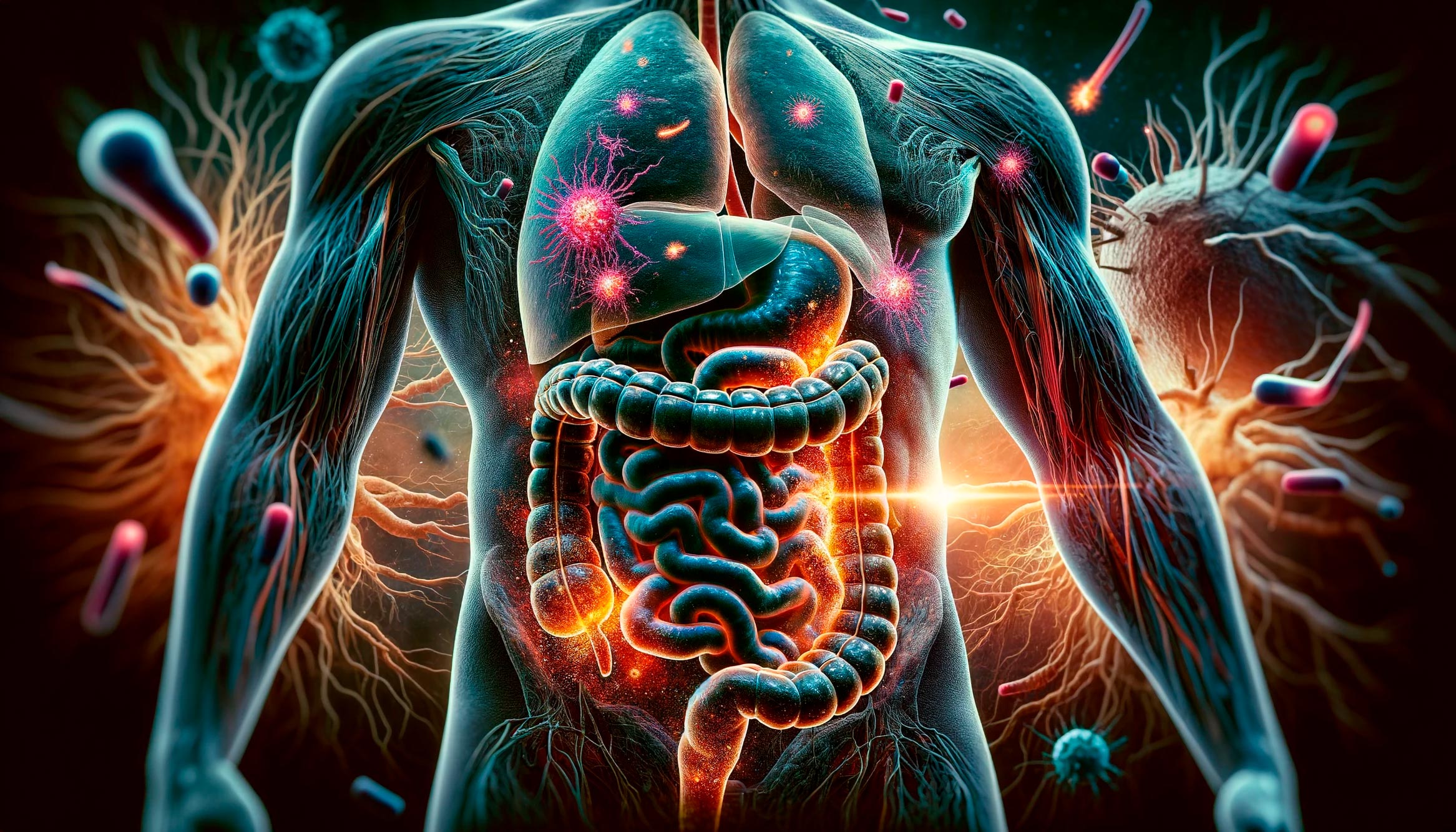
    Recent research published in Frontiers in Nutrition has found that neotame, a newer artificial sweetener, can damage the human gut by altering healthy bacteria and harming the epithelial barrier, potentially causing severe health issues like irritable bowel syndrome and sepsis. This study extends previous findings on artificial sweeteners, underscoring the need for further research into their safety and health impacts. Credit: SciTechDaily.com

    Neotame, a new artificial sweetener, harms gut health by damaging bacteria and epithelial cells, raising risks for diseases like sepsis and irritable bowel syndrome.

    New research has discovered that neotame, one of the new generation of artificial sweeteners, is capable of damaging the human intestine and causing illness.

    The study is the first to show that neotame can cause previously healthy gut bacteria to become diseased and invade the gut wall – potentially leading to health issues including irritable bowel syndrome and sepsis – and also cause a breakdown of the epithelial barrier, which forms part of the gut wall.

    The research, which was published today (April 24) in the journal Frontiers in Nutrition and was carried out at Anglia Ruskin University (ARU), demonstrates that neotame can damage the intestinal epithelium directly, by causing the death of epithelial cells, and indirectly, by damaging bacteria commonly found in the gut.

    The in vitro study identified a range of pathogenic responses following exposure of E. coli (Escherichia coli) and E. faecalis (Enterococcus faecalis) to neotame, which is found in drinks, foods, and chewing gums, including biofilm formation and increased adhesion to and invasion of cells by diseased bacteria.

    Some of the newest artificial sweeteners have a 1,000-fold sweeter taste compared to sugar, reducing the amount needed to be added to food and drink. Despite the smaller quantities used, the impact of neotame on the epithelium-microbiota relationship has the potential to cause poor gut health, which in turn could lead to metabolic and inflammatory diseases such as irritable bowel disease or insulin resistance.

    This new research into neotame builds on previous work by Dr. Havovi Chichger of Anglia Ruskin University (ARU), which discovered that saccharin, sucralose, and aspartame, some of the most widely used artificial sweeteners, could cause similar damage in the gut.

    Artificial sweeteners can play a role in helping with weight loss and aiding individuals with glucose intolerance and type 2 diabetes. However, this new study, led by Dr. Aparna Shil, of Jahangirnagar University in Bangladesh, and Dr. Chichger highlights the need for further research into the toxic effects of some of the artificial sweeteners that have been developed more recently.

    Dr. Chichger, Associate Professor in Biomedical Science at Anglia Ruskin University (ARU) and senior author of the study, said: “There is now growing awareness of the health impacts of sweeteners such as saccharin, sucralose, and aspartame, with our own previous work demonstrating the problems they can cause to the wall of the intestine and the damage to the ‘good bacteria’ which form in our gut.

    “This can lead to a range of potential health issues including diarrhea, intestinal inflammation, and even infections such as septicemia if the bacteria were to enter the bloodstream. Therefore, it is important to also study sweeteners that have been introduced more recently and our new research demonstrates that neotame causes similar problems, including gut bacteria becoming diseased.

    “Understanding the impact of these pathogenic changes occurring in the gut microbiota is vital. Our findings also demonstrate the need to better understand common food additives more widely and the molecular mechanisms underlying potential negative health impacts.”

    Reference: “The artificial sweetener neotame negatively regulates the intestinal epithelium directly through T1R3-signaling and indirectly through pathogenic changes to model gut bacteria” by Aparna Shil, Luisa Maria Ladeira Faria, Caray Anne Walker and Havovi Chichger, 2 April 2024, Frontiers in Nutrition.
    DOI: 10.3389/fnut.2024.1366409

    Never miss a breakthrough: Join the SciTechDaily newsletter.
    Follow us on Google and Google News.

    Anglia Ruskin University Artificial Sweeteners Gastroenterology Nutrition Popular
    Share. Facebook Twitter Pinterest LinkedIn Email Reddit

    Related Articles

    Scientists Reveal a Simple Eating Pattern That Helps Prevent Constipation

    Study Confirms Sweeteners Do Not Spike Hunger Levels and Identifies Additional Health Benefits

    New Study Finds 5 Healthy Behaviors Linked to Lower IBS Risk

    New, Low-Calorie Sweetener May Also Provide Health Benefits

    Artificial Sweeteners May Not Be Safe Sugar Alternatives – New Study Indicates Increased Cancer Risk

    What You Eat May Affect Risk and Severity of COVID-19

    New Research Uncovers Dangers of Artificial Sweeteners – Potentially Leading to Serious Health Issues

    Eating a Western Diet Impairs the Immune System in the Gut – May Increase Risk of Inflammation, Infection

    Vitamin D Linked to Low Coronavirus Death Rate

    Leave A Reply Cancel Reply

    • Facebook
    • Twitter
    • Pinterest
    • YouTube

    Don't Miss a Discovery

    Subscribe for the Latest in Science & Tech!

    Trending News

    Monster Storms on Jupiter Unleash Lightning Beyond Anything on Earth

    Scientists Create “Liquid Gears” That Spin Without Touching

    The Simple Habit That Could Help Prevent Cancer

    Millions Take These IBS Drugs, But a New Study Finds Serious Risks

    Scientists Unlock Hidden Secrets of 2,300-Year-Old Mummies Using Cutting-Edge CT Scanner

    Bread Might Be Making You Gain Weight Even Without Eating More Calories

    Scientists Discover Massive Magma Reservoir Beneath Tuscany

    Europe’s Most Active Volcano Just Got Stranger – Here’s Why Scientists Are Rethinking It

    Follow SciTechDaily
    • Facebook
    • Twitter
    • YouTube
    • Pinterest
    • Newsletter
    • RSS
    SciTech News
    • Biology News
    • Chemistry News
    • Earth News
    • Health News
    • Physics News
    • Science News
    • Space News
    • Technology News
    Recent Posts
    • Simple Blood Test May Predict Alzheimer’s Years Before Brain Scans Show Signs
    • Scientists Say Adding This Unusual Seafood to Your Diet Could Reverse Signs of Aging
    • U.S. Waste Holds $5.7 Billion Worth of Crop Nutrients
    • Scientists Say a Hidden Structure May Exist Inside Earth’s Core
    • Doctors Surprised by the Power of a Simple Drug Against Colon Cancer
    Copyright © 1998 - 2026 SciTechDaily. All Rights Reserved.
    • Science News
    • About
    • Contact
    • Editorial Board
    • Privacy Policy
    • Terms of Use

    Type above and press Enter to search. Press Esc to cancel.