

Close Menu
    Facebook X (Twitter) Instagram
    SciTechDaily
    • Biology
    • Chemistry
    • Earth
    • Health
    • Physics
    • Science
    • Space
    • Technology
    Facebook X (Twitter) Pinterest YouTube RSS
    SciTechDaily
    Home»Biology»Visual Science’s Ebolavirus 3D Model is 10 Times More Complex Than Their HIV Model
    Biology

    Visual Science’s Ebolavirus 3D Model is 10 Times More Complex Than Their HIV Model

    By SciTechDailyFebruary 4, 2012No Comments2 Mins Read
    Facebook Twitter Pinterest Telegram LinkedIn WhatsApp Email Reddit
    Share
    Facebook Twitter LinkedIn Pinterest Telegram Email Reddit
    Ebola Virus
    Ebola Virus 3D Model. Credit: Visual Science

    The Ebolavirus was first described in 1976 during the Zaire ebolavirus outbreaks in Africa. It’s one of the most lethal viruses on Earth, and it’s part of the Filoviridae family that includes Ebolavirus and Marburgvirus. Recent taxonomic updates have changed the way that we refer to these viruses, but they remain just as deadly, since once patients are infected, they develop severe hemorrhagic fever that has a fatality rate of almost 90% in some cases, which is the case in the Zaire ebolavirus variant.
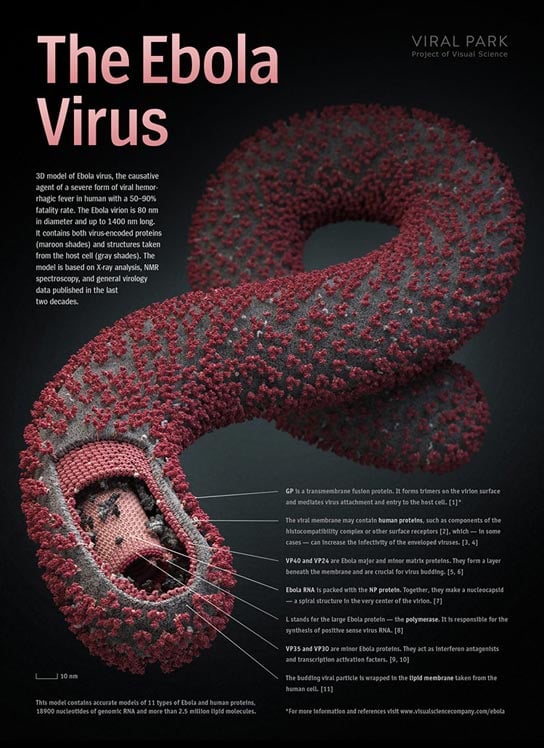
    Ebola Virus
    Credit: Visual Science

    There have been several epidemics of this disease, and many people have died of it, mainly in Zaire, Sudan, Congo, and Uganda. There have also been some fatalities because laboratory accidents. Ebolavirus is one of a handful of viruses that needs to be contained in Level 4 Biohazard facilities, necessitating positive pressure personnel suits, with segregated air supplies.

    Ebola Virus Close Up
    Credit: Visual Science

    In this 3D model that was presented in a study, Ebola-encoded structures are shown in maroon, and structures from human cells are shown in gray. The model is based upon X-ray analysis, NMR spectroscopy, and general virology data that have been published in studies over the last two decades. Some protein structures were elaborated using a predictive computer biology algorithm, including molecular modeling.
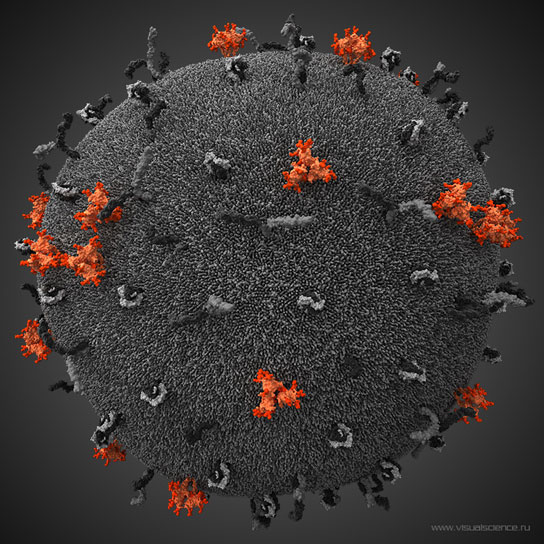
    HIV 3D Model
    Visual Science’s HIV 3D model. Credit: Visual Science

    This intricate model includes 11 types of Ebolavirus and human proteins, 18,900 nucleotides of genomic RNA and more than 2.5 million different lipid molecules. Ebolavirus are deadly because they cause severe hemorrhagic fever, infecting the capillary endothelium and several types of immune cells.

    Never miss a breakthrough: Join the SciTechDaily newsletter.
    Follow us on Google and Google News.

    3d Epidemiology Medicine Virology Virus Visual Science
    Share. Facebook Twitter Pinterest LinkedIn Email Reddit

    Related Articles

    Novel Coronavirus hCoV-EMC Infects Humans & Animals

    Brucella Blocked From Bonding With Host, Could Lead to Superbug Cure

    Study Shows that Vorinostat can Dislodge the Dormant HIV Virus in Patients

    Monkeys Cured of Ebola Zaire Virus With Antibody Cocktail

    Central American Bats Harbor a New Subtype of Influenza

    Scientists Find Cure for Neurocysticercosis, a Major Cause of Seizures

    NDM-1 Super Bacteria Scares Medical Community in India

    Moratorium Into Research of Modified Contagious H5N1 Avian Flu Strains

    Ruminant Orthobunyavirus Takes Northern Europe By Surprise

    Leave A Reply Cancel Reply

    • Facebook
    • Twitter
    • Pinterest
    • YouTube

    Don't Miss a Discovery

    Subscribe for the Latest in Science & Tech!

    Trending News

    Bone-Strengthening Discovery Could Reverse Osteoporosis

    Scientists Uncover Hidden Trigger Behind Stem Cell Aging

    Scientists Find Way to Reverse Fatty Liver Disease Without Changing Diet

    Could Humans Regrow Limbs? New Study Reveals Promising Genetic Pathway

    Scientists Reveal Eating Fruits and Vegetables May Increase Your Risk of Lung Cancer

    Scientists Reverse Brain Aging With Simple Nasal Spray

    Scientists Uncover Potential Brain Risks of Popular Fish Oil Supplements

    Scientists Discover a Surprising Way To Make Bread Healthier and More Nutritious

    Follow SciTechDaily
    • Facebook
    • Twitter
    • YouTube
    • Pinterest
    • Newsletter
    • RSS
    SciTech News
    • Biology News
    • Chemistry News
    • Earth News
    • Health News
    • Physics News
    • Science News
    • Space News
    • Technology News
    Recent Posts
    • Alzheimer’s Symptoms May Start Outside the Brain, Study Finds
    • Cancer’s Secret Weapon? Scientists Reveal How Tumors “Learn” To Survive Treatment
    • Millions Take This Popular Supplement – Scientists Discover a Concerning Link to Heart Failure
    • What Makes Rubber So Strong? Scientists Finally Solve 100-Year-Old Mystery
    • Scientists Decode Mysterious Magnetic “Maze Domains” To Boost EV Efficiency
    Copyright © 1998 - 2026 SciTechDaily. All Rights Reserved.
    • Science News
    • About
    • Contact
    • Editorial Board
    • Privacy Policy
    • Terms of Use

    Type above and press Enter to search. Press Esc to cancel.