
Close Menu
    Facebook X (Twitter) Instagram
    SciTechDaily
    • Biology
    • Chemistry
    • Earth
    • Health
    • Physics
    • Science
    • Space
    • Technology
    Facebook X (Twitter) Pinterest YouTube RSS
    SciTechDaily
    Home»Science»Xenon Gas Has Almost Vanished From the Atmosphere
    Science

    Xenon Gas Has Almost Vanished From the Atmosphere

    By SciTechDailyOctober 16, 2012No Comments2 Mins Read
    Facebook Twitter Pinterest Telegram LinkedIn WhatsApp Email Reddit
    Share
    Facebook Twitter LinkedIn Pinterest Telegram Email Reddit
    xenon-ion-escaping
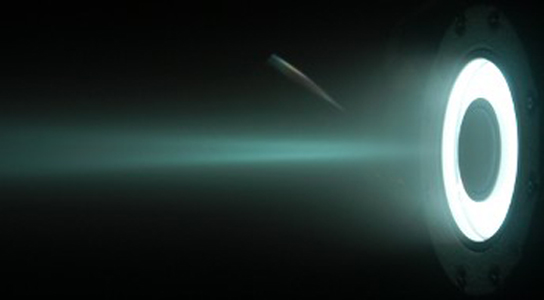
    Xenon ions escaping.

    Xenon, the second heaviest of the chemically inert noble gases, seems to have vanished from the Earth’s atmosphere; but German geoscientists think that they figured out where it went.

    The scientists published their findings in the journal Nature. The Earth’s atmosphere contains less xenon, relative to the lighter noble gases, than meteorites similar to the rocky material that formed the planet and some scientists think that xenon is lurking in glaciers, minerals, or in the Earth’s core.
    xenon-glow
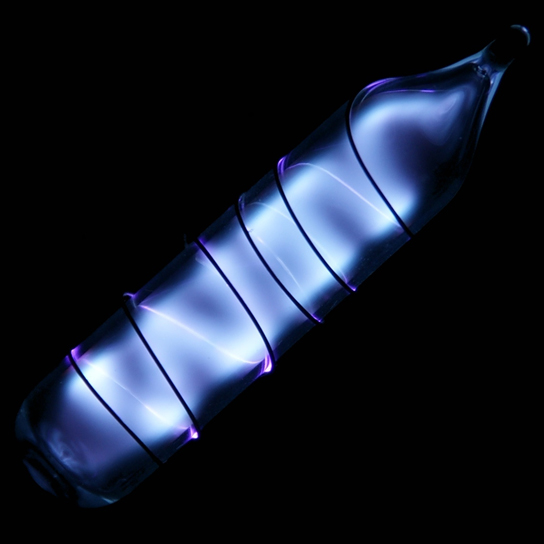
    Xenon lightbulb.

    Hans Keppler and Svyatoslav Shcheka, geophysicists at the University of Bayreuth in Germany, looked towards Earth’s minerals for answers. They thought that the xenon could be hiding in pockets of magnesium silicate perovskite, one of the major components of the Earth’s lower mantle.

    They tried dissolving xenon and argon in perovskite at temperatures exceeding 1,600 ºC and pressures about 250,000 times those at sea level, which are conditions similar to the ones found in the lower mantle. They didn’t find xenon.

    Keppler and Shcheka suggest that argon and other noble gases hid in the perovskite, but most of the xenon, which couldn’t dissolve in the mineral, dissipated into space. The ratios of three noble gases, xenon, krypton, and argon, in the atmosphere roughly correspond to their solubility in perovskite.

    This could also explain why lighter isotopes of xenon are even more depleted from the atmosphere than heavier ones. Over billions of years, xenon has been seeping into space.

    However, other geoscientists disagree with this theory. Chrystele Sanloup, a geoscientist at Pierre and Marie Curie University in Paris, states that “the theory does not totally explain all of the excess heavy xenon in the atmosphere, nor for additional xenon made from the radioactive decay of uranium and plutonium in rocks.”

    Sanloup also believes that if this explanation works for Earth, it should also apply to Mars, where the atmosphere is also missing xenon. However, Sandloup doubts that Mars has enough perovskite to explain the xenon in its atmosphere.

    Reference: “The origin of the terrestrial noble-gas signature” by Svyatoslav S. Shcheka and Hans Keppler, 10 October 2012, Nature.
    DOI: 10.1038/nature11506

    Never miss a breakthrough: Join the SciTechDaily newsletter.
    Follow us on Google and Google News.

    Atmosphere Geophysics Geoscience Planetary Science Xenon
    Share. Facebook Twitter Pinterest LinkedIn Email Reddit

    Related Articles

    Martian Rock Reveals a Record of the Planet’s Climate

    Lunar Reconnaissance Orbiter Finds Evidence of “Recent” Lunar Volcanism

    New Model Reveals Spreading Continents Kick-Started Plate Tectonics

    Yale Study Reveals Parts of Ancient Antarctica Were as Warm as Today’s California Coast

    Research Reveals New Man-Made Ozone-Depleting Gases in the Atmosphere

    Interplanetary Dust Particles Can Deliver Water and Organics to Terrestrial Planets

    Cloud-Chamber Experiments Show How Martian Clouds Form

    Scientists Link Earth’s Westward Drift of Magnetic Field and Superrotation of Inner Core

    Planetary ‘Runaway Greenhouse’ Climates More Easily Triggered than Previously Thought

    Leave A Reply Cancel Reply

    • Facebook
    • Twitter
    • Pinterest
    • YouTube

    Don't Miss a Discovery

    Subscribe for the Latest in Science & Tech!

    Trending News

    Scientists Discover 132-Million-Year-Old Dinosaur Tracks on South Africa’s Coast

    Scientists Uncover the Secret Ingredient Behind the Spark That May Have Started Life on Earth

    Physicists Observe Matter in Two Places at Once in Mind-Bending Quantum Experiment

    Stanford Scientists Discover Hidden Brain Circuit That Fuels Chronic Pain

    New Study Reveals Why Ozempic Works Better for Some People Than Others

    Climate Change Is Altering a Key Greenhouse Gas in a Way Scientists Didn’t Expect

    New Study Suggests Gravitational Waves May Have Created Dark Matter

    Scientists Discover Why the Brain Gets Stuck in Schizophrenia

    Follow SciTechDaily
    • Facebook
    • Twitter
    • YouTube
    • Pinterest
    • Newsletter
    • RSS
    SciTech News
    • Biology News
    • Chemistry News
    • Earth News
    • Health News
    • Physics News
    • Science News
    • Space News
    • Technology News
    Recent Posts
    • 320 Light-Years Away, a Planet Confirms a Fundamental Cosmic Assumption
    • Astronomers Solve Decades-Long Mystery About Saturn’s Spin – “Something Strange Was Happening”
    • Scientists Uncover Strange New State of Matter Inside Uranus and Neptune
    • The Crown Jewel of Dentistry? Breakthrough Tech Could Transform Tooth Repair
    • The Surprising Non-Medical Factor That Determines Cancer Survival
    Copyright © 1998 - 2026 SciTechDaily. All Rights Reserved.
    • Science News
    • About
    • Contact
    • Editorial Board
    • Privacy Policy
    • Terms of Use

    Type above and press Enter to search. Press Esc to cancel.