
A blood protein blocks hardening of enamel on teeth growing inside the jaw.
Australian and Chilean researchers solve a 100-year-old mystery and call for education and research to save millions of teeth worldwide.
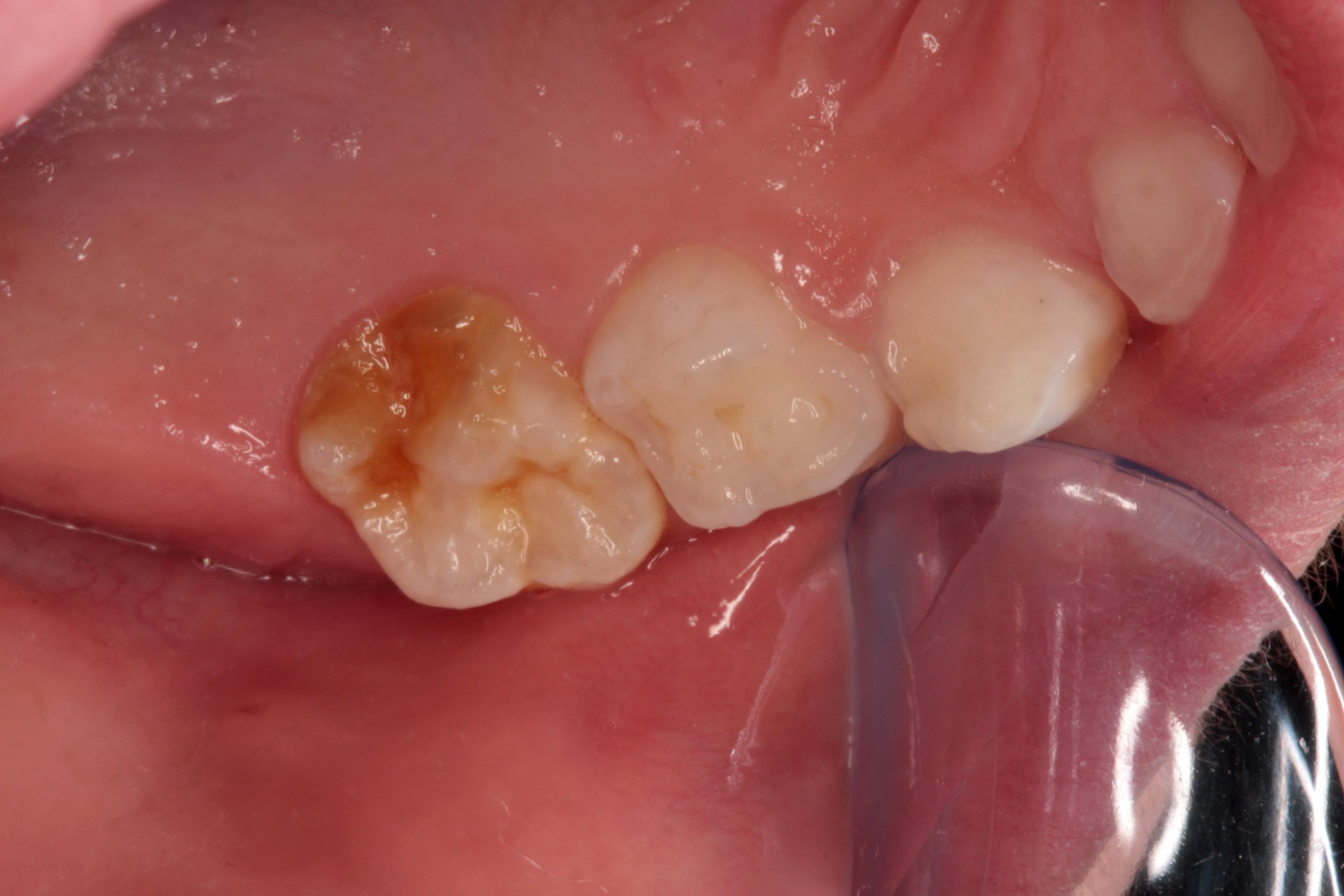
One in five children have chalky tooth enamel – visible as discolored enamel spots – which often causes severe toothache and decay, and sometimes leads to abscesses, extractions, and orthodontic problems.
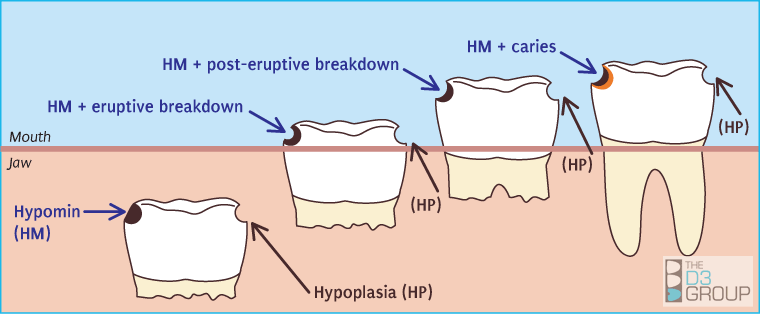
Now, researchers from The D3 Group (based at The University of Melbourne, Australia) and the University of Talca in Chile, have discovered the mechanism causing molar hypomineralisation, the commonest type of chalky teeth.
They report today in Frontiers of Physiology that chalky molars arise when developing enamel is contaminated by albumin – a protein found both in blood and in the tissue fluid surrounding developing teeth. The trigger appears to be childhood illnesses.
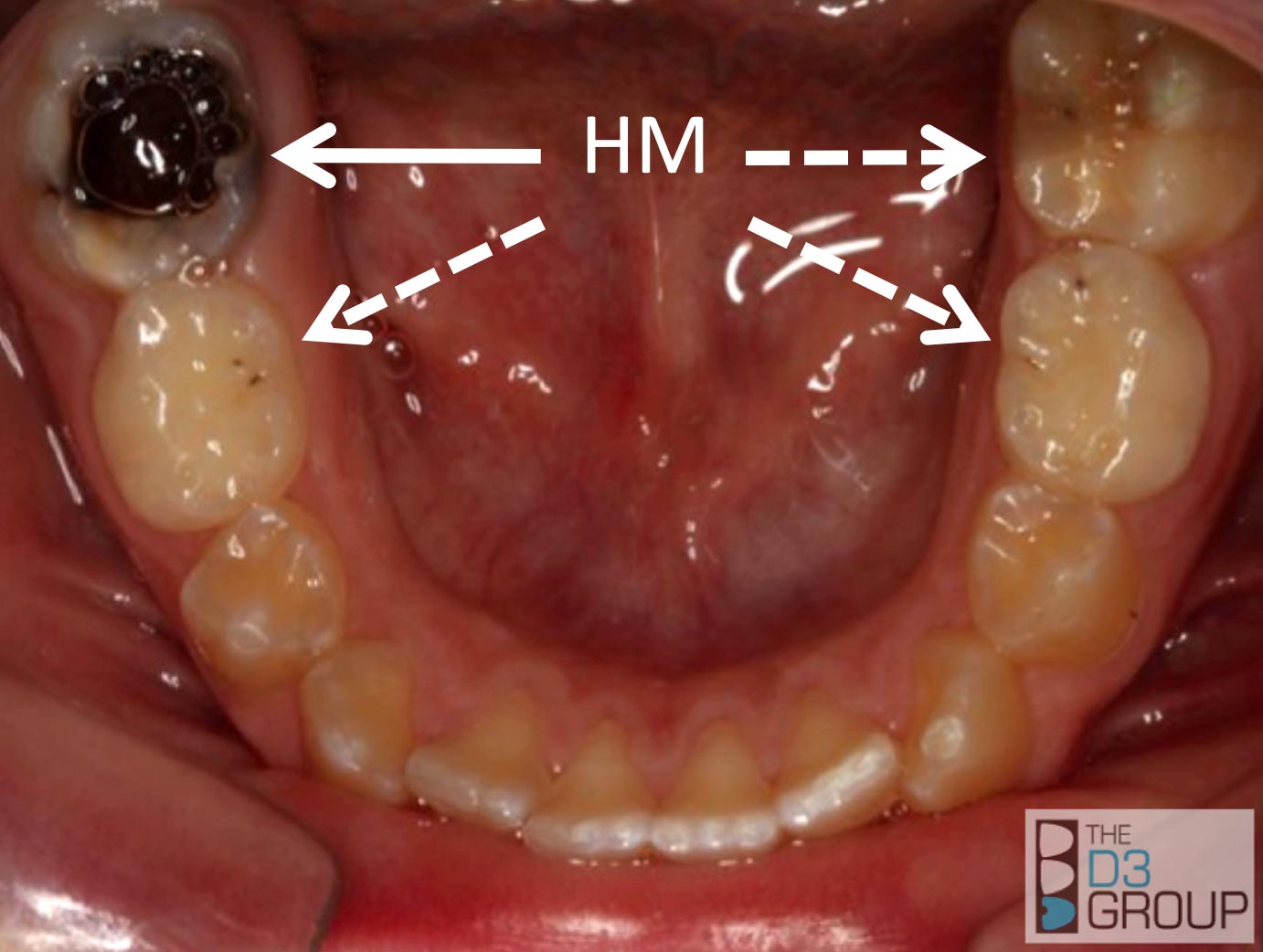
“The result is a sort of ‘mineralization blockage’, which is highly localized to the areas on individual teeth that become chalky enamel spots,” says Mike Hubbard, a University of Melbourne research professor, and lead author on the report.
“This discovery allows us to correct 40 years of medico-dental dogma which blamed defective enamel-forming cells. What this dogma couldn’t explain is why chalkiness affects only one or a few teeth in a child’s mouth.”
“We’ve shown instead that albumin leaks in occasionally at weak spots, binding to enamel-mineral crystals and blocking their growth. It’s not a system-wide problem, but a very localized one.”
The researchers suspect that the albumin leakage is triggered by routine baby illnesses such as a fever. Now they plan to:
- Determine the specific underlying causes, such as environmental factors or pathogens
- Promote their findings to dentists, other child health professionals, and parents, so they can all be on the lookout for chalky teeth.
“We can’t yet prevent chalky teeth from developing in the first place, but if health professionals catch them early – when they first enter the mouth – then we dentists can usually save them,” says Vidal Perez, a pediatric dentist and researcher at the University of Talca.
There are several types of chalky teeth reflecting different causes such as genetic anomalies and problems with nutrition.

The team is particularly concerned about molar hypomineralisation as it carries the most social and economic impact. “Molars are particularly prone to damage,” says Vidal. “They are hidden away at the back of our mouths, with grooves that catch food, and they’re harder to clean.”

Silent Epidemic of Childhood Decay
A tooth with severe hypomineralisation is 10 times more likely to decay than one without. It is very much a silent epidemic, causing lots of suffering.
The scale of the problem became apparent to Mike when he noted fluoridation of community water supplies led to a big but incomplete reduction of tooth decay in children. A substantial proportion of children with unexplained decay remained. So, he founded a research and education network, The D3 Group for developmental dental defects, to understand what was happening.
Fluoride, which protects against tooth decay in normal enamel, has little if any effect on chalky molars, which are as prevalent in developed countries as in developing ones.
Chalky tooth enamel was first studied by Austrian (and later, American) medical researcher Bernhard Gottlieb, who reported in 1920 the mystery that only some parts of some teeth are affected.
“Building on this research breakthrough, and with appropriate resourcing, The D3 Group can now look towards a medical strategy for preventing this worldwide problem,” said Mike.
“This new avenue of research could one day eliminate about half of childhood tooth decay, along with its disturbing costs to affected individuals and society,” he says.
Reference: “A breakthrough in understanding the pathogenesis of molar hypomineralisation: The mineralisation-poisoning model” by Michael J. Hubbard, Jonathan E. Mangum, Vidal A. Perez and Rebecca Williams, 21 December 2021, Frontiers in Physiology.
DOI: 10.3389/fphys.2021.802833
Never miss a breakthrough: Join the SciTechDaily newsletter.
Follow us on Google and Google News.
2 Comments
Now, solve the national disgrace of our our-of-control dental costs so children and adults can afford the dental care that is so critical to good health.
Chalky enamel may also be caused by trauma. I have a white, chalky spot on one of my incisors from when I fell as a toddler and knocked out a tooth. The adult tooth came in with the spot.