
UMass Amherst public health researcher says findings highlight the need to better protect youth from high-potency products.
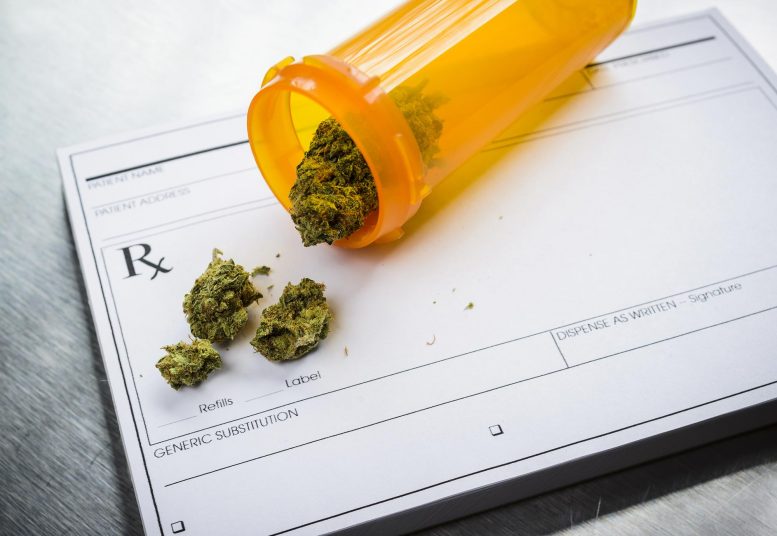
After medical marijuana became legal in Massachusetts, cannabis-related poison control calls involving the commonwealth’s children and teenagers doubled, according to a public health investigation led by University of Massachusetts Amherst injury prevention researcher Jennifer Whitehill.
The increase in calls to the Regional Center for Poison Control and Prevention at Boston Children’s Hospital occurred despite legislative mandates for childproof packaging and warning labels, and before the recreational use of marijuana was legalized for adults.

“As states across the country enact more permissive marijuana policies, we need to do more to promote safe storage in households with children,” says Whitehill, assistant professor of health promotion and policy and lead author of the research published in JAMA Network Open.
Whitehill and former UMass Amherst graduate student Calla Harrington analyzed data from the poison control center in collaboration with staff from the center, including medical director Dr. Michele Burns and clinical fellow Dr. Michael Chary. The research team reviewed the center’s data from 2009 through 2016 — four years before and four years after medical marijuana was legalized in Massachusetts.
During the study period, the poison control center received 218 calls from Massachusetts involving cannabis exposure in children and teens, from infancy to age 19, including 98 single-substance calls and 120 polysubstance calls. Those calls represented 0.15 percent of all poison control calls during that time period for that age group.
“While we’re pleased to see that the incidence is relatively low, we feel these cases are preventable, and the issue needs to be on the radar of policymakers and parents, particularly now that dispensaries are open for adult-use sales,” Whitehill says.
Some highlights of the findings:
- The incidence of calls for single-substance cannabis exposure increased 140 percent during the study period — from 0.4 per 100,000 population before medical marijuana was legalized to 1.1 per 100,000 population after legalization.
- Nearly 80 percent of the calls to the poison control center came from healthcare facilities, and, in terms of medical outcomes, most of the exposures resulted in moderate and minor effects. Four cases with major effects and no deaths were reported.
- A little more than a quarter of the cases were reported as unintentional, with 19.4 percent of calls involving children from infancy through age 4.
Calls involving edible cannabis products increased for most age groups, including ages 15-19. Because other research has found that the proportion of teens using marijuana is remaining about the same even as marijuana laws are loosening, this finding suggests that teenagers may be caught off guard by the potentially potent effects of edibles and concentrated extracts, Whitehill says.
The paper concludes, “This study suggests that states liberalizing marijuana policies should consider strengthening regulations to prevent unintentional exposure among young children and enhancing efforts to prevent use by teenagers, with particular attention to edible cannabis products and concentrated extracts.”
Whitehill says the next step is to study the impact of marijuana’s legalization for adult use, which went into effect in late 2016. Two years later, in November 2018, marijuana retail stores began opening.
“Given what we’ve seen here,” Whitehill says, “I would expect the calls to the poison control center to increase even more.”
Reference:”Incidence of Pediatric Cannabis Exposure Among Children and Teenagers Aged 0 to 19 Years Before and After Medical Marijuana Legalization in Massachusetts” by Jennifer M. Whitehill, PhD; Calla Harrington, MSW, MPH and Cheryl J. Lang, MPH, 16 August 2019, JAMA Network Open.
DOI: 10.1001/jamanetworkopen.2019.9456
Never miss a breakthrough: Join the SciTechDaily newsletter.
Follow us on Google and Google News.
1 Comment
Pesticides and other poisons are causing this. Dispensary made me so sick I thought my kidneys were going to shut down. I quit dispensary and only use 100% organic no salt based fertilizers no neem oil or any other harsh chemicals and all and I mean all my sickness went away. Ive tested this with various dispensary strains and different locations and the results are the same. It all makes me sick. And no one will talk about this. Ive had a heck of time just finding articles like this. Im desperate to connect with others experiencing what I have so we can stop this poisonous industry and have real regulations.