
Close Menu
    Facebook X (Twitter) Instagram
    SciTechDaily
    • Biology
    • Chemistry
    • Earth
    • Health
    • Physics
    • Science
    • Space
    • Technology
    Facebook X (Twitter) Pinterest YouTube RSS
    SciTechDaily
    Home»Science»1,800 Years Old: Archaeologists Excavate Earliest Ancient Maya Salt Works
    Science

    1,800 Years Old: Archaeologists Excavate Earliest Ancient Maya Salt Works

    By Louisiana State UniversityNovember 15, 2024No Comments3 Mins Read
    Facebook Twitter Pinterest Telegram LinkedIn WhatsApp Email Reddit
    Share
    Facebook Twitter LinkedIn Pinterest Telegram Email Reddit
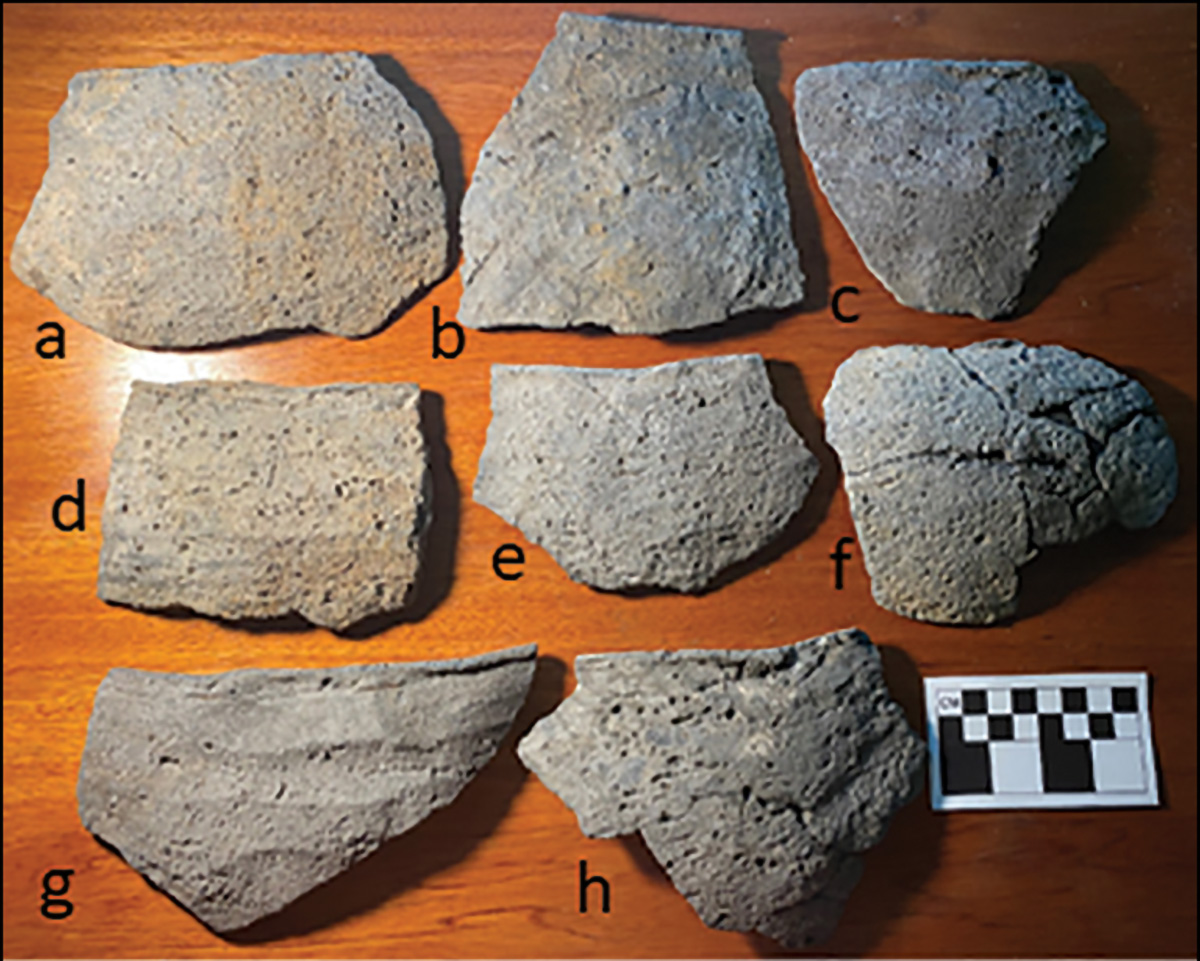
    Incurved Wall Bowls From the Sea Floor Survey
    Incurved wall bowls recovered from the sea-floor survey at Jay-yi Nah, Belize (exterior view). Credit: H. McKillop

    Supported by funding from the National Science Foundation, archaeologists from LSU and the University of Texas at Tyler have unearthed the oldest known ancient Maya salt works in southern Belize.

    The team was led by LSU Alumni Professor Heather McKillop, who first uncovered wooden structures preserved beneath the seafloor at the site in 2004. Her discovery also included associated artifacts and the only known ancient Maya wooden canoe paddle.

    Her key collaborator, Assistant Professor Elizabeth Sills at the University of Texas at Tyler, began working with McKillop as a master’s student and then as a doctoral student at LSU.

    Since their initial discovery of wood below the sea floor in Belize, the team has uncovered an extensive pattern of sites that include “salt kitchens” for boiling seawater in pots over a fire to make salt, residences for salt workers, and the remains of other pole and thatch buildings.

    Excavation Grid Sea Floor Survey
    An excavation grid is put in place to mark an area of high-density pottery on the sea floor. Credit: E.C. Sills

    All were remarkably well preserved in red mangrove peat in shallow coastal lagoons. Since 2004, the LSU research team has mapped as many as 70 underwater sites, with 4,042 wooden posts marking the outlines of ancient buildings.

    In 2023, the team returned to Belize to excavate a site called Jay-yi Nah, which curiously lacked the broken pots so common at other salt works, while a few pottery sherds were found.

    The Mystery of Jay-yi Nah’s Pottery

    “These resembled sherds from the nearby island site of Wild Cane Cay, which I had previously excavated,” McKillop said. “So, I suggested to Sills that we survey Jay-yi Nah again for posts and sea floor artifacts.”

    After their excavations, McKillop stayed in a nearby town to study the artifacts from Jay-yi Nah. As reported in Antiquity, the materials they found contrasted with those from other nearby underwater sites, which had imported pottery, obsidian, and high-quality chert, or flint.

    “At first, this was perplexing,” McKillop said. “But a radiocarbon date on a post we’d found at Jay-yi Na provided an Early Classic date, 250-600 AD, and solved the mystery.”

    Jay-yi Nah turned out to be much older than the other underwater sites. Through their findings, the researchers learned Jay-yi Nah had developed as a local enterprise, without the outside trade connections that developed later during the Late Classic period (AD 650-800), when the inland Maya population reached its peak with a high demand for salt—a basic biological necessity in short supply in the inland cities.

    Jay-yi Nah had started as a small salt-making site, with ties to the nearby community on Wild Cane Cay that also made salt during the Early Classic period. Abundant fish bones preserved in anaerobic deposits at Wild Cane Cay suggest some salt was made there for salting fish for later consumption or trade.

    Reference: “Earliest Ancient Maya salt production in southern Belize: excavations at Jay-yi Nah” by Heather McKillop and E. Cory Sills, 6 November 2024, Antiquity.
    DOI: 10.15184/aqy.2024.186

    Never miss a breakthrough: Join the SciTechDaily newsletter.
    Follow us on Google and Google News.

    Archaeology Louisiana State University
    Share. Facebook Twitter Pinterest LinkedIn Email Reddit

    Related Articles

    Mural Painted More Than 2,500 Years Ago Depicts Salt as an Ancient Maya Commodity at a Marketplace

    SLAC Synchrotron Reveals the Inner Workings of an Ancient Warship Battering Ram

    27-Foot Long Crocodylus Thorbjarnarsoni Roamed Kenya

    Ancient Murals in Guatemala Offer Glimpse of Mayan Astronomy

    Reproductive Cycle Put Dinosaurs at a Disadvantage

    Million-Year-Old Ash in South African Cave Yields Evidence of Cooking

    Exposing 8,000 Years of Civilization With Satellites

    Humans Implicated in Africa’s Deforestation 3,000 Years Ago

    Archaeologists Inch Closer to Understanding Stonehenge

    Leave A Reply Cancel Reply

    • Facebook
    • Twitter
    • Pinterest
    • YouTube

    Don't Miss a Discovery

    Subscribe for the Latest in Science & Tech!

    Trending News

    Largest-Ever Study Finds Medicinal Cannabis Ineffective for Anxiety, Depression, PTSD

    250-Million-Year-Old Egg Solves One of Evolution’s Biggest Mysteries

    Living With Roommates Might Be Changing Your Gut Microbiome Without You Knowing

    Century-Old Cleaning Chemical Linked to 500% Increased Risk of Parkinson’s Disease

    What if Your Memories Never Happened? Physicists Take a New Look at the Boltzmann Brain Paradox

    One of the Universe’s Largest Stars May Be Getting Ready To Explode

    Scientists Discover Enzyme That Could Supercharge Ozempic-Like Weight Loss Drugs

    Popular Sweetener Linked to DNA Damage – “It’s Something You Should Not Be Eating”

    Follow SciTechDaily
    • Facebook
    • Twitter
    • YouTube
    • Pinterest
    • Newsletter
    • RSS
    SciTech News
    • Biology News
    • Chemistry News
    • Earth News
    • Health News
    • Physics News
    • Science News
    • Space News
    • Technology News
    Recent Posts
    • Could Humans Regrow Limbs? New Study Reveals Promising Genetic Pathway
    • Black Hole Jets Pack Power of 10,000 Suns, Stunning New Study Reveals
    • A Cosmic Crash Turned This Nearby Galaxy Into Chaos
    • This Alien Solar System Doesn’t Follow the Rules – and Scientists Are Intrigued
    • What Did Prehistoric Europeans Eat? Scientists Uncover Surprising Answers
    Copyright © 1998 - 2026 SciTechDaily. All Rights Reserved.
    • Science News
    • About
    • Contact
    • Editorial Board
    • Privacy Policy
    • Terms of Use

    Type above and press Enter to search. Press Esc to cancel.