
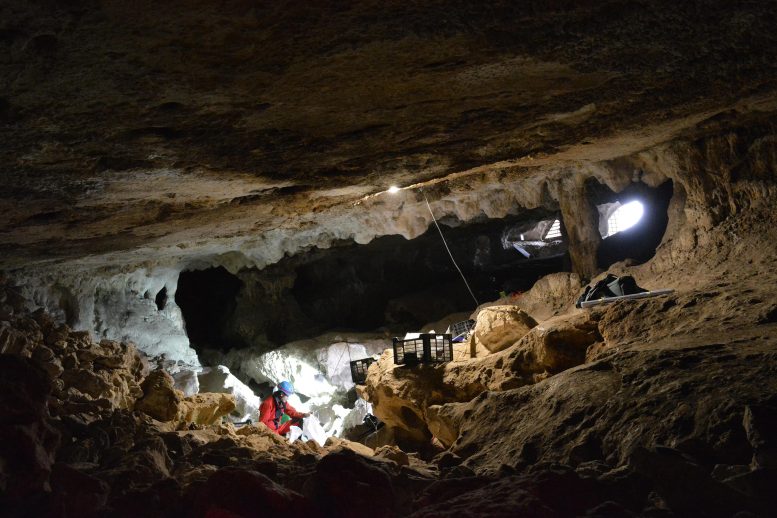
A Genome of a Human From the Ice Age Refuge Located in Southern Spain
A team of researchers from around the world has studied ancient human DNA obtained from various archaeological sites in Andalucía in southern Spain. The findings of the study include the oldest genome discovered to date from Cueva del Malalmuerzo in southern Spain, as well as the genomes of early farmers from other prominent sites, such as Cueva de Ardales, that are dated between 7,000 and 5,000 years old.
The Iberian Peninsula plays a significant role in the reconstruction of human population history. Being located in the southwestern part of Europe and acting as a geographic cul-de-sac, it served as a refuge during the last Ice Age with its extreme temperature fluctuations.
On the other hand, it may have been one of the starting points for the recolonization of Europe after the glacial maximum. Indeed, previous studies had reported on the genomic profiles of 13,000 to 8,000-year-old hunter-gatherers from the Iberian Peninsula and provided evidence for the survival and continuation of a much older Palaeolithic lineage that has been replaced in other parts of Europe and is no longer detectable.
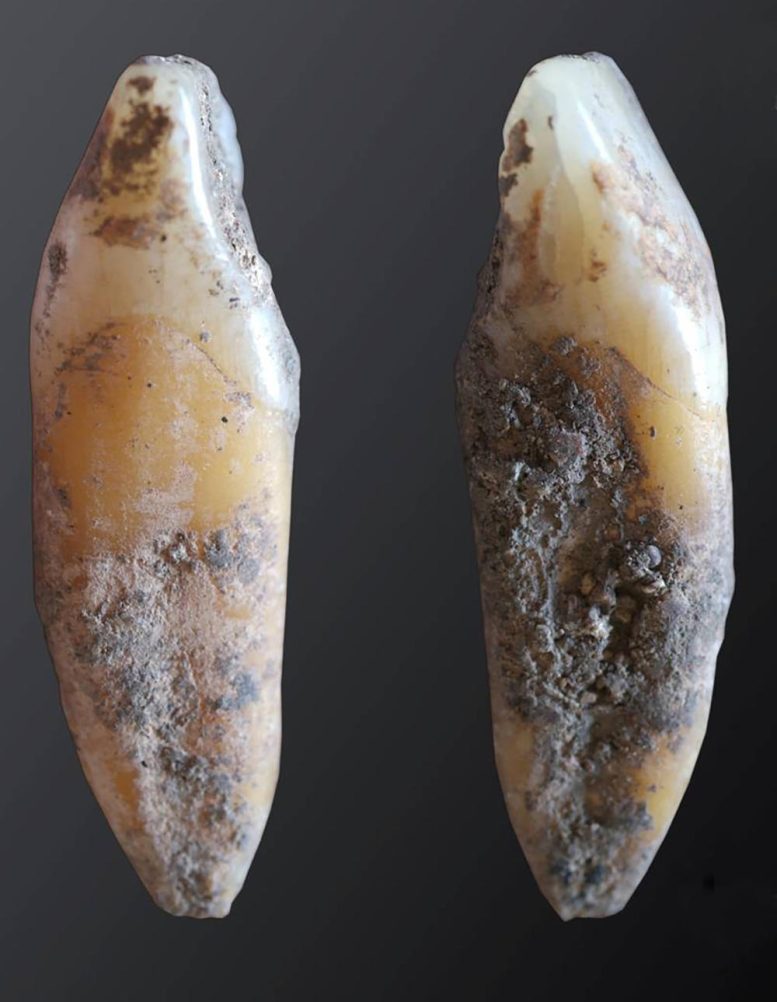
After an organism’s death, its DNA is only preserved for a certain period of time and under favorable climatic conditions. Extracting DNA from ancient remains from hot and dry climates is a huge challenge for researchers.
In Andalucía, in the south of present-day Spain, climatic conditions are similar to those in North Africa – however, DNA has successfully been recovered from 14,000-year-old human individuals from a cave site in Morocco. The new study fills crucial temporal and spatial gaps.
Researchers can now directly investigate the role of the southern Iberian Peninsula as a refuge for Ice Age populations and potential population contacts across the Strait of Gibraltar during the last Ice Age, when sea levels were much lower than today.
In the Right Place at the Right Time
The genetic ancestry of individuals from central and southern Europe who lived before the Last Glacial Maximum (24,000 to 18,000 years before today) differs from the ones who recolonized Europe afterward.
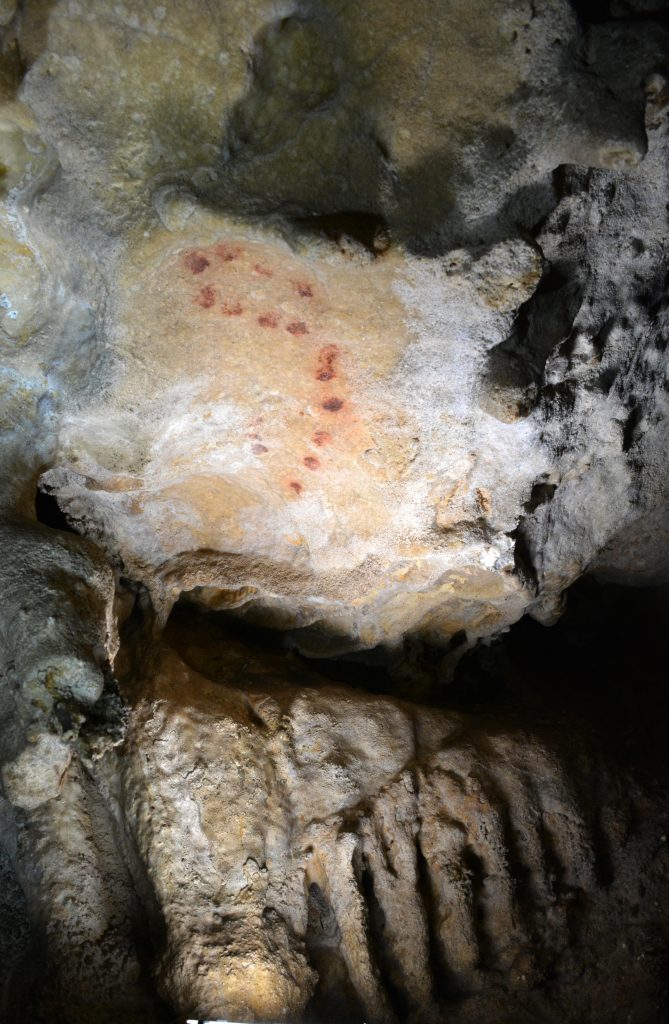
However, the situation in western Europe has not been clear until now due to a lack of genomic data from critical time periods. The 23,000-year-old individual from Cueva del Malalmuerzo near Granada finally adds data from the time when large parts of Europe were covered by massive ice sheets. The study describes a direct genetic link between a 35,000-year-old individual from Belgium and the new genome from Malalmuerzo.
“Thanks to the high quality of our data we were able to detect traces of one of the first genetic lineages that settled Eurasia 45,000 years ago. Importantly, we found similarities with a 35,000-year-old individual from Belgium whose ancestry we can now trace further to the 23,000-year-old individual from southern Iberia,” explains first author Vanessa Villalba-Mouco of the Max Planck Institute for Evolutionary Anthropology.
The individual from Cueva del Malalmuerzo not only links to earlier periods of settlement but also to the hunter-gatherers of southern and western Europe who lived long after the last Ice Age.
It also confirms the important role of the Iberian Peninsula as a refuge for human populations during the last Ice Age. From there, humans migrated northwards and eastwards once the ice sheets had retreated.
“With Malalmuerzo, we managed to find the right place and the right time period to trace a Palaeolithic human group back to one of the proposed Ice Age refugia. It is remarkable to find such a long-lasting genetic legacy on the Iberian Peninsula, especially since this pre-Ice Age ancestry had long since disappeared in other parts of Europe,” adds senior author Wolfgang Haak of the Max Planck Institute for Evolutionary Anthropology.
More Puzzle Pieces of Human History
Interestingly, the authors did not find any genetic link between the southern Iberian Peninsula and North Africa – despite a distance of only 13 kilometers across the Mediterranean Sea, and parallels in the archaeological record.
“In Malalmuerzo, we found no evidence of a genetic contribution from North African lineages, and conversely, there is no evidence of a genetic contribution from southern Spain in the genomes of the 14,000-year-old individuals from the Taforalt cave in Morocco,” adds Gerd-Christian Weniger from the University of Cologne. “Why the Strait of Gibraltar was a barrier at the end of the last Ice Age is still one of the unresolved questions of archaeological research in the western Mediterranean region.”
The study also includes a number of younger individuals from the Neolithic, a time period when the first farmers arrived in Europe from the Near East. The characteristic genetic ancestry of Anatolian Neolithic groups is indeed detectable in the individuals from Andalucía, suggesting that these early farmers spread over large geographic distances.
“Neolithic people from southern Iberia, however, show a higher proportion of hunter-gatherer lineages. Hence, interaction between the last hunters and the first farmers may have been much closer than in other regions,” says co-author Jose Ramos-Muñoz from Universidad de Cádiz.
The Iberian Peninsula’s special role during the Ice Age still resonates thousands of years later.
“Surprisingly, the genetic heritage of Paleolithic hunter-gatherers is still detectable in early farmers from southern Iberia, indicating local admixture between two population groups with very different lifestyles,” concludes Vanessa Villalba-Mouco.
Reference: “A 23,000-year-old southern Iberian individual links human groups that lived in Western Europe before and after the Last Glacial Maximum” by Vanessa Villalba-Mouco, Marieke S. van de Loosdrecht, Adam B. Rohrlach, Helen Fewlass, Sahra Talamo, He Yu, Franziska Aron, Carles Lalueza-Fox, Lidia Cabello, Pedro Cantalejo Duarte, José Ramos-Muñoz, Cosimo Posth, Johannes Krause, Gerd-Christian Weniger and Wolfgang Haak, 1 March 2023, Nature Ecology & Evolution.
DOI: 10.1038/s41559-023-01987-0
The study was funded by the Max Planck Society, Unión Europea-Next Generation EU, H2020 European Research Council, the German Research Foundation, and the Ministerio de Economía y Competitividad.
Never miss a breakthrough: Join the SciTechDaily newsletter.
Follow us on Google and Google News.