
Close Menu
    Facebook X (Twitter) Instagram
    SciTechDaily
    • Biology
    • Chemistry
    • Earth
    • Health
    • Physics
    • Science
    • Space
    • Technology
    Facebook X (Twitter) Pinterest YouTube RSS
    SciTechDaily
    Home»Health»3D-Printed Artificial Blood Vessels Could Revolutionize the Treatment of Heart Disease
    Health

    3D-Printed Artificial Blood Vessels Could Revolutionize the Treatment of Heart Disease

    By University of EdinburghJuly 27, 20243 Comments3 Mins Read
    Facebook Twitter Pinterest Telegram LinkedIn WhatsApp Email Reddit
    Share
    Facebook Twitter LinkedIn Pinterest Telegram Email Reddit
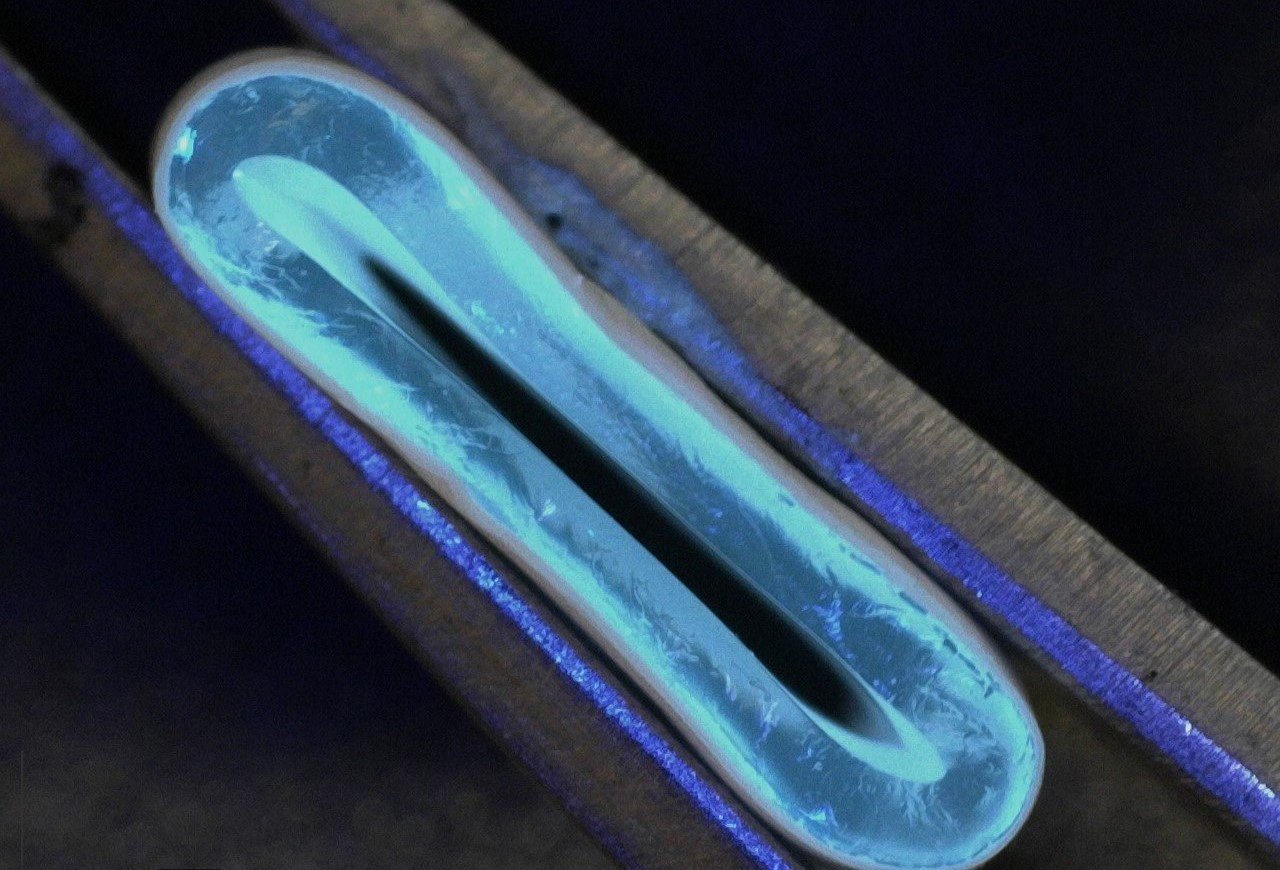
    3D Printed Blood Vessel
    Innovative 3D-printed vascular grafts developed by the University of Edinburgh show the potential to revolutionize heart bypass surgeries, combining strength, flexibility, and reduced complication risks in a novel medical application. Credit: Dr Norbert Radasci, School of Engineering, University of Edinburgh.

    3D-printed blood vessels that closely resemble the properties of human veins could revolutionize the treatment of cardiovascular diseases.

    Experts say that newly developed strong, flexible, gel-like tubes, created through an innovative 3D printing technology, have the potential to enhance outcomes for heart bypass patients by replacing the human and synthetic veins currently used in surgery to re-route blood flow.

    The development of synthetic vessels could help limit scarring, pain, and infection risk associated with the removal of human veins in bypass operations of which some 20,000 are carried out in England each year. The products could also help alleviate the failure of small synthetic grafts, which can be hard to integrate into the body.

    In a two-stage process, a team of researchers led by the University of Edinburgh’s School of Engineering used a rotating spindle integrated into a 3D printer to print tubular grafts made from a water-based gel.

    They subsequently reinforced the printed graft in a process known as electrospinning, which uses high voltage to draw out very thin nanofibers, coating the artificial blood vessel in biodegradable polyester molecules. Tests showed the resulting products to be as strong as natural blood vessels.

    Versatility and Future Research Directions

    The 3D graft can be made in thicknesses from 1 to 40 mm in diameter, for a range of applications, and its flexibility means that it could easily be integrated into the human body, the team says. The next stage of the study will involve researching the use of the blood vessels in animals, in collaboration with the University of Edinburgh’s Roslin Institute, followed by trials in humans.

    The research, published in Advanced Materials Technologies, was carried out in collaboration with Heriot-Watt University.

    Dr Faraz Fazal, of the University of Edinburgh’s School of Engineering and lead author, said: “Our hybrid technique opens up new and exciting possibilities for the fabrication of tubular constructs in tissue engineering.”

    Dr. Norbert Radacsi, of the University of Edinburgh’s School of Engineering and principal investigator, said: “The results from our research address a long-standing challenge in the field of vascular tissue engineering – to produce a conduit that has similar biomechanical properties to that of human veins.

    “With continued support and collaboration, the vision of improved treatment options for patients with cardiovascular disease could become a reality.”

    Reference: “Fabrication of a Compliant Vascular Graft Using Extrusion Printing and Electrospinning Technique” by Faraz Fazal, Ferry P.W. Melchels, Andrew McCormack, Andreia F. Silva, Ella-Louise Handley, Nurul Ain Mazlan, Anthony Callanan, Vasileios Koutsos and Norbert Radacsi, 25 July 2024, Advanced Materials Technologies.
    DOI: 10.1002/admt.202400224

    Never miss a breakthrough: Join the SciTechDaily newsletter.
    Follow us on Google and Google News.

    3D Printing Biomedical Engineering Blood Heart University of Edinburgh
    Share. Facebook Twitter Pinterest LinkedIn Email Reddit

    Related Articles

    Smart Pacemaker Harmlessly Dissolves in the Body After It’s No Longer Needed

    How Accurate Is Smartwatch Heart Data Tracking? It Depends on Your Skin Tone

    Slow Release of a Drug, TT-10, Improves Heart Attack Recovery

    Bioengineers Using 3D Printing and Smart Biomaterials To Create an Insulin-Producing Implant for Type 1 Diabetes

    First-Ever Transient Pacemaker Harmlessly Dissolves in Body – Disappears After It’s No Longer Needed

    COVID Vaccine Linked to Low Blood Platelet Count – Idiopathic Thrombocytopenic Purpura

    New Tool for Surgeons: 3D Bioprinted Heart

    MIT Bionic ‘Heart’ Made of Heart Tissue and a Robotic Pumping System Beats Like the Real Thing

    Beating Heart Patch Repairs Damage Caused by Heart Attack

    3 Comments

    1. Boba on July 27, 2024 3:36 pm

      …or they can give you cancer.

      Reply
    2. Jojo on July 27, 2024 10:22 pm

      “The next stage of the study will involve researching the use of the blood vessels in animals, in collaboration with the University of Edinburgh’s Roslin Institute, followed by trials in humans.”
      —-
      And this will of course take a minimum of 8-10 years to get past the human trials, then another 10 years until manufacturing is in place, MD training has completed and government approvals have been granted. So maybe 20 years until we see this technology available for general surgery.

      Perhaps if we removed SLOW humans from the research and put an AI or two to work on this we could see a commercial product in maybe two years?

      Reply
      • Boba on July 28, 2024 3:25 pm

        Ah, the “magic of AI”. Isn’t that the fella that hallucinates stuff? Please, go ahead and put your life into its hands. Your funeral.

        Reply
    Leave A Reply Cancel Reply

    • Facebook
    • Twitter
    • Pinterest
    • YouTube

    Don't Miss a Discovery

    Subscribe for the Latest in Science & Tech!

    Trending News

    Breakthrough Parkinson’s Drug Targets Disease at Its Genetic Roots

    Just 4 Weeks of Simple Diet Changes Reversed Signs of Aging in Older Adults

    Scientists May Have Finally Solved Why Humans Are Right-Handed

    NASA’s Hubble Accidentally Witnesses a Comet Shattering in Space

    Researchers Discover the Body’s Hidden “Off Switch” for Inflammation

    Scientists Discover Metformin Doesn’t Work the Way We Thought

    Tea or Coffee? Your Daily Choice Could Affect Osteoporosis Risk

    Vitamin C May Fight Cancer in a Surprising Way

    Follow SciTechDaily
    • Facebook
    • Twitter
    • YouTube
    • Pinterest
    • Newsletter
    • RSS
    SciTech News
    • Biology News
    • Chemistry News
    • Earth News
    • Health News
    • Physics News
    • Science News
    • Space News
    • Technology News
    Recent Posts
    • Scientists Discover the Secret Bacteria Behind Artisan Cheeses – and They May Be Good for Your Health
    • Banned Antibiotic Discovered in Fish Raises Food Safety Concerns
    • Common Asthma Drug May Reverse Dangerous Fatty Liver Disease
    • Scientists Develop Experimental Eye Drop That Could Transform Dry Eye Treatment
    • Extra Weight Could Age Your Brain Faster, Study Warns
    Copyright © 1998 - 2026 SciTechDaily. All Rights Reserved.
    • Science News
    • About
    • Contact
    • Editorial Board
    • Privacy Policy
    • Terms of Use

    Type above and press Enter to search. Press Esc to cancel.