
Close Menu
    Facebook X (Twitter) Instagram
    SciTechDaily
    • Biology
    • Chemistry
    • Earth
    • Health
    • Physics
    • Science
    • Space
    • Technology
    Facebook X (Twitter) Pinterest YouTube RSS
    SciTechDaily
    Home»Space»4.45 Billion-Year-Old Meteorite Points to Hot, Habitable Waters on Early Mars
    Space

    4.45 Billion-Year-Old Meteorite Points to Hot, Habitable Waters on Early Mars

    By Curtin UniversityNovember 24, 20242 Comments3 Mins Read
    Facebook Twitter Pinterest Telegram LinkedIn WhatsApp Email Reddit
    Share
    Facebook Twitter LinkedIn Pinterest Telegram Email Reddit
    Northwest Africa 7034 Martian Meteorite
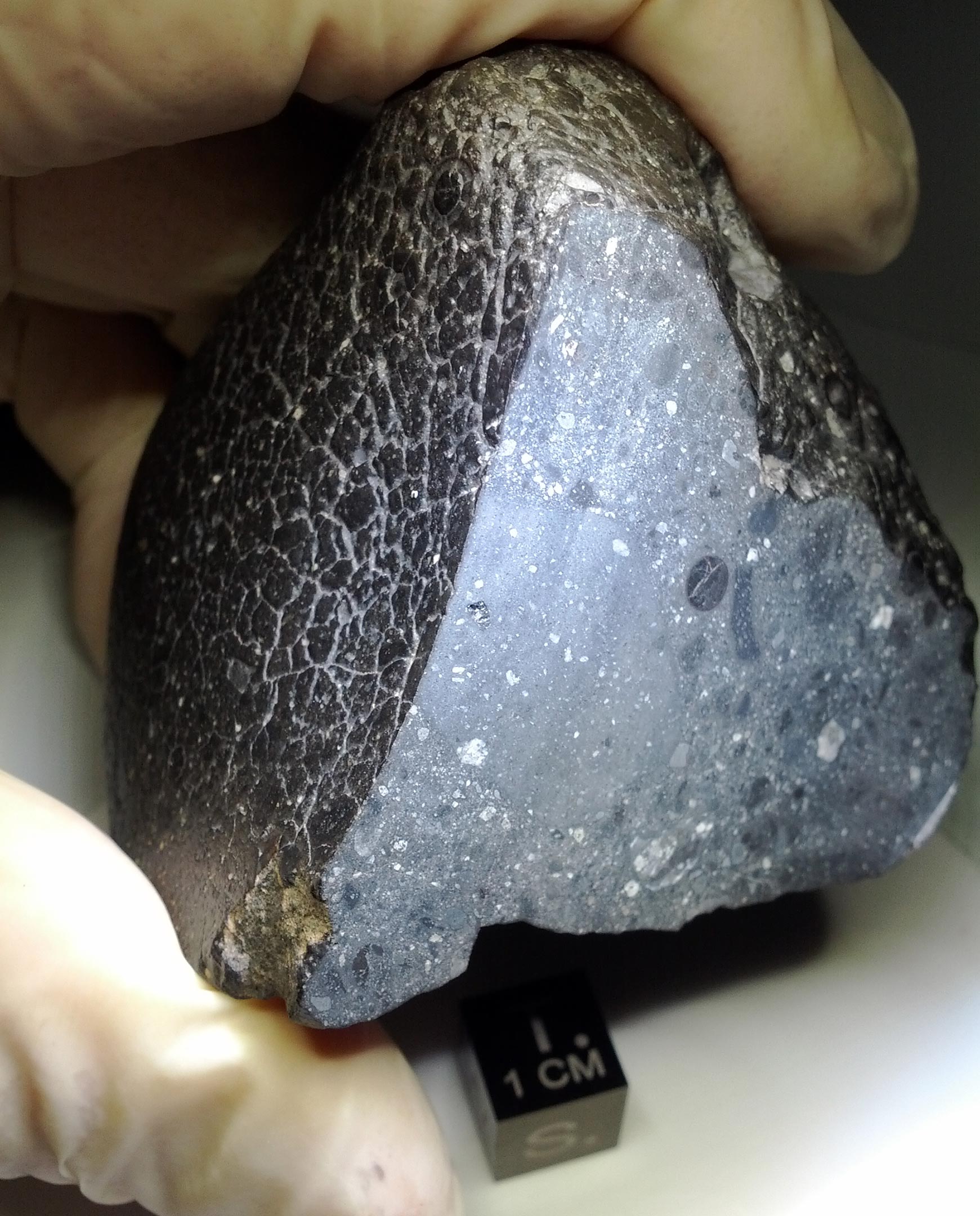
    A study reveals ancient hot water activity on Mars, indicated by a 4.45 billion-year-old zircon grain from a Martian meteorite. Designated Northwest Africa (NWA) 7034, and nicknamed “Black Beauty,” the Martian meteorite weighs approximately 11 ounces (320 grams). Credit: NASA

    Researchers have discovered potentially the oldest evidence of hot water activity on Mars through the analysis of a 4.45 billion-year-old zircon grain from the Martian meteorite known as Black Beauty.

    This finding suggests early Mars may have been habitable, supported by geochemical markers of water-rich fluids and elemental evidence of hydrothermal systems.

    Unveiling Ancient Water Activity on Mars

    Researchers from Curtin University have discovered what could be the oldest direct evidence of ancient hot water activity on Mars, suggesting that the planet may have been habitable at some point in its past.

    The team studied a 4.45 billion-year-old zircon grain from the Martian meteorite NWA7034, also known as Black Beauty. Their analysis revealed geochemical “fingerprints” of water-rich fluids within the grain.

    Insights from Geochemical Fingerprints

    Dr. Aaron Cavosie, a co-author from Curtin’s School of Earth and Planetary Sciences, explained that this finding sheds new light on ancient Martian hydrothermal systems linked to volcanic activity and provides critical insights into the planet’s early potential for habitability.

    “We used nano-scale geochemistry to detect elemental evidence of hot water on Mars 4.45 billion years ago,” Dr. Cavosie said.

    Black Beauty Martian Meteorite
    A sample of the Martian meteorite known as ‘Black Beauty’. Credit: Aaron Cavosie

    Elemental Clues in Martian Zircon

    “Hydrothermal systems were essential for the development of life on Earth and our findings suggest Mars also had water, a key ingredient for habitable environments, during the earliest history of crust formation.”

    “Through nano-scale imaging and spectroscopy, the team identified element patterns in this unique zircon, including iron, aluminum, yttrium, and sodium. These elements were added as the zircon formed 4.45 billion years ago, suggesting water was present during early Martian magmatic activity.”

    Implications of Water in Martian History

    Dr. Cavosie said the research showed that even though Mars’ crust endured massive meteorite impacts that caused major surface upheaval, water was present during the early Pre-Noachian period, prior to about 4.1 billion years ago.

    “A 2022 Curtin study of the same zircon grain found it had been ‘shocked’ by a meteorite impact, marking it as the first and only known shocked zircon from Mars,” Dr. Cavosie said.

    “This new study takes us a step further in understanding early Mars, by way of identifying tell-tale signs of water-rich fluids from when the grain formed, providing geochemical markers of water in the oldest known Martian crust.”

    Reference: “Zircon trace element evidence for early hydrothermal activity on Mars” by Jack Gillespie, Aaron J. Cavosie, Denis Fougerouse, Cristiana L. Ciobanu, William D. A. Rickard, David W. Saxey, Gretchen K. Benedix and Phil A. Bland, 22 November 2024, Science Advances.
    DOI: 10.1126/sciadv.adq3694

    Lead author Dr. Jack Gillespie from the University of Lausanne was a Postdoctoral Research Associate at Curtin’s School of Earth and Planetary Sciences at the time of the study, which was co-authored by researchers from Curtin’s Space Science and Technology Centre, the John de Laeter Centre and the University of Adelaide, with funding from the Australian Research Council, Curtin University, University of Adelaide and the Swiss National Science Foundation.

    Never miss a breakthrough: Join the SciTechDaily newsletter.
    Follow us on Google and Google News.

    Curtin University Mars Meteorites Popular Water
    Share. Facebook Twitter Pinterest LinkedIn Email Reddit

    Related Articles

    Mars’ Lost Ocean? Stunning New Evidence Found Beneath the Surface

    How a Martian Meteorite Found in a Drawer Rewrites Mars’ Water History

    Mars Revealed: NASA’s Curiosity Rover Uncovers the Red Planet’s Shocking Climate Shift

    Could Perseverance’s Mars Samples Hold the Secret to Ancient Life?

    Tracing Water on Mars: From Ice Caps to Hidden Oceans and the Quest for Life

    Icy Planetesimals: The Chilling Secret Behind Earth’s Water

    Mars Quakes Reveal Daily Meteor Bombardments on the Red Planet

    Meteorite Mayhem: How NASA InSight’s Seismic Data Is Rewriting Martian History

    Decoding the Red Planet’s Structure: Insights From Martian Meteorites

    2 Comments

    1. Darko on November 24, 2024 7:09 pm

      Mnogo stvari, svaki kamen je amajlija i zastita za svaki znak horoskopa. Treba ga nositi oko. Vrata kao ogrlicu ili barem u dzepu od farmerki.

      Reply
    2. Torbjörn Larsson on November 28, 2024 11:30 am

      The age is supporting the first evidence of an *Earth* ocean in zircons date 4.4 – 4.3 billion years ago: both planets had water soon after crust formed.

      Reply
    Leave A Reply Cancel Reply

    • Facebook
    • Twitter
    • Pinterest
    • YouTube

    Don't Miss a Discovery

    Subscribe for the Latest in Science & Tech!

    Trending News

    One of the Universe’s Largest Stars May Be Getting Ready To Explode

    Scientists Discover Enzyme That Could Supercharge Ozempic-Like Weight Loss Drugs

    Popular Sweetener Linked to DNA Damage – “It’s Something You Should Not Be Eating”

    Ancient “Rock” Microbes May Reveal How Complex Life Began

    Researchers Capture Quantum Interference in One of Nature’s Rarest Atoms

    “A Plague Is Upon Us”: The Mass Death That Changed an Ancient City Forever

    Scientists Discover Game-Changing New Way To Treat High Cholesterol

    This Small Change to Your Exercise Routine Could Be the Secret to Living Longer

    Follow SciTechDaily
    • Facebook
    • Twitter
    • YouTube
    • Pinterest
    • Newsletter
    • RSS
    SciTech News
    • Biology News
    • Chemistry News
    • Earth News
    • Health News
    • Physics News
    • Science News
    • Space News
    • Technology News
    Recent Posts
    • Scientists Rethink Extreme Warming After Surprising Ocean Discovery
    • The Surprising Role of Asteroids in the Origin of Life
    • Scientists Raise Concerns Over Newly Recognized Pollutant Found Everywhere in the Air
    • New Study Challenges 40-Year Puzzle About Childhood Body Fat
    • 20-Year Study Finds Daily Multivitamins Don’t Extend Lifespan
    Copyright © 1998 - 2026 SciTechDaily. All Rights Reserved.
    • Science News
    • About
    • Contact
    • Editorial Board
    • Privacy Policy
    • Terms of Use

    Type above and press Enter to search. Press Esc to cancel.