
Most of the world’s high-security pathogen labs lack strict oversight for risky research. The COVID-19 pandemic highlights the urgent need for stronger global biosafety regulation.
Did the coronavirus SARS-CoV-2 result from high-risk research gone wrong? Regardless of the answer, the risk of future pandemics originating from research with dangerous pathogens is real.
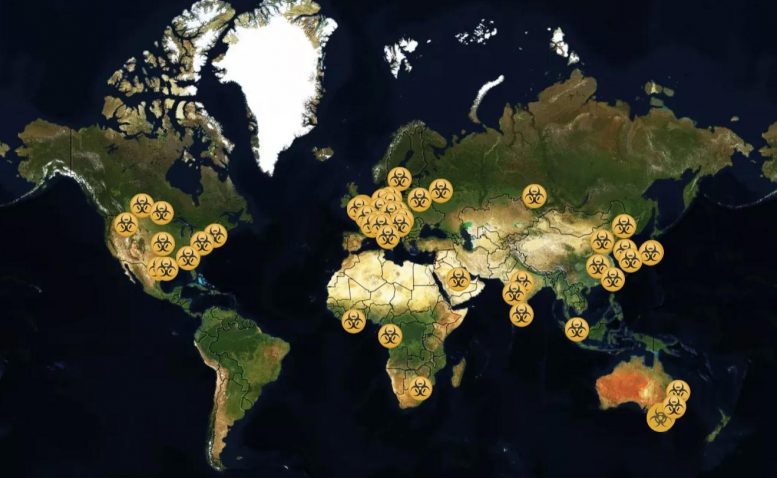
The focal point of this lab-leak discussion is the Wuhan Institute of Virology, nestled in the hilly outskirts of Wuhan. It is just one of 59 maximum containment labs in operation, under construction or planned around the world.
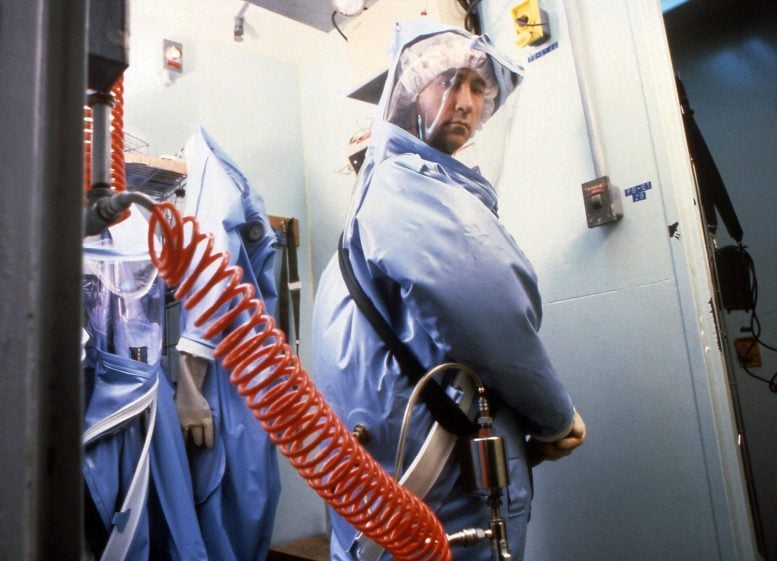
Known as biosafety level 4 (BSL4) labs, these are designed and built so that researchers can safely work with the most dangerous pathogens on the planet – ones that can cause serious disease and for which no treatment or vaccines exist. Researchers are required to wear full-body pressurized suits with independent oxygen.
Spread over 23 countries, the largest concentration of BSL4 labs is in Europe, with 25 labs. North America and Asia have roughly equal numbers, with 14 and 13 respectively. Australia has four and Africa three. Like the Wuhan Institute of Virology, three-quarters of the world’s BSL4 labs are in urban centers.
With 3,000m² of lab space, the Wuhan Institute of Virology is the largest BSL4 lab in the world, though it will soon be overtaken by the National Bio and Agro-Defense Facility at Kansas State University in the US. When it is complete, it will boast over 4,000m² of BSL4 lab space.
Most labs are significantly smaller, with half of the 44 labs where data is available being under 200m² – less than half the size of a professional basketball court or about three-quarters the size of a tennis court.
Around 60% of BSL4 labs are government-run public-health institutions, leaving 20% run by universities and 20% by biodefence agencies. These labs are either used to diagnose infections with highly lethal and transmissible pathogens, or they are used to research these pathogens to improve our scientific understanding of how they work and to develop new drugs, vaccines, and diagnostic tests.
Safety and Security Lapses in High-Containment Facilities
But far from all of these labs score well on safety and security. The Global Health Security Index, which measures whether countries have legislation, regulations, oversight agencies, policies, and training on biosafety and biosecurity, is instructive. Led by the US-based Nuclear Threat Initiative, the index shows that only about one-quarter of countries with BSL4 labs received high scores for biosafety and biosecurity. This suggests plenty of room for improvement for countries to develop comprehensive systems of biorisk management.
Membership of the International Experts Group of Biosafety and Biosecurity Regulators, where national regulatory authorities share best practices in this field, is another indicator of national biosafety and biosecurity practices. Only 40% of countries with BSL4 labs are members of the forum: Australia, Canada, France, Germany, Japan, Singapore, Switzerland, UK, and the US. And no lab has yet signed up to the voluntary biorisk management system (ISO 35001), introduced in 2019 to establish management processes to reduce biosafety and biosecurity risks.
The vast majority of countries with maximum containment labs do not regulate dual-use research, which refers to experiments that are conducted for peaceful purposes but can be adapted to cause harm; or gain-of-function research, which is focused on increasing the ability of a pathogen to cause disease.
Three of the 23 countries with BSL4 labs (Australia, Canada, and the US) have national policies for oversight of dual-use research. At least three other countries (Germany, Switzerland, and the UK) have some form of dual-use oversight, where, for instance, funding bodies require their grant recipients to review their research for dual-use implications.
Rising Demand for BSL4 Labs
That still leaves a large proportion of scientific research on coronaviruses carried out in countries with no oversight of dual-use research or gain-of-function experiments. This is particularly concerning as gain-of-function research with coronaviruses is likely to increase as scientists seek to better understand these viruses and to identify which viruses pose a higher risk of jumping from animals to humans or becoming transmissible between humans. More countries are expected to seek BSL4 labs, too, in the wake of the pandemic as part of a renewed emphasis on pandemic preparedness and response.
While the COVID-19 pandemic has served as a stark reminder of the risks posed by infectious diseases and the importance of a robust biomedical research enterprise for saving lives, we also need to keep in mind that such research can carry risks of its own. Good science and smart policy, however, can keep those risks in check and allow humanity to reap the benefits of this research.
Written by:
- Filippa Lentzos – Senior Lecturer in Science and International Security, King’s College London
- Gregory Koblentz – Associate Professor and Director of the Master’s in Biodefense, George Mason University
Adapted from an article originally published on The Conversation.
Never miss a breakthrough: Join the SciTechDaily newsletter.
Follow us on Google and Google News.
2 Comments
This shows that technology evolves faster than the humans who create it. Not even the NIH Ebola center in Bethesda, MD, could contain the spread to distant wings of the facility — because they are so inept as to spread it with their shoes and wheels on carts — which they do not disinfect. It is as basic as clean room 101, but humans have a perverse need to contaminate everything. Consider the spread of Covid-19 resulting in 3.9 million deaths worldwide, primarily because humans refuse to properly wear a proper 95% mask and stop spitting on each other. It really is that simple, but for the Flat Earther, the Birther, the Truther, the Right Winger, the Sinner in the name of The Father.
This is Gaia self regulating. Just wait…
Gain of function is especialy troubling – as soon as we create something that not in the nature yet, it will appear everywhere and no security will help. 100 mil virus effect!