

A Penn-led research team has uncovered how hydralazine, one of the oldest blood pressure medications and a standard treatment for preeclampsia, functions at the molecular level. In the process, they made an unexpected finding: it can also stop the growth of aggressive brain tumors.
Over the last 70 years, hydralazine has been a critical medication in clinical practice, serving as a first-line treatment for dangerously high blood pressure, particularly during pregnancy. Yet one major question has remained unanswered: its “mechanism of action,” meaning the specific molecular process that allows it to work effectively, safely, and across different medical conditions.
“Hydralazine is one of the earliest vasodilators ever developed, and it’s still a first-line treatment for preeclampsia—a hypertensive disorder that accounts for 5-15% of maternal deaths worldwide,” says Kyosuke Shishikura, a physician-scientist at the University of Pennsylvania. “It came from a ‘pre-target’ era of drug discovery, when researchers relied on what they saw in patients first and only later tried to explain the biology behind it.”
Shishikura, his postdoctoral adviser at Penn, Megan Matthews, and their collaborators have now resolved this long-standing mystery.
In a study published in Science Advances, the team identified the molecular process behind hydralazine’s effects and, unexpectedly, uncovered a biological connection between hypertensive disorders and brain cancer. These findings show how long-used medications can reveal new therapeutic possibilities and may guide the development of safer and more targeted drugs for both maternal health and brain tumors.
“Preeclampsia has affected generations of women in my own family and continues to disproportionately impact Black mothers in the United States,” Matthews says. “Understanding how hydralazine works at the molecular level offers a path toward safer, more selective treatments for pregnancy-related hypertension—potentially improving outcomes for patients who are at greatest risk.”
Hydralazine blocks an oxygen-sensing enzyme
The team discovered that hydralazine inhibits an oxygen-sensing enzyme called 2-aminoethanethiol dioxygenase (ADO), which acts as a molecular switch that signals blood vessels when to constrict.
“ADO is like an alarm bell that rings the moment oxygen starts to fall,” Matthews says. “Most systems in the body take time; they have to copy DNA, make RNA, and build new proteins. ADO skips all that. It flips a biochemical switch in seconds.”
Hydralazine works by binding to ADO and blocking its activity, effectively “muting” this oxygen alarm. With the enzyme shut down, the signaling proteins it normally breaks down—known as regulators of G-protein signaling (RGS)—remain stable.
The buildup of RGS proteins, says Shishikura, tells the blood vessels to stop constricting, effectively overriding the “squeeze” signal. This reduces intracellular calcium levels, which he calls the “master regulator of vascular tension.” As calcium levels fall, the smooth muscles in blood vessel walls relax, causing vasodilation and a drop in blood pressure.
From preeclampsia to brain cancer: A common target
Prior to this study, cancer researchers and clinicians had begun to suspect that ADO was important in glioblastoma, where tumors often have to survive in pockets of very low oxygen, Shishikura explains. Elevated levels of ADO and its metabolic products had been linked with more aggressive disease, suggesting that shutting this enzyme down could be a powerful strategy, but no one had a good inhibitor to test that idea.
To see if hydralazine was a contender, Shishikura worked closely with structural biochemists at the University of Texas, who used X-ray crystallography, a high-resolution imaging technique, to visualize hydralazine bound to ADO’s metal center, and with neuroscientists at the University of Florida, who tested the drug’s effects in brain cancer cells.
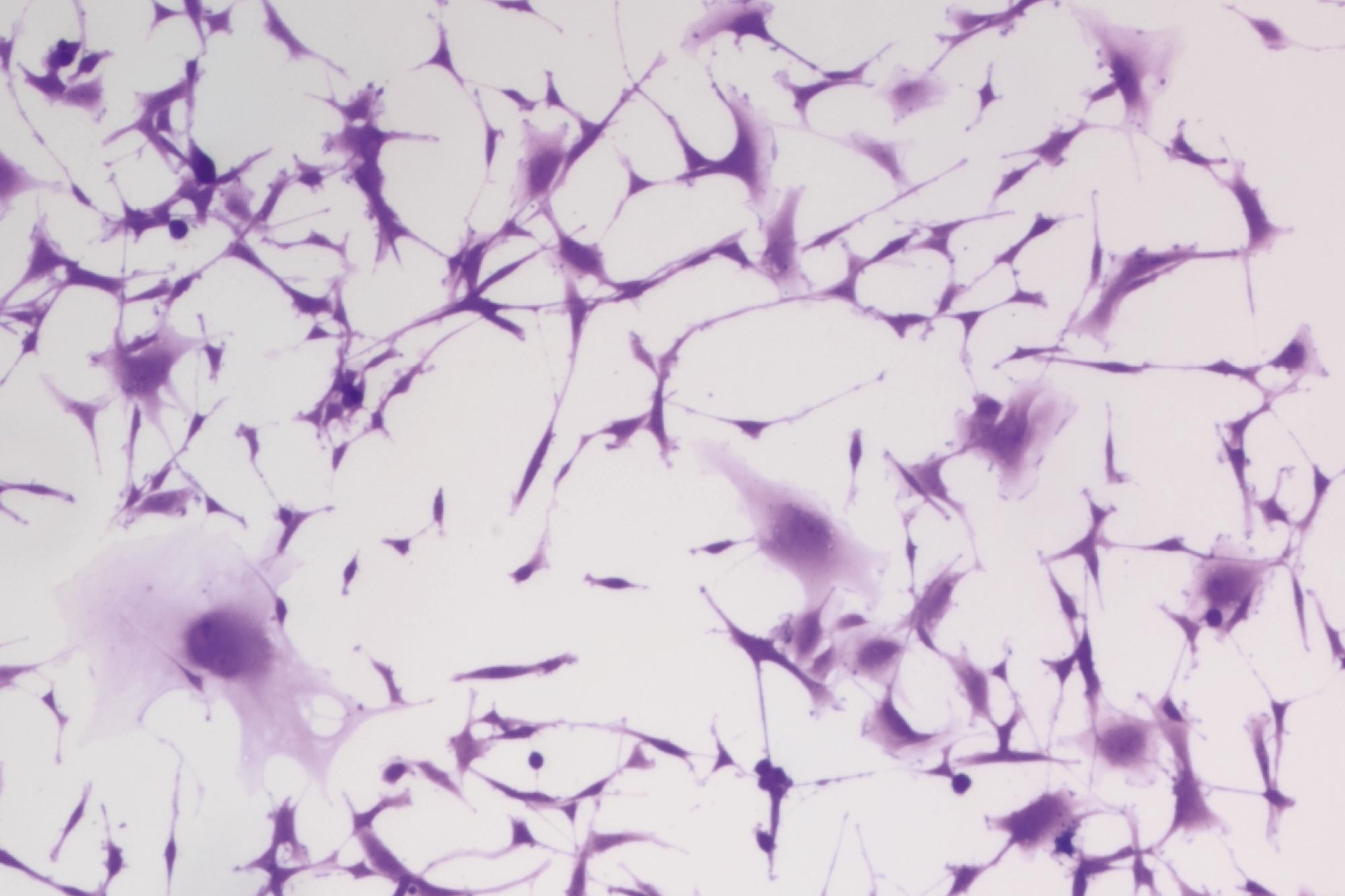
They found that the ADO pathway that regulates vascular contraction also helps tumor cells survive in low-oxygen environments. Unlike chemotherapy, which aims to kill all cells outright, hydralazine disrupted that oxygen-sensing loop, triggering cellular “senescence,” or a dormant, non-dividing state in glioblastoma cells, effectively pausing growth without triggering further inflammation or resistance.
Unlocking the potential for other lifesaving treatments
Their findings highlight how long-established treatments can reveal new therapeutic potential and could help in the design of safer, more effective drugs for both maternal health and brain cancer.
They say the next step is to push the chemistry further building new ADO inhibitors that are more tissue specific and better at crossing, or exploiting weak points in, the blood-brain barrier so they hit tumor tissue hard while sparing the rest of the body.
Matthews is also working to continue engineering the next generation of medical solutions by revealing the mechanics of clinically tested, long-known treatments.
“It’s rare that an old cardiovascular drug ends up teaching us something new about the brain,” Matthews says, “but that’s exactly what we’re hoping to find more of—unusual links that could spell new solutions.”
Reference: “Hydralazine inhibits cysteamine dioxygenase to treat preeclampsia and senesce glioblastoma” by Kyosuke Shishikura, Jiasong Li, Yiming Chen, Nate R. McKnight, Thomas P. Keeley, Katelyn A. Bustin, Eric W. Barr, Snehil R. Chilkamari, Mahaa Ayub, Sun Woo Kim, Zongtao Lin, Ren-Ming Hu, Kelly Hicks, Xie Wang, Donald M. O’Rourke, J. Martin BollingerJr., Zev A. Binder, William H. Parsons, Kirill A. Martemyanov, Aimin Liu and Megan L. Matthews, 15 October 2025, Science Advances.
DOI: 10.1126/sciadv.adx7687
This work was supported by the National Institutes of Health (NIDA 1DP1DA051620, DA036596, and NCI R37CA285434); the National Science Foundation (CHE-2204225); the American Cancer Society (129784-IRG-16-188-38-IRG); the Charles E. Kaufman Foundation New Initiative Grant; the University Research Fund; the Astellas Foundation for Research on Metabolic Disorders; and the Herbert and Diane Bischoff Fund.
Never miss a breakthrough: Join the SciTechDaily newsletter.
Follow us on Google and Google News.