

A groundbreaking study led by Bar-Ilan University reveals that starch-rich plants played a central role in the diet of ancient hunter-gatherers.
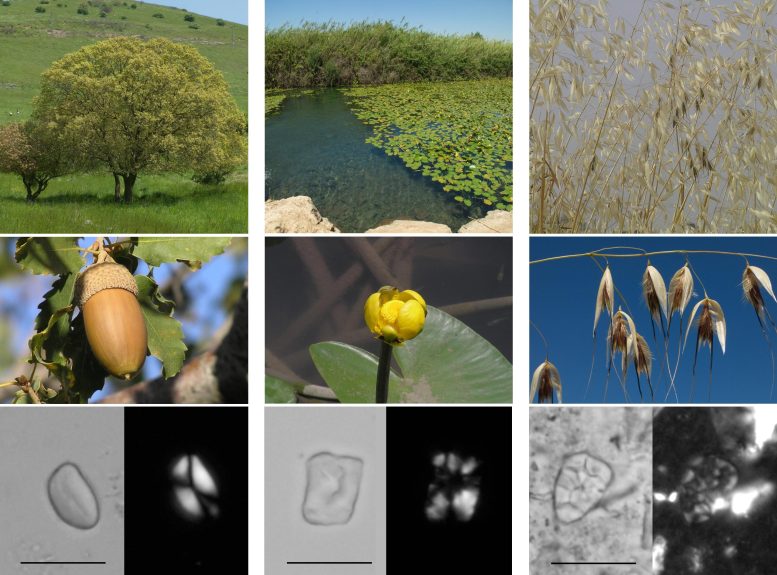
A new archaeological study along the Jordan River, just south of northern Israel’s Hula Valley, sheds new light on the diets of early humans and challenges long-standing assumptions about prehistoric eating habits. The research shows that ancient hunter-gatherers relied heavily on plant foods, especially starchy varieties, as a key energy source. Contrary to the popular belief that early hominids primarily consumed animal protein, the findings reveal a varied plant-based diet that included acorns, cereals, legumes, and aquatic plants.
Published in the Proceedings of the National Academy of Sciences, the multidisciplinary study centers on the discovery of 780,000-year-old starch grains found on basalt tools at a prehistoric settlement near Gesher Benot Ya’akov. This site, located on the ancient shores of Lake Hula, has yielded extensive archaeological evidence, including more than 20 layers of human occupation, fossilized animal bones, and preserved plant remains like seeds and fruits.
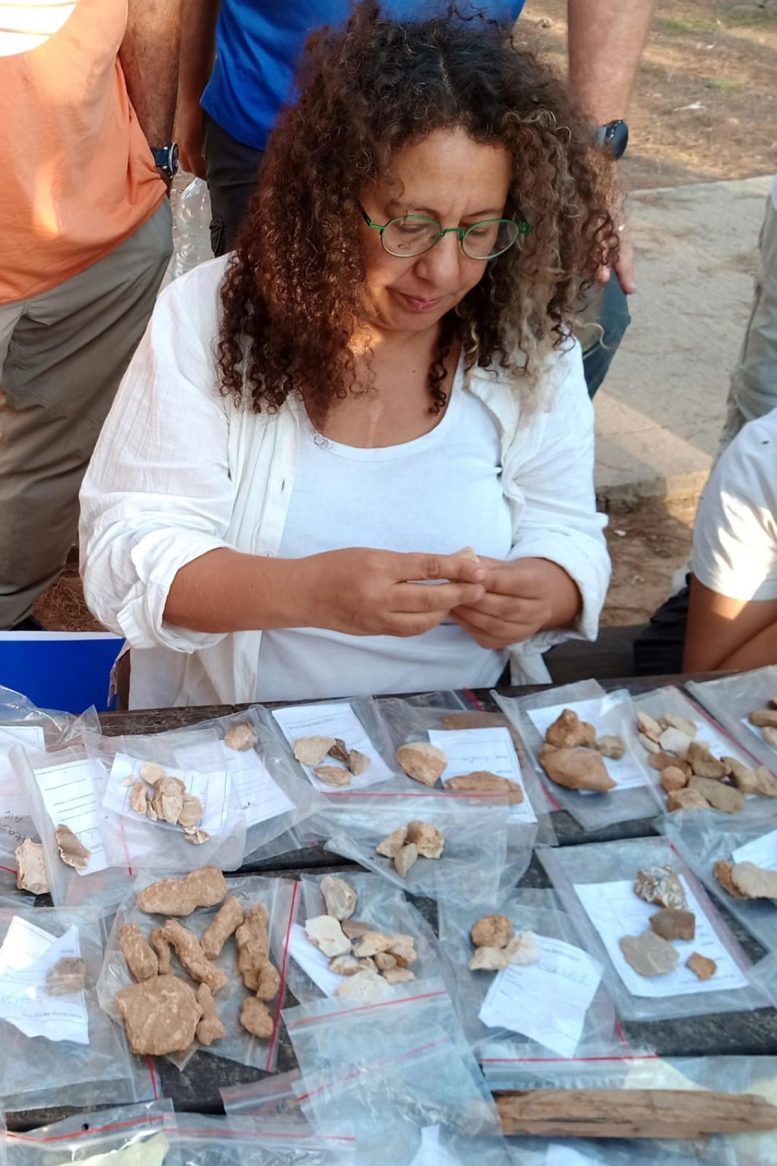
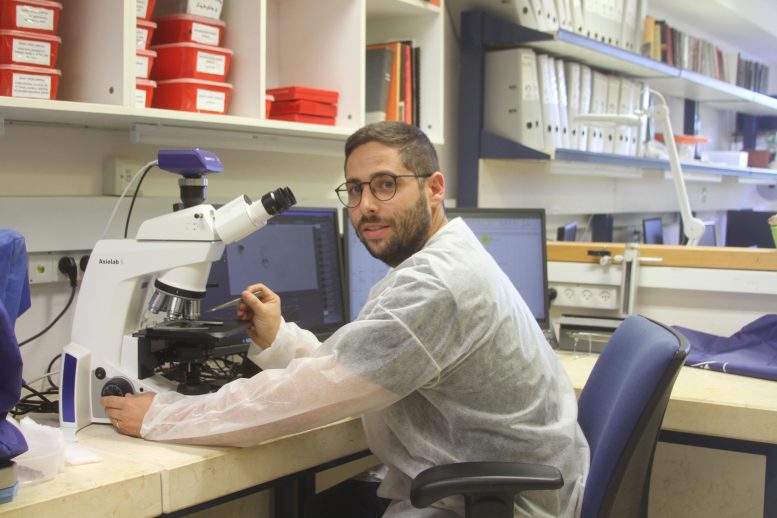
The research was part of Dr. Hadar Ahituv’s doctoral work at Bar-Ilan University’s Martin (Szusz) Department of Land of Israel Studies and Archaeology. He now works at the Laboratory for Ancient Food Processing Technologies (LAFPT) at Haifa University’s Zinman Institute of Archaeology.
The project brought together experts from several institutions, including Prof. Nira Alperson-Afil and Dr. Yoel Melamed from Bar-Ilan University, Prof. Naama Goren-Inbar from the Hebrew University, and Prof. Amanda Henry from Leiden University in the Netherlands.
Challenging the paleo diet narrative
The research contradicts the prevailing narrative that ancient human diets were primarily based on animal protein, as suggested by the popular “paleo” diet. Many of these diets are based on the interpretation of animal bones found in archaeological sites, with plant-based foods rarely preserved.
However, the discovery of starch grains on ancient tools provides new insight into the central role of plants, particularly starchy tubers, nuts, and roots, which are rich in carbohydrates vital for the energy demands of the human brain.
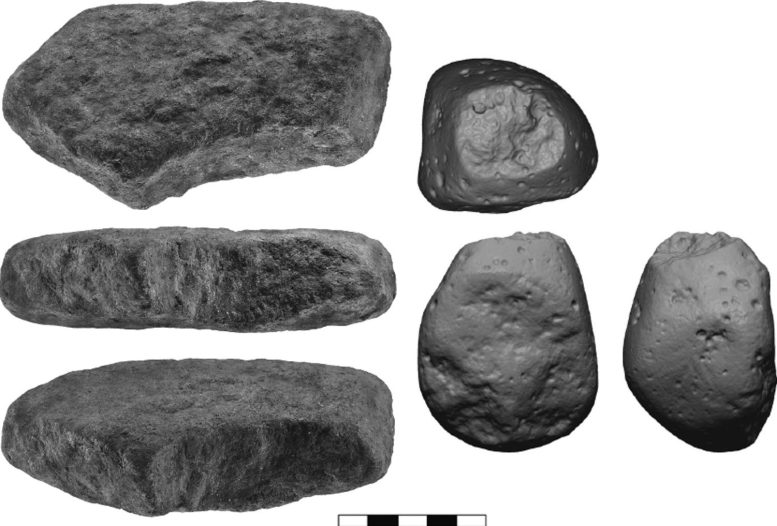
The study highlights the sophisticated methods early humans used to process plant materials. The starch grains were found on basalt maces and anvils—tools used to crack and crush plant foods.
These tools, the earliest evidence of human processing of plant foods, were used to prepare a variety of plants, including acorns, cereals, legumes, and aquatic plants like the yellow water lily and now-extinct water chestnut. Researchers also identified microscopic remains such as pollen grains, rodent hair, and feathers, supporting the credibility of the starch findings.
Significance of plant-based diets
“This discovery underscores the importance of plant foods in the evolution of our ancestors,” said Dr. Ahituv. “We now understand that early hominids gathered a wide variety of plants year-round, which they processed using tools made from basalt. This discovery opens a new chapter in the study of early human diets and their profound connection to plant-based foods.”
The findings also offer insights into the social and cognitive behaviors of early humans. The use of tools to process plants suggests a high level of cooperation and social structure, as the hominids operated as part of larger social groups. Their ability to utilize a diverse array of resources from both aquatic and terrestrial environments shows a deep knowledge of their surroundings, much like modern humans today.
The discovery marks a significant milestone in the field of prehistoric studies and provides valuable evidence about the dietary habits of our ancient ancestors, offering new perspectives on human evolution and the development of complex societies.
Reference: “Starch-rich plant foods 780,000 y ago: Evidence from Acheulian percussive stone tools” by Hadar Ahituv, Amanda G. Henry, Yoel Melamed, Naama Goren-Inbar, Corrie Bakels, Lyudmila Shumilovskikh, Dan Cabanes, Jeffery R. Stone, Walter F. Rowe and Nira Alperson-Afil, 6 January 2025, Proceedings of the National Academy of Sciences.
DOI: 10.1073/pnas.2418661121
Never miss a breakthrough: Join the SciTechDaily newsletter.
Follow us on Google and Google News.
34 Comments
Hominims then, like humans now, ate whatever came to hand. I am hard pressed to consider this a ‘ground-breaking’ discovery.
How cute?! People had to take from their environment in order to thrive with it. And the evidence is natural. Wow
That’s really impossible because according to the bible this earth is only 6,000 years old to start with.
y’know, no one said anything about the bible here. also, if it was stated somewhere, than why would it be in a newsletter that literally states “*780,000-Year-Old* Discovery Reveals That Early Humans Thrived on a Plant-Based Diet.”
Was Adam the first man or the first Israelite? Adam is in the second part of Creation so that could have been a billion years after the first part of Creation
All animals rely on their environment.
How does hair, rodent, and feathers plus bones support a starch diet. Seems someone is pushing what they want to believe. I don’t see a convincing argument here. No doubt some plant material was eaten, but that doesn’t mean it was their primary diet.
Paleo diet isn’t only meat, it’s pretty much a lot of non grain plant foods with animal proteins. Yes, tubers were also a part of it. Seems like the author needs to inform themselves better.
Personally, I was thinking that it would make sense that huntet-gatherers would eat a plant based diet. It’s a lot easier to “catch” a plant than to catch an animal. The processing makes sense too. They had a nomadic lifestyle. Grinding and pounding plants made it easier to travel with because it took up less space and could be carried in a dried gourd for example instead of carrying whole plants. I think the invention of weapons like spears and bows and arrows and figuring out how to effectively trap them.
How is this a discovery if it’s been know for almost 100 years now..
Yeah, plants are easier to catch lol
Interesting how many people are desparate to play down this research.
How are you not trolling?
It’s a book written by someone! So science is right or wrong, believe whatever the hell you want to .
Most plant foods require cooking/soaking to extract the nutrients and energy that are needed to survive, not thrive.
No. You will always get nutrients from raw plants. Some you might get more if its cooked.
What exactly are you trying to day with this statement?
That ancient peoples had modern science and could find out exactly what foods had what nutrients, while also having a understanding of exactly what nutrients their bodies need?
Because that would be a wild assertion to be making.
Or are you just upset to learn that ancient peoples had varied diets?
I understood our taming of fire to have opened up caloric intake from foods we couldn’t previously get a lot of calories from which fueled our increase in size and brainpower. you get more nutrients, but less calories, when the food is more raw, but you get more calories and less nutrients when heated with fire, because heat breaks nutrients down, but you increase the calories you can get from that food.
780,000-Year-Old Discovery Reveals That Early Humans Thrived on a Plant-Based Diet = bias
Your bias do you mean?
Yes yes, everyone is biased except you. Your self awareness is amazing.
What bias are you talking about?
Thos study does not reveal that early humans thrived on a plant based diet. It shows that early humans, living in the area they studied, had a diet that included plants. There was also animal bones found, so they also ate meat.
Because there were human bones in your parents’ cemetery, they were cannibals?
Right
Like Walter Matera, I’m sceptic as well of this being a ground breaking discovery (considering hominids being vegetarians). The finding is close to 1 million years ago and quite a lot of things have happened since. Let’s not forget that for instance gorillas are herbivores. So our ancestry was not purely carnivore. The human is an apex predator and the human GI tract anatomy has nothing to support the herbivore hypothesis.
People who bring up the human GI tract as evidence that humans didnt eat plants, even though we eat them today, are some of the most wild people alive.
Do you actually think early humans had an understanding of what their GO tract was and knew exactly what the best foods to eat were?
And considering they also found animal bone, that shows they were not eating an only vegan diet.
You mean our long, bumpy colons like herbivores have as opposed to short, smooth colons like carnivores?
Our saliva produces amylase as its primary digestive enzyme, which is designed for breaking down starches into simple sugars.
We also have a side rotating free moving lower jaw, which is only present in herbivores, not even true carnivores or omnivores.
All primates are predominantly plant-oriented in their dietary patterns. Carnivory is the exception, not the norm.
Finally, a weii-reasoned comment.
💯
Gorillas eat their own poop in order to extract enough nutrition from a plant only diet. I’d much rather eat meat than poop.
Literally no one cares what modern people on the “paleo” diet think. They do not matter, so trying to prove them wrong is asinine.
Also, all this research proves is that in that area of the world, they had a varies diet.
It says nothing about all hunter gatherera throughout all of humanoties existence.
That debunks that this predates the theory that early humans left Africa 60,000 years ago.
Many earlier hominins are also considered humans, including Homo neanderthalensis (Neanderthals). MODERN humans (homosapiens) left Africa 60,000 years ago, other species of humans left Africa long before that.
I can’t lie, one look at that lady was all I needed to see to know that this was some bulls**t. Nice try I’m still going to go to the store and buy a big steak I don’t think this is, chicken thighs 3.5 lbs, and pork chops.
This shows that they MIGHT have been eating, and that they might have been forced to. Cut their bones, check in there and other things will be revealed. These are just assumptions.
Trust me, after battling with 12-year long chronic problems, after 6-12 months of only meat ALL my problems have vanished.
One should see how often people say to me “must be a coincidence”. Well go ahead, stay unhealthy, I’m not!
The only new thing about this research is the twist of renaming their diet as “plant based” instead of “omnivorous.” Roasting starchy vegetables was a game changer in the ancient world, but we’ve known about that for a long time.