
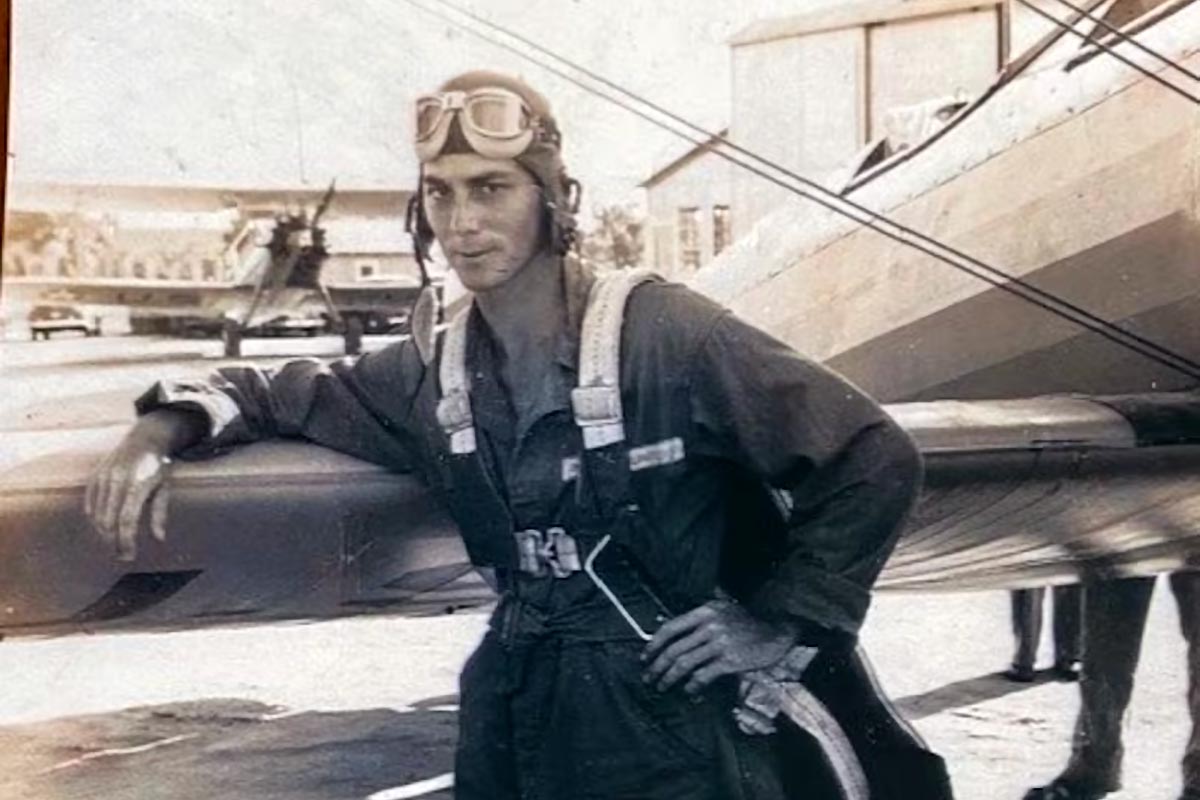
Nearly 80 years after a USAAF B-25 bomber crashed in Sicily during WWII, forensic experts identified the remains of co-pilot 2nd Lt Gilbert Haldeen Myers. The collaborative effort between Cranfield University and the US DPAA culminated in Myers receiving a burial with full military honors, marking a significant closure for his family.
On a summer’s day in July 1943, a USA B-25 Mitchell bomber left Tunisia in North Africa on a mission to attack the Sciacca Aerodrome in Sicily, Italy.
On board was a crew of six including 27-year-old US Army Air Forces (USAAF) 2nd Lt Gilbert Haldeen Myers, the co-pilot. Myers of Pittsburgh, Pennsylvania, was assigned to the 381st Bombardment Squadron, 310th Bombardment Group.
But as the aircraft approached its designated target, the B-25 bomber was struck by anti-aircraft fire, causing it to lose altitude and crash in a field about one and a half miles from the aerodrome.
Witnesses at the time said one crew member bailed out of the B-25 before it crashed, but Myers’ remains were never recovered, and he was subsequently declared missing in action. There were no survivors, or any record of passengers being taken prisoner.
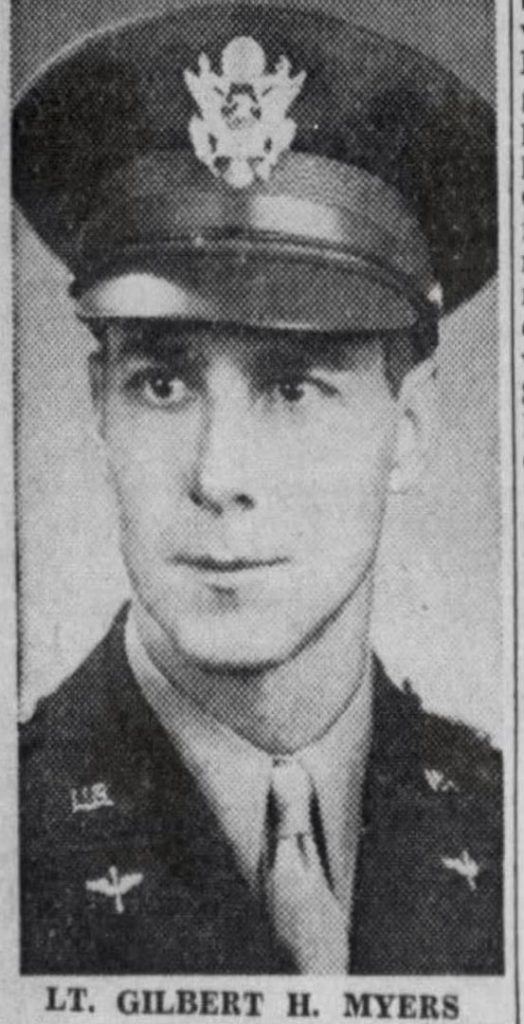
Painstaking Work to Recover 2nd Lt Myers
It is estimated that around 72,000 American personnel are still unaccounted for from World War II alone, with around 39,000 deemed to be recoverable. For years, Myers was one of those individuals. In 1947, investigators conducted search and recovery operations near Sciacca, but could not locate anything linking back to Myers.
But then last year, nearly 80 years on from the B-25 crash, that changed. Forensic experts from Cranfield University’s Recovery and Identification of Conflict Casualties team (CRICC) worked in partnership with colleagues from the US Defense Prisoner of War/Missing in Action Accounting Agency (DPAA), traveling to Sciacca to undertake a painstaking investigation. In October 2023, investigators announced they had located human remains belonging to Myers, and through DNA analysis in the USA, he has now been accounted for.
The Cranfield team consisted of a team of 20 people – each assigned to scouring the vicinity surrounding the impact zone. Such an undertaking entailed meticulous examination of tonnes of soil, aiming to recover fragments of human remains or personal effects crucial for identifying crew members.
Specialist Process Used to Analyse Remains
Dr. David Errickson, Senior Lecturer in Archaeology and Anthropology at Cranfield Forensic Institute, emphasized the challenges they faced during the excavation in Sicily, highlighting their use of wet screening to analyze items found. “This deployment was our longest yet,” he said.
“During our operations, we systematically excavated the ground, meticulously examining every piece that could possibly be bone or other evidence. In challenging environments like the excavation site in Sicily, our team utilized wet screening, a process where excavated material is passed through water to separate and analyze human remains and artifacts.”
He added: “This year has seen our forensic team involved in the investigation of several significant aircraft crashes in Europe, including a Lockheed P-38 Lightning, a Douglas A-20 Havoc, a Martin B-26 Marauder, and a forthcoming mission to the recovery site of a Boeing B-17.”
He further emphasized the significance of such work, stating: “The recovery of 2nd Lt Myers’ remains not only facilitates a proper full military honors burial but also allows the family to receive any personal effects found. Most importantly, it brings closure for the families of those missing or killed in action.”
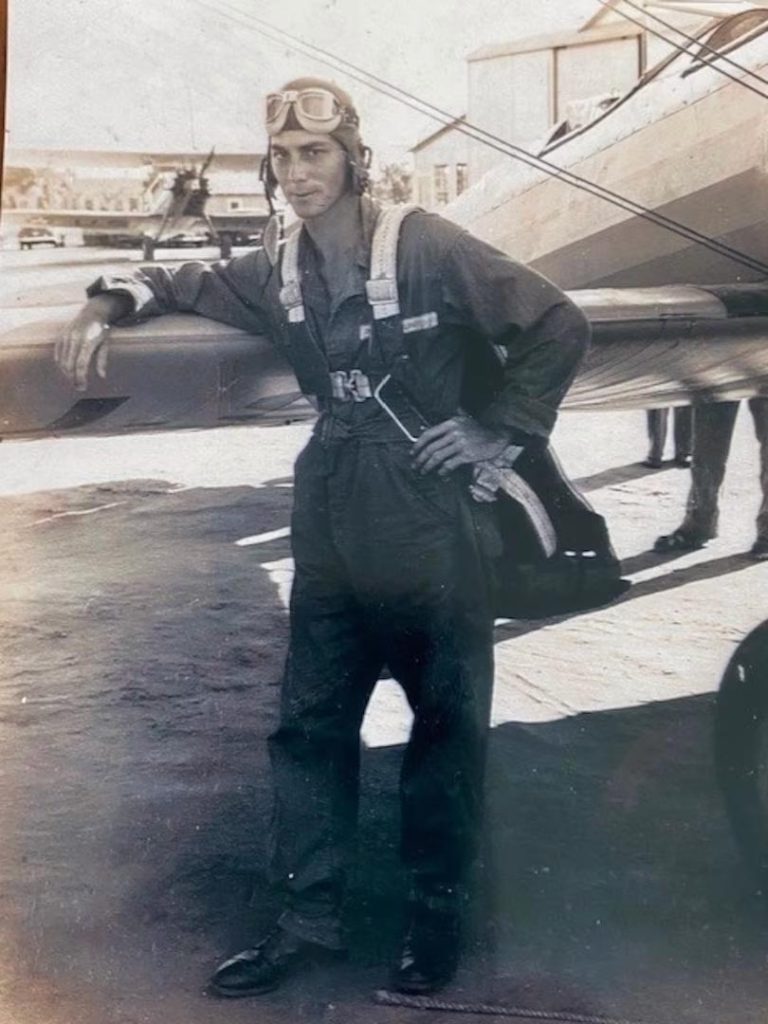
The human remains were sent to the DPAA Laboratory for examination and identification and on August 10 this year, DPAA identified them as belonging to Myers. They also recovered plane wreckage parts.
Identification at the DPAA involved DNA analysis, in addition to anthropological and circumstantial evidence found by the Cranfield team.
A Privilege to Locate a Missing Serviceman
Myers’ name is recorded on the Walls of the Missing at Sicily-Rome American Cemetery in Nettuno, Italy, along with others still missing from WWII. There are now plans to place a rosette next to his name to indicate he has been accounted for.
Ahead of Remembrance Day this year, he was buried in St. Petersburg, Florida, on November 10.
Dr. Nicholas Márquez-Grant, a Forensic Anthropologist at Cranfield Forensic Institute, added: “Sometimes excavations like these can yield nothing or remain ambiguous.
“Additionally, circumstances are influenced by the post-incident land usage. In areas where plowing has occurred or the terrain has altered, discoveries are often confined to minuscule fragments. However, one small piece of evidence can be crucial in identifying an individual.
“In this case, playing a role in the quest to locate a missing serviceman was a profound privilege, bringing closure to Gilbert Haldeen Myers’ family.”
The team from Cranfield University included graduates of the Forensic MSc program.
The DPAA has been partnering with Cranfield University as part of its efforts to forge new relationships with experts in Europe.
Specialists from Cranfield Forensic Institute (CFI) also assisted with the recovery and identification earlier this year of U.S. Army Air Forces Staff Sgt. Edgar L. Mills, who was killed in action over Germany during the Second World War. This is part of Cranfield University’s continued dedication to recovering the missing who have died in conflicts.
Never miss a breakthrough: Join the SciTechDaily newsletter.
Follow us on Google and Google News.