
Close Menu
    Facebook X (Twitter) Instagram
    SciTechDaily
    • Biology
    • Chemistry
    • Earth
    • Health
    • Physics
    • Science
    • Space
    • Technology
    Facebook X (Twitter) Pinterest YouTube RSS
    SciTechDaily
    Home»Biology»Extinctions Due to Habitat Loss are Proportional to the Area Destroyed
    Biology

    Extinctions Due to Habitat Loss are Proportional to the Area Destroyed

    By Eric Gershon, Yale UniversityJune 28, 2012No Comments2 Mins Read
    Facebook Twitter Pinterest Telegram LinkedIn WhatsApp Email Reddit
    Share
    Facebook Twitter LinkedIn Pinterest Telegram Email Reddit
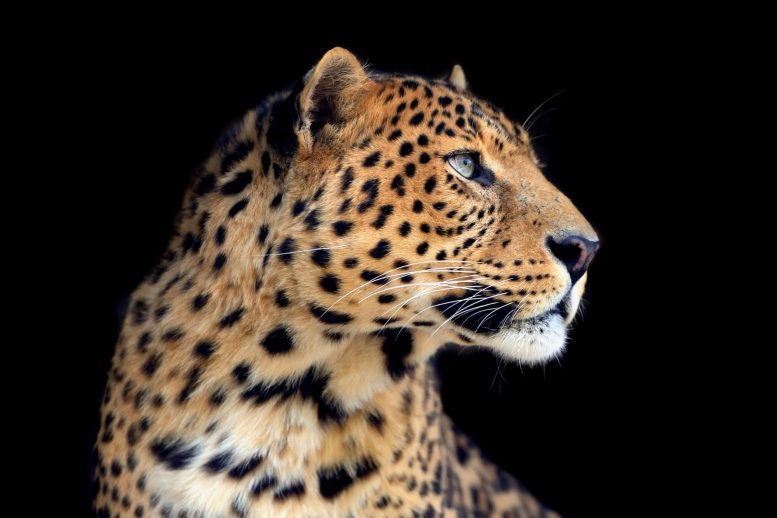
    Leopard Close Portrait
    The relationship between geographic area and species richness depends primarily on the average size of species’ geographic ranges.

    While studying extinction threat due to habitat loss, scientists found that the relationship between geographic area and richness of species primarily depends on the mean size of species’ geographic ranges.

    As human encroachment continues to shrink the habitable area for other animal species, a new study suggests that associated extinctions may be more severe than previously thought.

    Working with David Storch from Charles University in Prague, Yale researchers Petr Keil and Walter Jetz found that the relationship between geographic area and richness of species primarily depends on a single critical characteristic — the mean size of species’ geographic ranges.

    To a greater degree than expected, this holds true for almost 20,000 species of amphibians, birds and mammals worldwide, the authors report in a paper forthcoming in Nature and available now online.

    “Once you’ve accounted for the smaller geographic range of, for example, amphibians compared with mammals,” said Jetz, “we find striking and almost rule-like consistency among continents. The way the number of endemic species increases with area suggests that potential extinctions due to diminished habitat are approximately proportional to the area destroyed. This highlights the potentially severe consequences of habitat loss on species diversity.”

    The research offers a new take on a fundamental concept in ecology, the standard species-area relationship, which states that the larger the region, the more species live in it.

    The findings also suggest that the search for general principles underpinning Earth’s increasingly threatened biodiversity is fertile ground for further study, Jetz said.

    Reference: “Universal species–area and endemics–area relationships at continental scales” by David Storch, Petr Keil and Walter Jetz, 24 June 2012, Nature.
    DOI: 10.1038/nature11226

    Jetz is associate professor in Yale’s Department of Ecology and Evolutionary Biology. Keil is a postdoctoral associate in Jetz’ lab. Storch is lead author.

    Never miss a breakthrough: Join the SciTechDaily newsletter.
    Follow us on Google and Google News.

    Biodiversity Ecology Evolutionary Biology Extinction Yale University
    Share. Facebook Twitter Pinterest LinkedIn Email Reddit

    Related Articles

    New Research Reveals Scale is a Key Ingredient When Tracking Biodiversity

    Study Projects How Climate Change Will Affect the Functions Birds in Ecosystems Worldwide

    Barb Geometry of Asymmetrical Feathers Sheds Light on Evolution of Flight

    Yale Study Details Recent Shifts in Occurrence, Cause, and Magnitude of Mass Animal Die-Offs

    Scientists Detail the Evolutionary Success of Spiny-Rayed Fishes

    Antibiotics Might Contribute to the Health Problems of the Bee Colonies

    Genetic Analysis Reveals New Family Tree for Ray-Finned Fish

    Evolution Shapes Ecology of Dammed Connecticut Lakes

    “Map of Life” to Illustrate All Living Things Geographically

    Leave A Reply Cancel Reply

    • Facebook
    • Twitter
    • Pinterest
    • YouTube

    Don't Miss a Discovery

    Subscribe for the Latest in Science & Tech!

    Trending News

    JWST Finds a “Star” 100 Billion Times Brighter Than Any Star Should Be

    Scientists Find a Hidden Biological Link Across Different Forms of Autism

    Astronomers Discover a Ghostly River of Stars That Could Reveal Dark Matter

    Why Is Colorectal Cancer Rising in People Under 50? New Clues Point to the Environment

    Quantum Fluctuations Break a Crystal’s Symmetry Rules

    Why Does an Irregular Heartbeat Strike 40 Years Early in Some People?

    Scientists Reveal How ADHD Could Fuel Creative Thinking

    Scientists Find Just 3 Minutes of Sprinting Can Transform Blood Chemistry

    Follow SciTechDaily
    • Facebook
    • Twitter
    • YouTube
    • Pinterest
    • Newsletter
    • RSS
    SciTech News
    • Biology News
    • Chemistry News
    • Earth News
    • Health News
    • Physics News
    • Science News
    • Space News
    • Technology News
    Recent Posts
    • Does Vitamin C Really Prevent Colds? The Answer May Surprise You
    • Study Reveals Your Organs May Be Aging at Very Different Speeds
    • T Cells Have a Hidden Ability Scientists Never Knew Existed
    • This Grain-of-Rice-Sized “Rainbow” Chip Could Transform 6G Communications
    • Physicists Discover Time Crystals Can Communicate Across a Semiconductor
    Copyright © 1998 - 2026 SciTechDaily. All Rights Reserved.
    • Science News
    • About
    • Contact
    • Editorial Board
    • Privacy Policy
    • Terms of Use

    Type above and press Enter to search. Press Esc to cancel.